
Why Are Jellycat Plush So Expensive?
Share
The short answer
A Jellycat costs what it costs because of four separate things stacked on top of each other: dense short-pile fabric that costs several times what budget plush fabric costs, safety testing that is charged per design rather than per unit, production runs that are small by toy-industry standards, and a brand that people now actively want to own. The last one is real, and it is worth naming honestly instead of pretending the price is purely a manufacturing story.
For reference, the Bashful Beige Bunny starts at $33.00 for the medium size on Jellycat's US site, with larger sizes running well above that (us.jellycat.com, accessed August 2026). That is roughly three to five times what a mass-market plush of the same size sells for at a big-box retailer.
I run a four-animal plush company. I have personally sat through the certification process that sits behind that price tag, four separate times. So this is a breakdown from inside the category rather than a guess from outside it.
Fabric is the biggest single lever
Plush fabric is sold by the yard or meter, and the spread between tiers is wide.
Shannon Fabrics, one of the better-known minky suppliers in the US, lists its Cuddle Solids line at $15 to $20 per yard at retail and its heavier Luxe Cuddle line at $22 to $35 per yard on its published minky cost guide (Shannon Fabrics, guide accessed August 2026). Budget polyester plush of the kind used in claw-machine and dollar-store toys sits far below that. Manufacturers buy at wholesale rather than retail, so the absolute numbers drop, but the ratio between tiers survives the discount.
What you get for the extra money is mostly density and recovery. A short, dense pile has more fiber packed into the same square inch, which is why premium plush feels heavy and velvety instead of thin and slippery. Cheap long-pile fabric hides its sparseness by making the fibers longer, and that is exactly the fabric that mats into clumps after one wash and never comes back. Dense short pile also holds embroidery better, because there is enough substrate for the stitches to sit in without puckering.
The backing matters as much as the pile and nobody talks about it. A knitted backing lets the fabric stretch over curves without seam stress; a stiff woven backing forces the design into flat panels. That is a real part of why some plush look sculpted and others look like a pillow with ears.
Fabric alone does not explain a $33 price tag on a small toy. It explains maybe a few dollars of difference per unit. The rest comes from costs that have nothing to do with how much fabric you buy.
Safety testing is charged per design, not per unit
This is the part almost every "why is plush expensive" article skips, and it is the part that actually reshapes small-brand pricing.
In the US, any toy designed primarily for children 12 and under has to be tested by a CPSC-accepted third-party laboratory and certified in a Children's Product Certificate before it can legally be sold (CPSC, Rules Requiring Third-Party Testing). The limits are specific: no more than 100 ppm total lead in any accessible component, no more than 90 ppm lead in paint or surface coatings, and no more than 1,000 ppm of any regulated phthalate (CPSC Toy Safety Business Guidance). Europe runs a parallel system under EN 71, and Jellycat states that its products are tested to British, American, European and Australian standards and carry both the CE and UKCA marks (Jellycat Safety & Care, accessed August 2026).
Here is the economics of it. Lab fees are quoted per design and per material set. A published price sheet from JJR Lab lists an EN 71 report at $290 (JJRLAB, accessed August 2026), and a full US suite covering mechanical hazards, flammability, heavy metals and phthalates runs considerably higher at an accredited North American lab. Those numbers do not move whether you produce 500 units or 500,000.
Divide a four-figure testing bill across a 200,000-unit run and it disappears into rounding. Divide it across a first run of a few hundred and it becomes one of the largest line items on the sheet.
Jellycat is on the large side of that equation, which is genuinely a point in the consumer's favor: the scale that makes the brand profitable also makes per-unit compliance cheap enough that they can test everything without it wrecking the price.
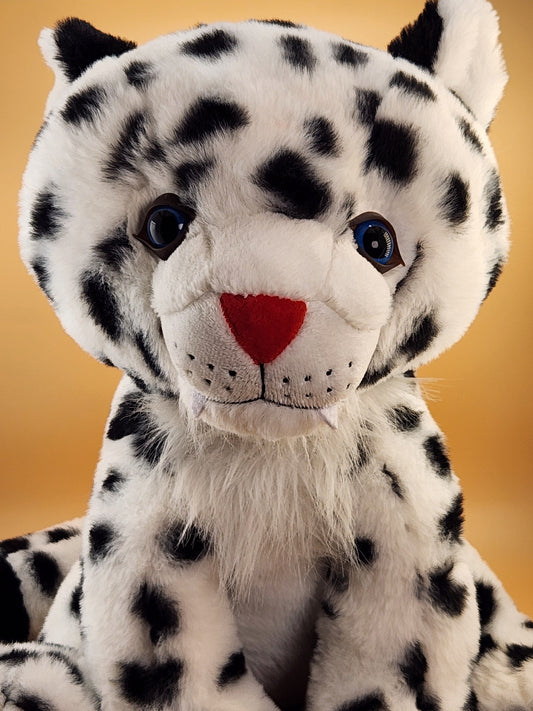
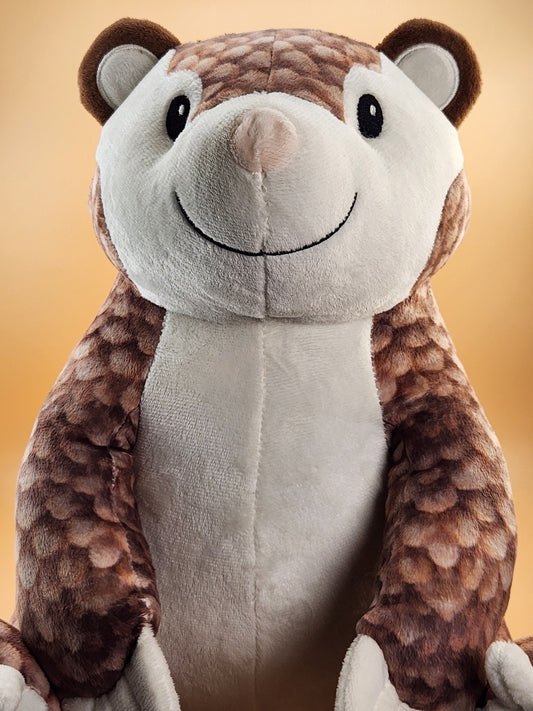
I am on the small side. Paulie the Pangolin, Ruby the Red Panda, Wayne the Whooping Crane, and Tashi the Snow Leopard are four legally separate products, not four colorways of one SKU. Each needed its own manufacturing run, its own sample shipment, and its own Children's Product Certificate. The first came back from Intertek's Arlington Heights, Illinois lab in May 2024. The fourth did not clear until May 2025. Sixteen months for four stuffed animals, with nothing going wrong.
Every certificate names the rules it certifies against: ASTM F963-23 for mechanical hazards, the flammability requirements for soft toys, CPSIA Section 103 for tracking labels, and heavy metals in surface coatings. My name is on all four as the person responsible for keeping the test records.
Batch size changes the math on everything else
Beyond testing, small runs raise the per-unit cost of nearly every input. Fabric mills have minimum order quantities, and buying a short length of a custom color costs more per yard than buying a mill run. Embroidery and pattern setup are one-time charges spread across whatever you produce. Tooling for a custom shape, sample rounds, and the factory's own changeover time all behave the same way.
Jellycat sits in an unusual middle position. The company is large enough to get real manufacturing economics, but it releases a very wide range of characters and retires them on a rotating basis, which means individual designs never reach the volumes a single evergreen character would. A brand selling three teddy bear designs forever will always beat a brand selling hundreds of characters on per-unit cost. That breadth is the product, and breadth is expensive.
The brand premium is real, and worth stating plainly
Jellycat's own filings make the margin picture clear. The company reported revenue of £333 million in the year to 31 December 2024, up 66%, with pre-tax profit more than doubling to £139 million from £67 million, and proposed a £110 million dividend to its owners (Business Matters, 2 October 2025, reporting Companies House filings). A pre-tax margin around 42% is not what a business running on thin manufacturing spreads looks like.
Some of that comes from the toys. A meaningful share comes from brand equity built over 25 years: distinctive character design, a recognizable house style, retail theater like the Selfridges fish-and-chips counter and the New York diner, and an adult collector base that treats new releases as events.
Calling that "just marketing" would be lazy. Brand equity costs money to build and it delivers something buyers actually value, which is confidence that the thing in the box will be good. What is fair to say is that a portion of the $33 is paying for the brand rather than the bunny, and that is true of every premium consumer brand on earth. Jellycat is not unusual in charging it. They are unusual in how successfully they have built it.
Scarcity and the resale market push the number up further
Jellycat retires designs permanently rather than running them forever, and stock allocation across its independent stockist network means a character sold out on the official site may still be sitting in a local gift shop. Both facts create genuine scarcity, and scarcity feeds a secondary market. eBay maintains an entire browse category for retired Jellycat listings, where asking prices for discontinued characters routinely sit well above original retail.
Two effects follow. Retail prices face no downward pressure, because anything that does not sell at full price will clear on resale anyway. And a slice of the customer base is buying with resale value in mind rather than cuddle value, which changes what they will tolerate paying.
Whether that is good for the category depends on who you ask. Collectors like it. Parents trying to replace a lost bedtime friend at 11pm do not.
So, is a Jellycat overpriced?
Not on the evidence. The fabric is better, the testing is real, the design work is genuine, and the durability holds up. A high price plus a high margin is not the same thing as a rip-off; it means a company has built something people will pay a premium for.
What is fair to say is that you are paying for more than materials, and you should know which parts of the price are which so you can decide what you actually want to fund.
What you're actually paying for in any quality plush
If you are comparing brands, these are the things that separate a plush worth $35 from one worth $8. None of them require you to trust a brand's marketing copy.
A Children's Product Certificate. In the US this is a legal requirement for toys aimed at children 12 and under, not a badge. Reputable brands will produce one if you ask. Silence is an answer.
Named standards, not vague claims. "Meets safety standards" means nothing. ASTM F963-23, EN 71, and CPSIA Section 103 mean something, because each one is a specific document with specific tests behind it.
Dense short pile with a knitted backing. Squeeze it. Quality plush compresses and springs back. Cheap plush stays dented.
Embroidered features instead of glued plastic. Embroidered eyes and noses cannot detach, and they survive washing. Glued plastic parts are the most common failure point in both safety terms and laundry terms.
Reinforced seams and a sewn-in care label. A brand that expects the toy to last labels it for washing. If you want the full method, our guide on how to wash a Jellycat without ruining it covers care labels, drying, and restoring loft after a wash.
A tracking label. CPSIA Section 103 requires permanent marking that identifies the manufacturer and production batch. It exists so a recall can reach the right units. Its presence tells you a brand went through the process.
Where Snugglebug sits
Our animals are $40. Each one carries a Children's Product Certificate from third-party testing at Intertek's Arlington Heights, Illinois lab, certified against ASTM F963-23, the flammability requirements for soft toys, CPSIA Section 103, and heavy metals in surface coatings. They are rated for ages 18 months and up, and they are hand wash only, because we have not paid for the durability testing that would let us claim machine washability, and we are not going to claim it without the data.
Fifteen percent of every purchase goes to conservation organizations working on the species we make. You can read more about how our plush get made and what our supply chain actually looks like, or see the animals themselves in the full collection.
Nobody buying a $40 stuffed animal for their kid should have to ask for the paperwork. That is the point of a floor. You do not get credit for clearing it, you just do not get to skip it.
Snugglebug is not affiliated with or endorsed by Jellycat Ltd. Prices and product details cited were accurate as of August 2026.