
Top Quality Stuffed Animals: Safe & Durable Plush
A parent is often standing in the toy aisle, or scrolling late at night, looking at two plush toys that seem similar at first glance. Both look soft. Both have sweet faces. One costs less, one costs more, and the hard part is knowing what that extra cost provides.
That question matters because a stuffed animal isn't just decor. It gets hugged, dragged across floors, packed into backpacks, washed after spills, and leaned on during hard days. For some children, it also becomes a first lesson in empathy, animal care, and the wider world.
A quality plush earns its place through the small details that are not immediately apparent. The stitching, the fill, the washability, the design choices, and the honesty of the brand all shape what that toy becomes over time.
Table of Contents
- What Truly Defines a Quality Stuffed Animal
- A Shopper's Guide to Inspecting Plush Toys
- Matching the Perfect Plush to the Person
- The Deeper Meaning of Quality Sustainability and Impact
- Caring for Your Stuffed Animal to Ensure a Lifetime of Love
What Truly Defines a Quality Stuffed Animal
A child drags a favorite rabbit from the bed to the car, to preschool, then back home for one more bedtime story. By the end of that day, the plush has been hugged, squeezed, dropped, and chewed on by stress and routine. Quality shows up in that ordinary cycle. It determines whether the toy stays safe, familiar, and comforting, or starts to split, shed, and lose the shape a child depends on.
That is why quality stuffed animals are measured by more than softness. The best ones bring together material choice, careful construction, age-appropriate safety, lasting comfort, and thoughtful design. Each part supports the others. Strong fabric means less wear. Even stitching means fewer failures at the seams. Smart design means a child can love the toy hard without the toy becoming a hazard.

Quality starts beneath the fur
Surface softness creates the first impression, but the materials underneath shape the relationship over time. A denser plush fabric usually keeps its hand feel longer, resists matting, and recovers better after repeated hugs and washing. Cheaper fabrics often look appealing at first and then flatten quickly, which changes both the appearance and the comfort of the toy.
Stuffing matters for the same reason. Even fill distribution helps a plush hold its shape, sit properly, and feel reassuring in the arms. Lumpy fill or hollow spots often signal rushed production. They also change the sensory experience. For a young child, that matters more than adults sometimes realize. Familiar weight and shape help a comfort object stay recognizable, which supports emotional attachment and consistent soothing.
History gives useful context here. Early stuffed toys often relied on materials such as felt, mohair, kapok, and straw, as noted by the Victoria and Albert Museum's history of soft toys. Modern fibers can offer softer texture, more consistent fill, easier care, and safer performance than many nineteenth-century materials.
A simple example helps. If a child sleeps with a fox plush every night, the same paw, belly, and ear get compressed again and again. Better fabric and balanced stuffing help that fox remain the same fox. That continuity supports comfort, memory, and even early learning, because children often build stories, routines, and vocabulary around toys that stay visually and physically consistent.
Practical rule: If the outside feels lovely but the body feels uneven, the toy was not made with equal care all the way through.
Construction is where trust is built
Construction turns good materials into a toy that can handle real childhood. Seams carry most of that burden. They absorb pulling at the arms, twisting at the neck, and repeated pressure along the belly and legs. When a plush fails early, it often starts in those high-stress zones.
According to plush toy quality checks used for safety compliance, high-quality stuffed animals must utilize a minimum stitch density of 10 stitches per inch. Seams must also be secure enough that a ballpoint pen cannot be inserted into the gap, and every toy must pass through a metal detection machine to reject any product containing broken needle fragments, helping ensure compliance with ASTM F963 safety standards.
Those details may sound factory-specific, but the reason behind them is human. Tight stitching keeps stuffing inside and reduces the chance that small internal parts work loose. Metal detection catches a hidden danger before a toy reaches a family. Quality control is not paperwork. It is care made visible through process.
A strong build usually includes:
- Tight seam lines that stay smooth instead of gapping or puckering
- Cleanly finished threads that will not catch and unravel
- Secure facial features that stay in place through repeated handling
- Balanced stuffing across the head, limbs, and torso
- Reinforced stress points around ears, tails, arms, and legs
For readers who want to understand how these choices are made before a plush reaches a shelf, this explanation of how plush toys are manufactured adds useful context.
Design integrity matters more than cuteness
A well-designed plush solves problems. It is easy to carry, comfortable to hold, stable enough for play, and expressive without depending on fragile extras. Good design often looks simple because someone took the time to remove features that would snag, fray, poke, or detach.
That restraint has long-term value. A toy with embroidered eyes, manageable fur length, and balanced proportions is often safer for younger children and easier to maintain for caregivers. It also stays usable longer. That matters for family budgets, but it also matters for the planet. A plush that lasts for years is less likely to be replaced quickly and less likely to become waste after one season of use.
Here is a clearer way to compare the choices:
| Feature | Lower-quality choice | Better-quality choice |
|---|---|---|
| Eyes | Loose plastic piece | Securely attached or embroidered feature |
| Fur length | Very long and easily matted | Soft pile that stays manageable |
| Seams | Sparse stitching | Dense, even stitching |
| Shape | Cute in photos only | Balanced for cuddling and play |
Analysts at Data Bridge Market Research on the global plush toys market report continued growth in stuffed animals and plush toys, including a strong share for North America and for the stuffed animal segment itself. That growth helps explain why buyers are paying closer attention to durability, safety, and materials instead of treating plush as disposable.
A quality stuffed animal keeps its identity through cuddles, washing, travel, classroom visits, and years of affection. That reliability supports more than ownership. It supports attachment, imaginative play, and the quiet kind of learning that happens when a child returns to the same trusted companion again and again.
A Shopper's Guide to Inspecting Plush Toys
A child spots a plush on the shelf, hugs it once, and decides it is the one. That first cuddle matters. The second question matters just as much. Will this toy still feel safe, comforting, and recognizable after car rides, naps, classroom trips, and many rounds of washing?
A careful inspection answers that question better than the face alone can. Good plush design leaves clues in the places children rarely notice but use constantly: the seams under the arms, the stitching around the nose, the way the stuffing springs back after a squeeze. Those small construction choices shape big outcomes. They affect safety, how long a toy stays in use, and whether it becomes a lasting companion instead of a short-lived purchase.
A quick visual guide helps in the store or at unboxing time.

What to check with hands and eyes
Start with the squeeze test. Press the belly, limbs, and head. Even filling should feel springy and consistent, like a well-packed pillow that returns to shape instead of staying lumpy. Uneven stuffing often leads to sagging, twisting, or hard spots, which can make a plush less comfortable to hold and harder for a child to use in pretend play.
Next, do a seam check with your fingers, not just your eyes. Follow the underarms, inner legs, neck, and tail base because these areas carry tension whenever a child drags, hugs, or swings the toy around. Dense, even stitches work like the joints in a well-built backpack. They spread stress across the structure instead of letting one weak point fail early.
The tug test comes next. Gently pull on eyes, noses, bows, or accessories. Nothing should shift. A decorative part that loosens under light pressure may not hold up to daily handling, and parts security is directly tied to safe use.
Use this short checklist while you inspect:
- Check the fabric surface for shedding, bald spots, or a rough backing that shows through the pile.
- Look for thread control around paws, ears, and facial embroidery. Loose ends often signal rushed finishing.
- Notice the scent. A strong chemical odor is a reason to pause and read labels more carefully.
- Test shape recovery by hugging the toy firmly and seeing whether it rebounds instead of collapsing.
- Read the material notes if allergies, sensory comfort, washability, or environmental impact matter in your home or classroom.
Fabric choice can confuse even careful shoppers. Some textiles feel soft at first touch but wear down quickly, while others stay gentle after repeated use and washing. For families comparing fibers, this guide to what bamboo fabric means in plush and textiles explains one common material question in plain language.
A plush that passes a gentle inspection before purchase has a better chance of surviving the much harder test of childhood.
Why older craftsmanship still matters
Shoppers have been judging plush construction for more than a century. Early teddy bears became popular not only because they looked charming, but because they were made to be handled, carried, repaired, and kept. The Leipzig Toy Fair helped establish teddy bears as a serious toy category in the early years of the 20th century, and museum and historical collections still show how strongly construction quality shaped which toys survived.
That history is useful because it corrects a modern misconception. Plush toys are often marketed for quick appeal, but the best ones were never designed as disposable objects. A well-made bear holds its form, keeps its features, and remains familiar to a child over time. That continuity supports emotional attachment and memory. Children often return to the same toy during transitions, bedtime routines, storytelling, or stress, and a plush that still feels like itself can support that ritual more reliably.
A practical example helps. If a grandparent is choosing a bear meant to begin in a nursery, travel through everyday play, and later rest in a keepsake box, the inspection should focus on construction choices that preserve identity over time. Tight seams, secure features, and fabrics that age gracefully do more than protect the toy. They protect the relationship a child builds with it, and they reduce the chance that a beloved object becomes waste before its story is finished.
Matching the Perfect Plush to the Person
A plush can be beautifully made and still be the wrong choice for the child, classroom, or care setting. Quality isn't one-size-fits-all. The right toy depends on who will use it, how often it will be handled, and what role it needs to play.

For infants and toddlers
The youngest children need simplicity more than novelty. Parenting experts recommend selecting machine-washable stuffed animals to maintain hygiene, and for infants, a 0+ months age rating is a key sign that the toy was designed for safety and durability from the earliest stage, according to The Bump's guidance on choosing stuffed animals.
That recommendation helps solve a common confusion. Many adults assume a smaller plush is automatically better for a baby. Size matters, but surface details matter more. Embroidered eyes are often easier to trust than hard attachments. Shorter, smoother fabrics are easier to keep clean. A toy that survives regular washing stays in use instead of being retired after the first stomach bug or spilled bottle.
Practical example: a soft rabbit for a nursery should be easy to wash, easy to dry, and easy for small hands to hold by the body or ears without stressing the seams.
For therapy and comfort settings
Comfort settings place different demands on a plush. In hospitals, counseling rooms, and family support programs, the toy may be squeezed constantly, carried from room to room, or used as a grounding object during stressful moments.
In that context, texture becomes part of function. Some children calm more easily with a plush that has a smooth body and distinct tactile details such as softer ears or a gently varied fabric panel. Shape also matters. A too-floppy toy can frustrate a child who wants something substantial to hold, while an overly rigid toy may feel less soothing.
Useful qualities in these settings often include:
- Predictable texture that doesn't surprise sensitive hands.
- Durable seams at points that get gripped often, like arms and neck.
- Washability for shared or frequent use.
- Calm design without noisy extras, glitter, or hard trims.
A comfort plush does one job quietly. It helps a child regulate, rest, or feel less alone.
For classrooms and thoughtful gifts
Educators often need a plush to do more than comfort. It may need to support storytelling, nature lessons, geography, or social-emotional learning. That's where realistic, species-specific design becomes meaningful. A red panda that looks recognizably like a red panda can spark better questions than a generic “cute animal” toy.
There's also an overlooked learning dimension here. Recent pediatric research from 2024 to 2025 indicates that children are 30% more likely to retain informational concepts from toys that withstand daily use for over 12 months, as noted in this discussion of plush durability and educational retention. The evidence gap in the wider market is still real, but the core idea makes sense. Children return to the toys that stay intact.
That's one reason some educators and gift buyers choose options tied to real animals and learning materials. Snugglebug offers species-specific plush modeled after endangered animals, paired with educational cards about those animals and their habitats. In a classroom, that kind of design can turn a plush into a conversation starter rather than only a comfort item.
Gift buyers often weigh different questions than parents or teachers. Presentation matters. So does the story behind the brand. A gift feels more meaningful when it has a clear purpose, whether that purpose is early comfort, wildlife learning, or supporting a mission the family already cares about.
The Deeper Meaning of Quality Sustainability and Impact
A plush toy can be beautifully sewn and still fall short of what many families now mean by quality. More shoppers want to know where the fibers came from, how the toy was made, and whether the company is transparent about its choices.
That shift is visible in buyer expectations. A 2025 industry report found that 68% of consumers actively seek transparency about whether plush toys use recycled fibers or sustainable materials, yet only 12% of major brands publish detailed supply chain audits, according to this report on plush toy transparency and audit disclosure. The gap leaves eco-conscious buyers with limited ways to separate careful sourcing from vague marketing.

Quality includes the supply chain
A durable toy usually creates less waste than a toy that splits, sheds, or gets discarded quickly. Longevity is one of the most practical sustainability features a plush can have. If one bear lasts through years of use, hand-me-downs, and memory keeping, that often has more meaning than a short-lived novelty purchase.
Buyers can look for a few signals when evaluating environmental impact:
- Material transparency about recycled fibers or sustainably sourced textiles.
- Manufacturing clarity that goes beyond broad claims and explains actual practices.
- Durability choices that support longer use instead of fast replacement.
- Repair friendliness so small damage doesn't end the toy's life.
Families who want a deeper framework can review these ideas in this guide to eco-friendly plush toys and responsible design.
Why durability can shape learning
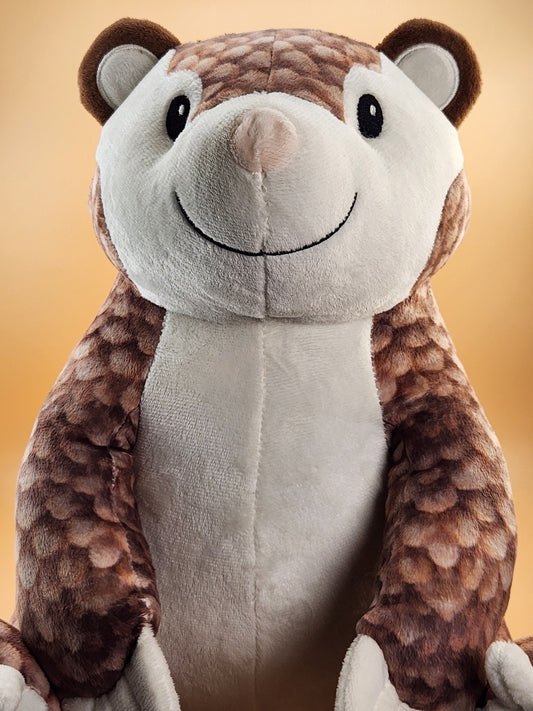
Quality also affects what a toy can teach. When a plush remains in a child's daily world, it has repeated chances to support stories, facts, routines, and empathy. A pangolin plush that survives bedtime, travel, and school sharing keeps showing up in the moments where learning sticks.
That matters especially for animal education. Children often build care through repetition. They hear the animal's name again. They remember where it lives. They ask why it needs protection. If the toy disappears quickly because it tears or can't be cleaned, those moments disappear too.
A market that values better plush reflects this wider role. Grand View Research reported that the global stuffed animals and plush toys market reached $13.68 billion in 2025 and is projected to grow to $25.94 billion by 2033, with a projected 8.4% CAGR from 2026 to 2033, in this global market analysis of stuffed animals and plush toys. Behind that growth is a simple reality. Many buyers aren't just purchasing softness. They're choosing products that feel safer, last longer, and carry more purpose.
Quality becomes more meaningful when the toy supports both the child holding it and the world that child is learning to care about.
Caring for Your Stuffed Animal to Ensure a Lifetime of Love
Even the best plush needs care. The goal isn't to keep it pristine. Most beloved stuffed animals won't stay pristine. The goal is to keep it clean, safe, and structurally sound so it can stay in the family story for years.
Cleaning without damaging the plush
Start by checking the care label. If the toy is machine-washable, place it in a pillowcase or mesh laundry bag before washing. That reduces friction on the fabric and protects ears, tails, and embroidered details.
Use a gentle cycle with mild detergent. Then air-dry when possible. High heat can stress fabrics, affect shape, or change the feel of the stuffing.
For minor messes, spot cleaning is often enough:
- Blot first with a clean cloth instead of rubbing the stain deeper.
- Use a small amount of mild soap mixed with water.
- Clean in sections so the stuffing doesn't become overly wet.
- Press with a dry towel and let the toy dry fully before returning it to use.
A practical example is a plush dropped in the car after a snack spill. It may not need a full wash. Careful spot cleaning can remove the mess while preserving the toy's shape and softness.
Simple repairs and smart storage
Small repairs are worth doing early. A loose seam rarely gets better on its own. It usually widens with every hug.
For a minor seam opening, hand sewing with a close ladder stitch can keep the repair discreet and strong. If stuffing is escaping, tuck it back in before closing the seam. For a limb that feels loose, reinforce the area around the original stitching rather than adding tension in a new place.
A simple repair kit can include:
- Matching thread for less visible mending
- A fine hand needle for controlled seam repairs
- Small scissors for loose threads
- Extra soft stuffing if a section has thinned over time
Storage matters too. Keep plush toys away from direct sunlight if they're being displayed for long periods, since fading can change colors and dry the fabric surface. For memory storage, breathable cotton bags are usually a better choice than sealing toys tightly in plastic while still slightly damp.
A well-loved stuffed animal doesn't need to look new. It needs to stay whole, clean, and ready for the next cuddle.
A cared-for plush often becomes more valuable with age, not less. It carries the evidence of use, comfort, and attachment. That's part of the point of choosing quality in the first place.
Families, educators, and gift buyers who want a plush that connects comfort with wildlife learning can explore Snugglebug. The collection focuses on species-specific animals, educational storytelling, and mission-driven design that supports both meaningful play and conservation awareness.