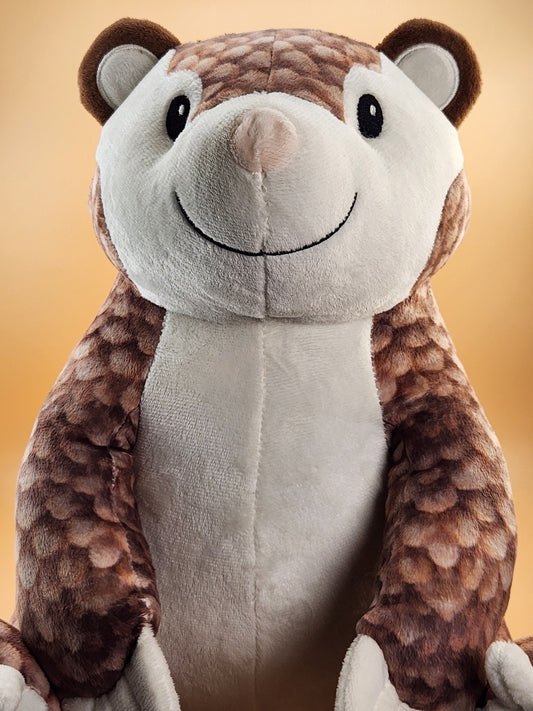

Pangolin Stuffed Animal: A Guide to Cuddles & Conservation
A child once picked up a scaled plush at a gift table, hugged it to the chest, and asked, “What animal is this?” That small question is exactly why a pangolin stuffed animal matters.
Table of Contents
- More Than a Toy A Pangolin's Tale
- Why a Pangolin Plush Is a Special Choice
- How to Choose a Safe and High-Quality Pangolin Plush
- Turning Playtime into a Lesson in Empathy
- The Conservation Impact of Your Cuddly Companion
- How to Care for Your Pangolin Plush
- Give a Gift That Tells a Story
More Than a Toy A Pangolin's Tale
In the wild, a pangolin moves, mostly at night, often unseen even by people working hard to protect it. That hidden life makes the animal feel almost mythical to many children, which is why a plush version can become such a powerful bridge between home and the natural world.

A parent might place a pangolin stuffed animal on a bookshelf beside storybooks and notice what happens next. A child asks why it has scales. Another asks why this animal isn't at the local zoo. Soon the toy is no longer background decor. It becomes the beginning of a conversation.
That matters because the toy aisle is changing. The global stuffed animal and plush toy market was valued at USD 13.7 billion in 2025 and is projected to grow to USD 25.9 billion by 2033, with growth tied to demand for toys connected to educational and conservation themes, according to Grand View Research's stuffed animal and plush toys market analysis.
A plush with a real-world story
Many plush toys are chosen because they're soft, familiar, or easy to gift. A pangolin plush is different. It introduces a species many adults haven't learned much about either, and that gives families room to discover something together.
A thoughtful toy doesn't just comfort a child. It gives adults better questions to answer.
One practical example is a reading corner that includes a pangolin plush, a forest-themed picture book, and a simple fact card. During quiet time, the toy gives the child something to hold while learning, which often makes unusual animals feel less distant and more worthy of care.
Families who want a kid-friendly starting point often look for simple background materials such as these pangolin facts for kids. The strongest use of a pangolin stuffed animal isn't decorative. It's relational. The toy helps a child connect affection with knowledge, and that connection can last.
Why a Pangolin Plush Is a Special Choice
A pangolin plush stands out because the animal itself stands out. Pangolins are mammals, but they don't look like the mammals most children know. They have overlapping scales, long bodies, and a way of curling into a ball that sparks immediate curiosity.

The deeper reason this choice matters is conservation. Pangolins are the world's most trafficked wild mammals, with all eight species currently threatened with extinction. They also play a vital ecological role by consuming up to 70 million insects annually, primarily termites and ants, as explained in the IFAW pangolin FAQ.
What makes them memorable
Children often understand an animal faster when the explanation is concrete.
- They're mammals with scales: That surprises people right away.
- They help ecosystems: By eating huge numbers of ants and termites, they act as natural pest control.
- They're hard to spot: They're nocturnal, solitary, and shy, which helps explain why many families have never seen one.
A practical example works well at home. An adult can place a pangolin plush beside an armadillo picture and a reptile picture, then ask which one it resembles most. The child begins comparing body coverings, movement, and habitat. That turns a cuddle toy into an early science prompt.
Why the choice feels meaningful
Not every animal plush carries the same educational weight. A pangolin stuffed animal often invites a slower kind of attention. A child may ask, “Why have people never heard of this one?” That question opens a door to empathy.
Practical rule: If a toy helps a child ask better questions about a real animal, it has educational value beyond play.
This is also why some parents prefer species-specific toys over generic stuffed animals. A clearly designed pangolin plush can support vocabulary, observation, and emotional connection all at once. Families exploring that broader developmental role sometimes also read about the benefits of stuffed animals, especially when they want toys that support comfort and learning together.
How to Choose a Safe and High-Quality Pangolin Plush
Safety comes before charm. A pangolin stuffed animal may be adorable, but the right choice depends on how it's made, who it's for, and how it will be used every day.
Near the top of any buyer's checklist should be visible construction quality. Seams, fabric texture, and small parts matter far more than trendy styling.
Critical safety benchmarks for plush toys include strong seam integrity to prevent stuffing exposure and choking hazards, and the avoidance of high-pile fabrics for infants under 12 months due to respiratory risks from loose fibers, according to this plush toy safety guide from Imago Group.
Start with safety before cuteness
Parents and caregivers often get pulled toward the softest or fluffiest option. For very young children, that can be the wrong priority.
- Choose low-pile fabrics for babies: Long fibers can shed and create avoidable risk for infants under 12 months.
- Check seam strength by hand: Gentle tugging along the legs, tail, and scale edges can reveal weak stitching.
- Prefer embroidered details when possible: Eyes, noses, and decorative elements should feel secure and simple.
One practical example is nursery use. If the plush is meant mostly for supervised cuddles and shelf display, the design can be a bit more detailed. If it's meant for frequent mouthing, travel, or naps in a stroller, simpler construction is safer and easier to maintain.
Compare materials and construction
Not all plush fabrics wear the same way. Some look lush on day one but mat quickly. Others hold shape better after repeated hugging and cleaning.
| Feature | What to Look For | Why It Matters |
|---|---|---|
| Fabric texture | Short or medium pile, smooth finish | Easier to clean and safer for younger children |
| Seams | Tight, even stitching at stress points | Helps prevent stuffing from coming out |
| Details | Secure embroidery or firmly attached features | Reduces risk from loose parts |
| Fill | Evenly distributed stuffing with no lumps | Keeps the toy comfortable and durable |
| Shape | Balanced body that sits or rests well | Better for both play and display |
A reputable product page should help answer these questions with clear photos and care details. One example on the market is Snugglebug's species-based plush line, which presents endangered animal designs intended for comfort and educational use. The point isn't branding alone. The point is whether a maker explains what the toy is made for and how it should be used.
Match the toy to the child's age and use
A toddler doesn't use a plush the same way an older child does. A preschooler may drag it through daily adventures. A school-age child may use it during reading time, science lessons, or bedtime routines.
That's why size and purpose should be matched carefully.
- For infants: Keep the fabric simple and avoid anything overly shaggy or heavily embellished.
- For toddlers: Look for a shape that's easy to carry by the body, not by delicate appendages.
- For older children: Slightly more realistic scale patterning can support educational play.
A short product demo can help adults notice details they might miss in still images.
A practical shopping habit works well here. Before buying, adults can ask three questions out loud: Will this toy be cuddled daily, washed occasionally, and handled roughly? If the answer is yes, construction quality matters more than novelty.
Turning Playtime into a Lesson in Empathy
The most effective learning with a pangolin stuffed animal usually doesn't look like a formal lesson. It happens during bedtime, in the car, at a reading rug, or while a child lines up favorite toys for pretend tea.

One of the most helpful facts for that moment is simple and memorable. “Pangolin scales are made of keratin, the same protein that makes up our own hair and nails,” a detail highlighted by Wildlife SOS India. That single idea clears up a common confusion. Pangolins may look reptile-like to children, but they aren't reptiles.
A simple conversation at bedtime
A parent can run a fingertip over the plush scales and say, “These are like nails, not like lizard skin.” That short sentence gives a child a physical reference point. It turns texture into biology.
Another practical example works during bath-time preparation. A caregiver can show the child their own fingernails, then point to the plush scales. The child begins connecting body science to animal science. That's a strong early learning pattern because it starts with something familiar.
Children build empathy faster when a strange animal becomes understandable.
That same moment can also reduce fear. Some children ask whether pangolins bite, sting, or act like “dangerous” exotic animals. A plush gives adults room to answer calmly and accurately, without making the species seem frightening.
Classroom and home activities that work
A pangolin plush becomes much more useful when paired with a simple activity. These don't need to be complicated.
- Map activity: Place the plush beside a world map and talk about where pangolins live in Africa and Asia.
- Texture comparison: Let children compare the plush's scales with a comb, a pinecone, and their own fingernails.
- Curl-up play: Show how pangolins protect themselves by curling, then let children copy the shape safely on a rug.
For educators, a circle-time example works especially well. One child holds the pangolin stuffed animal while another shares one thing the animal needs to stay safe in the wild. The toy gives shy children a speaking role because they can “speak for” the animal.
A reading station can do the same thing at home. The plush sits beside books about forests, insects, or endangered animals. Over time, the toy becomes a cue. When it appears, curiosity follows.
The Conservation Impact of Your Cuddly Companion
The strongest pangolin plush stories don't stop at “rare animal.” They connect a child's affection to the animal's real situation in the wild.

Three of the eight pangolin species are critically endangered, and the Sunda pangolin population has declined by an estimated 80% in just 21 years due to unsustainable hunting, according to World Animal Protection's pangolin conservation article. That's the kind of reality a toy can help make visible, especially for children who learn best through stories and symbols.
Why awareness matters
One of the biggest educational gaps around pangolins is misunderstanding. Many families have never heard that the illegal trade in pangolins is tied to demand for their scales. That false belief matters because it drives harm.
A practical example is the educational card that sometimes comes with a wildlife plush. Instead of stopping at a name and habitat, a good card can prompt better conversations. It can help adults explain that pangolins need protection in the wild, not collection, display, or trade.
Another overlooked point is captivity. Pangolins are notoriously difficult to maintain in captivity and often die shortly after capture because of physiological stress and poor adaptation to artificial environments, as described by Save Pangolins. That helps explain why a plush can be a more ethical teaching tool than the expectation of seeing one in a typical zoo setting.
How a purchase can support real action
Mission-driven brands matter when their business model ties the product to conservation work. Snugglebug states that it donates 15% of profits to vetted organizations protecting endangered animals and habitats, and families interested in that support model can learn more through the Pangolin Crisis Fund page.
A useful buying question: Does the toy only describe the animal, or does it help fund protection for the animal's future?
A practical gifting example makes this easy to picture. A grandparent gives a pangolin stuffed animal for a birthday, adds the educational card, and includes a note that says this animal needs help in the wild. The gift becomes more than comfort. It becomes an early lesson in responsible care.
That's where conscious gifting has real force. A child still gets softness, routine, and companionship. But the adult has also chosen an object that can point outward, toward habitat protection, anti-trafficking work, and informed compassion.
How to Care for Your Pangolin Plush
A well-made plush lasts longer when families treat cleaning as routine maintenance, not a rescue mission after heavy wear. A pangolin stuffed animal often becomes a travel buddy, reading companion, and bedtime favorite, so regular care protects both softness and shape.
For small messes
Spot cleaning is usually the gentlest first step.
- Use a damp cloth: Wipe the area with cool or lukewarm water and a small amount of mild soap.
- Press, don't scrub: Scrubbing can rough up the fabric and flatten textured details.
- Let it air dry fully: Place the toy on a clean towel in a ventilated room.
A practical example is snack-time residue on the paws or belly. A quick wipe the same day usually prevents staining and keeps the toy from needing a full wash.
For deeper cleaning
If the care tag allows machine washing, a gentle routine helps protect the plush.
- Place the toy in a mesh laundry bag or pillowcase.
- Wash on a gentle cycle with mild detergent.
- Skip high heat.
- Air dry instead of using a hot dryer.
A plush kept clean and dried gently usually stays softer and better shaped over time.
After drying, hands can lightly reshape the body and smooth the fabric. If the toy has textured “scales,” brushing those areas lightly with fingers often restores the look better than any tool.
Give a Gift That Tells a Story
Some gifts are opened, enjoyed, and forgotten. A pangolin stuffed animal tends to do something else. It gives a child a companion, then keeps offering new meaning through questions, routines, and conversations.
For a baby shower, it can be chosen as a nursery keepsake with an unusual story behind it. For a birthday, it can become the animal no one else at the party brought. For a classroom, therapy room, or hospital setting, it can offer comfort while also giving adults a gentle way to talk about the wider world.
Different children connect to it for different reasons.
- The animal-loving child: Enjoys discovering a species that feels new and remarkable.
- The thoughtful parent: Wants a toy that supports empathy as well as comfort.
- The values-based gift buyer: Prefers presents that carry an educational or conservation message.
The lasting appeal comes from that combination. Soft enough to hug. distinctive enough to remember. Meaningful enough to discuss again later. A pangolin plush doesn't need to compete with louder toys. Its power is quieter than that, and often deeper.
A pangolin plush from Snugglebug can give a child a comforting companion while also supporting wildlife education and conservation-centered gifting.