
Snugglebug: Manufacturing Plush Toys with Purpose
A child squeezes a red panda plush on the ride home and asks why its tail has rings. That tiny question started much earlier, at a sketch table where a designer had to decide whether those rings should be stitched, printed, or built from separate fabric pieces.
That's the complete story behind manufacturing plush toys. A soft companion may feel simple in small hands, but every seam, fiber, label, and test reflects a chain of choices about safety, ethics, cost, and purpose.
Table of Contents
- The Journey of a Plush Toy Begins
- From Sketch to Sample The Design and Prototyping Phase
- Choosing the Right Stuff Materials and Sustainability
- The Assembly Line Patterning Cutting and Sewing
- Bringing It to Life Stuffing Finishing and Quality Control
- Ensuring Safe Cuddles Testing and Global Certifications
- From Our Partner to Your Porch Logistics and Conscious Choices
The Journey of a Plush Toy Begins
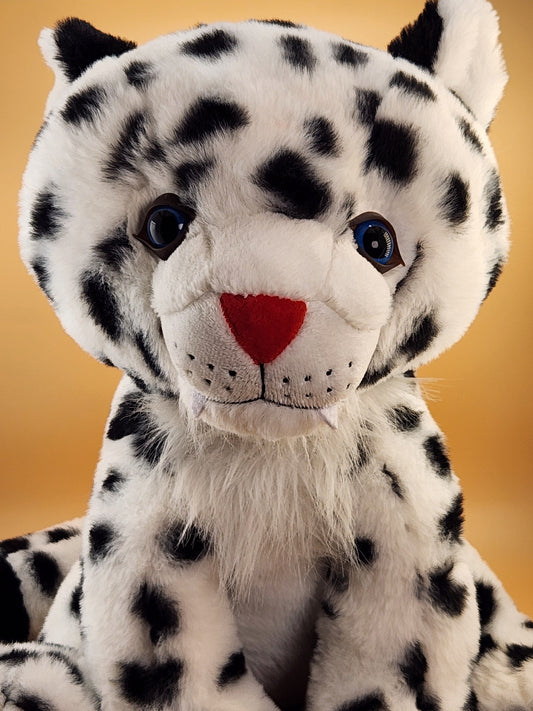
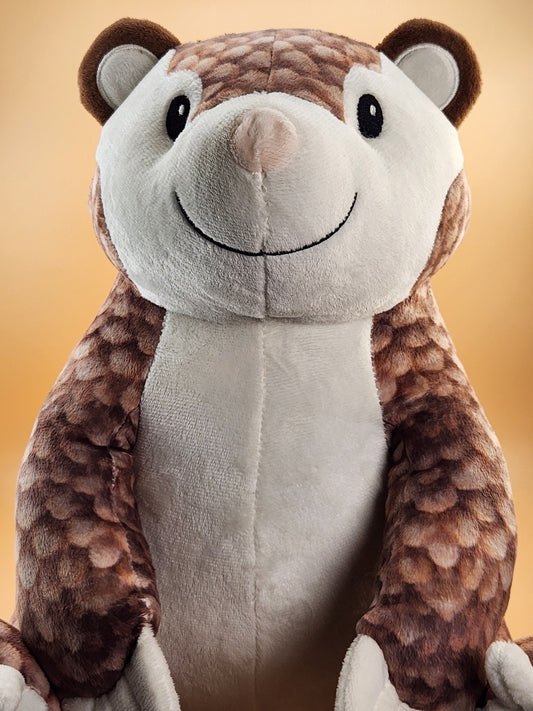
A plush toy often starts with an animal, not a factory. Paulie the Pangolin, Ruby the Red Panda, Tashi the Snow Leopard, and Wayne the Whooping Crane aren't generic characters. They're shaped by real species, real habitats, and real conservation stories.
That changes the job of design. The team isn't only asking, “Will this be cute?” They're also asking, “Will a child recognize what makes this animal special?” A pangolin's scales, a crane's long legs, or a red panda's striped tail can't be treated like decoration. Those details carry the educational purpose.
A toy can hold a mission
A mission-driven plush has to do two things at once. It has to comfort a child, and it has to stay faithful enough to the animal it represents that the toy becomes a doorway to curiosity.
That dual role affects every later decision:
- Character shape: Rounder shapes feel friendlier, but too much simplification can erase what makes the species distinct.
- Surface details: Embroidery may be safer and softer than hard attachments, but it also changes expression and realism.
- Educational add-ons: A printed card or hangtag needs room in the budget and packaging plan from the start.
A beloved plush doesn't begin as a product unit. It begins as a translation problem: how to turn a living animal into something soft, durable, and emotionally legible to a child.
This work sits inside a very large industry, not a tiny craft niche. The global stuffed and plush toy market is estimated at $10.2 billion in 2024 and projected to reach $19.8 billion by 2034, according to Fact.MR's stuffed and plush toys market report. That scale matters because it raises the stakes for how toys are made. When millions of plush items move through global supply chains, design discipline, compliance, and material choices stop being optional extras.
Why parents often underestimate the process
Most adults see the finished result. They notice softness, maybe the stitching around the nose, and whether the toy feels giftable. They don't see pattern files, sample revisions, seam tests, or the debate over whether one plastic trim would complicate safety testing.
That hidden complexity is exactly why manufacturing plush toys deserves a closer look. The cuddly exterior is the last chapter, not the first.
From Sketch to Sample The Design and Prototyping Phase
A plush toy designer works a bit like an architect. The charming face sketch matters, but the unseen blueprint matters just as much. If the plan is weak, the finished toy slumps, twists, or looks adorable from one angle and odd from another.
The first pass usually starts on paper. Designers study reference photos of the animal, then simplify. A whooping crane's long beak might need softening for a child-friendly look. A pangolin's armor-like texture has to be suggested without creating a rigid toy.

Turning personality into a technical plan
Once the character direction is approved, the artwork has to become a tech pack. That's the practical document that tells a factory what to make.
A good tech pack usually spells out things such as:
- Overall dimensions so the plush keeps the intended size and proportions.
- Fabric placement for each panel, such as belly, tail, ears, wings, or feet.
- Embroidery files for eyes, nose, whiskers, spots, or feathers.
- Seam and stuffing notes that describe where firmness should change.
- Construction warnings for features that may affect safety or durability.
Many people find this aspect confusing. A cute drawing isn't enough. Plush is a three-dimensional sewn object, so every curve in the sketch has to be translated into pattern pieces that can be cut, stitched, turned, and stuffed.
Why the first sample almost never gets approved
The prototype is the first physical truth test. On screen, a tail may look balanced. In fabric, it may pull the body backward. A smiling embroidered face may sit too high once the head is stuffed. Tiny problems multiply once a toy gains volume.
That's why revision is normal. Designers often adjust the pattern, not because the original concept failed, but because soft goods behave differently than flat drawings.
A practical example helps. If a red panda plush needs a large striped tail, the team may test several options:
- Printed stripes feel simpler but may lose depth.
- Separate fabric bands add realism but create more seams.
- Embroidered stripe details can improve control in small areas but may stiffen the fabric.
Practical rule: If a design detail can't survive turning, stuffing, and repeated hugging, it isn't ready for production.
One product option in this space is Snugglebug, which makes species-specific plush toys modeled after real endangered animals and includes educational cards tied to wildlife learning. That kind of product brief gives the prototype stage a second job. It has to preserve both emotional warmth and species recognition.
Prototyping saves pain later
Parents often think prototyping is about aesthetics alone. It isn't. This stage catches expensive downstream problems before they scale: twisted limbs, awkward seams, hard edges, poor balance, or faces that drift away from the original character.
When manufacturing plush toys goes well, that's usually because the prototype phase asked hard questions early.
Choosing the Right Stuff Materials and Sustainability
Materials decide more than softness. They affect washability, seam behavior, color consistency, safety planning, and whether the final toy feels like a keepsake or a carnival prize.
Plush factories commonly work with polyester-based plush fabrics and PP cotton filling, especially in larger global production systems, as noted in the earlier market discussion from Fact.MR. That's the baseline many buyers start from. But a mission-driven brand usually has to push the conversation further.

What each material changes in the toy
Fabric is the toy's skin. Filling is its posture. Thread and trim are the fine motor details that hold character together.
Here's where readers often get stuck: a “sustainable material” choice isn't just a moral sticker. It can alter manufacturability.
| Attribute | Conventional Materials | Snugglebug's Sustainable Choices |
|---|---|---|
| Outer fabric feel | Often consistent and easy to source in standard plush textiles | May prioritize recycled polyester or thoughtfully sourced natural blends when the hand-feel and durability fit the design brief |
| Filling behavior | Standard fill can be predictable during stuffing | Recycled filling options may require closer testing for loft, clumping, and recovery |
| Color consistency | Often easier to match across large runs | Sustainable inputs may need tighter review for dye consistency and lot matching |
| Sourcing complexity | Commonly available through established factory channels | Can require more coordination, documentation, and early supplier alignment |
| Brand meaning | Usually chosen for cost and familiarity | Chosen to support lower-impact goals alongside softness, durability, and safety |
Sustainability changes the production conversation
The tradeoff isn't imaginary. The choice of sustainable materials like recycled polyester can affect manufacturability, hand-feel, and cost, and one industry report cited in this plush-toy sustainability discussion describes a market estimated at about USD 11.4 billion in 2023 and projected to reach around USD 18.2 billion by 2032. The useful takeaway isn't just that demand is growing. It's that brands need to ask whether a sustainability claim changes the actual factory process or only the packaging language.
A practical example makes this clearer. Suppose a toy uses recycled polyester plush on the body and a different fabric on the paws. The factory may need to check whether those fabrics stretch differently, whether they sew cleanly at the same stitch tension, and whether the surface sheds fibers differently after brushing.
The best choice depends on the child's experience
Parents usually ask, “Is it soft?” Designers also ask:
- Will it stay soft after washing?
- Will the seams hold if a child drags it by one arm?
- Will the face stay expressive if embroidery sits on a stretchier fabric?
- Will the fill recover after being compressed in shipping?
Those are material questions.
Some brands also explore alternatives such as bamboo-derived textiles for certain applications. For families curious about that category, this guide to what bamboo fabric is helps explain why fiber language can get confusing fast.
Material selection is where ethics becomes tactile. A child doesn't cuddle a sourcing policy. A child cuddles the direct result of it.
In manufacturing plush toys, the best material choice is rarely the cheapest line item or the greenest sounding phrase. It's the combination that delivers safety, softness, durability, and honesty.
The Assembly Line Patterning Cutting and Sewing
Once the sample is approved, the toy stops being a concept and becomes a stack of pattern pieces. This stage looks mechanical from the outside, but it behaves more like tailoring. Every curve has to land where the character needs structure, softness, or motion.

Pattern complexity shapes the final character
Not all plush patterns are equal. A simple bird body may rely on broad mirrored panels and a few gussets. A pangolin-inspired design can require many more pieces if the maker wants layered scale effects, shaped limbs, or a curled tail that feels intentional rather than floppy.
That complexity changes the whole sewing flow:
- More panels mean more seam intersections to align.
- Directional fabrics must be cut so the nap runs consistently.
- Small shaped pieces require steadier handling and tighter quality checks during assembly.
A helpful analogy is a suit jacket versus a sweatshirt. Both are garments. One forgives simplification. The other depends on precise structure to look right.
Why toys are often sewn inside out
Many plush bodies are stitched inside out first, then turned right side out before stuffing. That method hides seam allowances and gives the toy a cleaner surface.
The challenge is that turning puts stress on curves, corners, ears, tails, and narrow limbs. If the seam allowance is too bulky, the shape puckers. If the stitching is too close, the seam may weaken. If the opening for turning is poorly chosen, the body can distort before stuffing even begins.
A practical factory example might look like this:
- Cut body panels from the approved pattern layout.
- Attach facial embroidery before the head is closed.
- Sew small appendages such as ears, wings, or arms separately.
- Join main panels and leave a controlled opening for turning and stuffing.
- Turn and inspect to make sure curves and expression still read correctly.
This short factory video helps show the rhythm of plush construction in motion.
Skilled sewing is where charm survives production
This is the point where many promising designs lose their magic. An eyebrow angle shifts. A beak points too high. A leg seam twists. Mass production doesn't automatically flatten personality, but weak process control can.
That's why experienced sewing teams matter so much in manufacturing plush toys. They aren't just joining fabric. They're preserving expression across repeated builds.
Bringing It to Life Stuffing Finishing and Quality Control
An unstuffed plush shell looks surprisingly lifeless. The character appears only when fill is distributed with judgment. Too much stuffing and the toy feels rigid. Too little and it collapses into itself. Uneven stuffing creates the worst result of all. One cheek puffs up while the other sinks, or the body leans to one side.
That's why stuffing is less like filling a pillow and more like shaping clay from the inside.
Stuffing creates posture and personality
Different areas need different firmness. A belly may need a squishy feel. A neck may need support so the head doesn't droop. Feet may need enough structure to help the toy sit well for gifting or display.
A careful team checks things such as:
- Symmetry: Does the left arm feel like the right arm?
- Recovery: After compression, does the plush bounce back into shape?
- Surface smoothness: Are there lumps, gaps, or overly hard pockets?
- Character posture: Does the animal sit, stand, or drape as intended?
Finishing comes next. Loose threads are trimmed. Embroidered features are checked for clarity. Surface details are cleaned up. If the toy uses embroidery for eyes and nose instead of hard plastic parts, the team also verifies that the expression is consistent from unit to unit.
Quality control works best in stages
Quality inspection shouldn't wait until the toy is boxed. Industry guidance recommends checking incoming materials, monitoring in-process sewing, and performing final inspection on issues like stuffing distribution and seam strength, according to this guide to plush supplier quality checks.
That staged approach matters because rework gets expensive after the shell is stuffed and closed. A hidden seam problem discovered at the end can mean opening the toy, removing fill, repairing the issue, restuffing, and closing again. That costs time and can also reduce consistency.
Factory mindset: Catch the problem when it is flat fabric, not after it becomes a finished friend.
A strong process often includes acceptance notes in the tech pack for seam appearance, stuffing symmetry, and recovery shape. Some teams also use end-of-line metal detection to help catch stray metal or broken needle fragments before shipment.
Finishing touches are small, but they carry trust
Parents tend to notice the face first. Gift buyers notice presentation. Children notice the overall feel immediately. That's why the “last five percent” of work matters so much.
A few finishing choices often shape the whole perception of quality:
- Embroidery placement: A few millimeters can change expression from gentle to startled.
- Thread cleanup: Loose threads make a toy feel rushed.
- Surface grooming: Brushing or smoothing the plush can restore the intended texture after sewing.
- Washability planning: Fabrics and finishes should hold up to real family life, not just shelf display.
Families shopping for plush they can live with often care about easy care as much as softness. This overview of machine-washable stuffed animals is useful because it connects construction choices to what happens after the gift is opened.
Good finishing makes a toy look polished. Good staged quality control makes it worthy of trust.
Ensuring Safe Cuddles Testing and Global Certifications
Safety language can feel intimidating because it arrives as acronyms. ASTM. CPSIA. EN 71. CE. Parents don't need to memorize each code, but they do deserve to know what responsible manufacturing is checking for.
The simplest way to think about it is this: every toy needs a safety recipe. The ingredients, the construction method, and the intended age use all affect which tests and documents apply.

What the standards are actually looking at
In the United States, ASTM F963 is mandatory for children's toys under CPSIA, and it covers mechanical, chemical, and flammability requirements, according to the U.S. Consumer Product Safety Commission toy safety guidance.
For plush toys, that can touch many design choices:
- Mechanical risks: Seams, fasteners, wires, and small attached parts
- Chemical risks: Coatings, inks, plastic parts, and accessible materials
- Flammability risks: Textile behavior under required testing conditions
Readers often assume safety testing happens only after design is finished. In practice, compliance starts much earlier. A single decision, such as adding a plastic nose or removable outfit, can create new testing requirements.
Designing for safety is easier than redesigning for compliance
A thoughtful plush team reduces risk at the concept stage. Embroidered eyes are a classic example. They don't just shape the toy's look. They may also avoid some of the concerns that come with attached hard components.
Another example is printed fabric. It can look harmless from a distance, but inks and coatings may change the chemical testing path. The same goes for metallic threads, accessories, and mixed-material trims.
Safety is easiest to build in when the toy is still an idea. It is hardest to bolt on after the character has already been approved.
For brands selling across regions, the paperwork can be just as important as the lab work. The United States, the European Union, and other markets each have their own frameworks, and the exact path depends on the product's features. Responsible teams don't ask only whether a toy can be made. They ask what documentation, factory controls, and test planning are needed before it ships.
That discipline may not be visible in a child's bedroom, but it's part of what makes a plush toy feel safe enough to become a daily companion.
From Our Partner to Your Porch Logistics and Conscious Choices
A finished toy still isn't ready for a child until the last practical steps are handled well. The manufacturing partner has to pack it correctly, label it clearly, and move it through a supply chain without undoing the care built into the product.
That's where values become operational. Ethical claims mean little if the brand doesn't choose partners who can document materials, follow inspection routines, and communicate clearly about changes before production begins.
Costs influence values in real ways
Scale economics heavily shapes plush production. For a small batch under 1,000 units, a plush toy can cost about $5 to $20 per unit, while production of 10,000 units or more can reduce that to roughly $2 to $10 per unit, according to this plush toy manufacturing cost breakdown. The same source notes that packaging can add $0.50 to $2 per unit, and small-batch projects may require $500 to $3,000 in design and prototyping expenses.
Those numbers explain why SKU planning matters so much. A brand that launches too many variations too early may spread development costs across too few units. A brand that forecasts carefully has more room to keep educational inserts, better materials, or cleaner packaging choices in the final product.
Conscious logistics is more than shipping speed
Packaging is one of the easiest places for a brand's values to become visible. The simplest responsible questions are often the most useful:
- Does the package protect the toy without excessive waste?
- Are labels clear enough for retailers, parents, and compliance needs?
- Can educational inserts survive transit without becoming clutter?
- Does the unboxing feel thoughtful rather than overbuilt?
Partner selection matters just as much. A good factory partner flags sourcing changes, keeps records, and respects agreed quality standards. A weak partner may substitute a trim, change a fabric lot, or rush a packaging step that affects presentation or compliance.
For families interested in the broader packaging and product impact side of the category, this overview of eco-friendly plush toys gives useful context about how greener decisions extend beyond fabric alone.
The last mile should complete the story
The toy that arrives on a porch should feel consistent with the reason it was made. If the mission is wildlife education and gentler consumer choices, the packaging, inserts, and labeling should support that story rather than interrupt it.
That's what gives manufacturing plush toys real depth. The process doesn't end when the final seam closes. It ends when a child opens the box, hugs the animal, reads the card, and starts caring about a species that used to feel far away.
A thoughtful plush toy can do more than decorate a nursery. It can comfort a child, teach something real, and support a bigger purpose. Families who want that kind of gift can explore Snugglebug, a mission-driven plush brand centered on endangered animals, educational storytelling, and conservation support.