
Nature Journal for Kids: A Hands-On Family Guide
Saturday morning often starts the same way in many homes. Kids spill outside, a parent looks at the yard, porch, or park bench, and the big question lands fast, what should they do with all that curiosity?
A nature journal for kids gives that energy a shape. It turns a walk, a backyard pause, or a schoolyard sit-spot into a repeatable habit of looking closely, writing down what changed, and coming back again later to compare what's new. That matters because the best journals are not random sketchbooks. They are time-stamped field records that help children notice patterns in weather, plants, insects, and tracks over time, using the simple routine of recording date, time, location, and weather, then observing first and writing second U.S. Fish and Wildlife Service guide.

Table of Contents
- What a Nature Journal Actually Does for Kids
- Three Age-Based Page Templates You Can Copy Tonight
- Building the Journal and Your First Entry
- Seasonal and Habitat Activity Plans
- Connecting Entries to Real Wildlife and Conservation
- Adapting the Journal for Different Learners
- Sharing, Preserving, and Growing the Journal
What a Nature Journal Actually Does for Kids
A weekend outdoors can feel productive and unproductive at the same time. Children run, collect, point, and ask questions, but without a simple structure, the day fades into “fun” instead of becoming a record they can revisit. A nature journal for kids solves that problem by giving families a repeatable way to turn loose observation into something that can be compared across visits.
The four habits that make the page useful
The first habit is to write down date, time, location, and weather on every entry. The U.S. Fish and Wildlife Service says those details make observations more useful because they can be compared over time, which is exactly what a notebook needs if it is going to show seasonal change instead of one-off memories U.S. Fish and Wildlife Service guide. A child who notes “Tuesday, 4:10 p.m., backyard oak, windy” can later compare that page with another afternoon in the same place and notice what changed.
The second habit is observe first and write second. That small order matters because children often want to label too quickly, which pushes them toward guessing instead of looking. The third habit is to combine pictures, words, and numbers, so the page can include a sketch, a label, a tally, a measurement, or a rough count rather than only an illustration Natural History Museum activity guide. The fourth habit is to revisit the same sit-spot again and again, because repeated visits across seasons build pattern recognition, not just a pile of pages.
Practical rule: a good first page is not complete when it looks pretty, it is complete when it helps a child answer, “What did I actually notice?”
The rest of this guide turns those habits into page layouts, a simple build routine, seasonal ideas, and wildlife connections that keep the notebook from becoming another abandoned craft project. Families looking for a companion activity can also pair the journal with the animal-behavior ideas in this conservation journal resource for families.
A quick example from a backyard
A child at a fence line might see a robin hopping through leaves. Instead of asking for a perfect drawing, the parent can prompt a date, a quick sketch, and one number, maybe the number of worms or the number of steps between the bird and the porch. That page becomes more useful than a simple picture because it captures a real moment in a way the child can compare later.

Three Age-Based Page Templates You Can Copy Tonight
A single journal format does not work equally well for a preschooler, an early reader, and a tween who wants real field notes. The best nature journal for kids matches the page to the child's current skills, then leaves room to grow. That is why the most helpful home setup is not “one perfect template,” but three simple versions that meet children where they are.
Page layout by age band
| Age band | Core layout | Skills assumed | Sensory anchor |
|---|---|---|---|
| Preschool | One large sketch box, weather stickers, and three picture prompts | Pointing, naming, matching, simple dictation | Color, texture, sound |
| Early elementary | Labeled diagram space, I notice / I wonder / It reminds me of lines, one measurement strip | Beginning writing, counting, simple labeling | Shape, size, movement |
| Tween | Small data table, species ID line, short reflection paragraph | Independent writing, comparison, note-taking | Pattern, detail, change |
The preschool page should stay visually simple. A big box for a leaf, bug, feather, or rock keeps attention on one object, and weather stickers reduce the pressure of writing before a child is ready. The early elementary page can add the familiar I notice, I wonder, It reminds me of structure, which helps children move from description into curiosity without feeling trapped by blank space Berkeley Greater Good Science Center. The tween page should feel like a real notebook page, with room for a date, a sketch, a measurement, a species name if known, and a short paragraph about what changed since the last visit.
What a finished page might look like
A preschooler might glue in a bark rubbing, circle “windy” on a weather strip, and tell an adult that the tree feels “scratchy.” An early elementary child might sketch the same bark, write pale gray and rough, then add 3 inches next to a leaf outline. A tween might add a small table for leaf length, note the tree's location, and write a reflection about how the trunk looked different after rain.
The best template is the one a child can finish without help every single time.
A useful trick is to let siblings share the same sit-spot but use different page types. That keeps the family together while preventing the youngest child from getting buried under a page that asks for too much writing and the oldest from feeling bored by a sticker-only spread.
Building the Journal and Your First Entry
A journal does not need special supplies to work well. A family can begin with reused printer paper, scrap cardboard covers, and crayons or pencils already in the house. The point is to make a notebook that feels sturdy enough for a child to open, carry, and return to, because young children usually use what is easy to handle, not what looks polished on a shelf.
A simple build routine
One practical setup uses folded 8.5-by-11-inch sheets, assembled into a small booklet. Early-childhood journal-building guidance from ERIC shows that details like hole placement affect how easy the book is to use, including holes measured about 1.5 inches from the top and bottom and a cover punched about 1.75 inches from the top and bottom ERIC journal-building guidance. Those small choices reduce friction, so children spend less energy wrestling with the notebook and more energy adding pages.
Families can keep the materials short and simple:
- Paper: reused printer paper or notebook paper
- Cover: scrap cardboard or a cereal box panel
- Binding: punched holes and yarn, string, or metal rings
- Tools: crayons, pencil, eraser, and a clip if the child likes a firm surface
The first entry works best as a short five-step routine. First, write the location, date, time, and weather. Second, choose one plant or animal, not five. Third, sketch it and label only what can be seen. Fourth, add measurements or counts. Fifth, finish with one question or reflection. That sequence matches museum and educator guidance that keeps the page centered on observation instead of perfectionism Natural History Museum activity guide.
A parent does not need to turn the page into a lesson. A brief prompt, a pencil, and a few quiet minutes are enough.
A backyard oak tree example
A child sitting under an oak tree might start with “backyard, 4:15 p.m., warm, breezy.” The sketch could be a rough trunk with one leaf cluster and a few acorns on the ground. A parent might help with one count, such as the number of acorns in a small patch, then ask, “What do you wonder about this tree?” The child could answer, “Why are some leaves bigger than others?”
That page is enough. It does not need to look finished like a poster. It needs to show that the child noticed, recorded, and asked something real.
Seasonal and habitat rhythm
Best practice: revisit the same spot often enough that the page starts to reveal patterns, not just pretty moments.
The same notebook can keep going through the year if each season gets a slightly different focus. A spring page might hold buds and new leaves. A summer page might hold insects or water sounds. Autumn can bring fallen seeds, changing color, and signs of movement. Winter often makes bark, tracks, and weather easier to notice, especially if families set a small sit-spot routine near a window, porch, yard edge, or another place children can return to without much setup. For families who want a simple place-based next step, a guide on creating a wildlife-friendly garden with Snugglebug-friendly habitat ideas can help turn the outdoor space into a place that supports both observation and care.
The same structure works across ages. A toddler might add one sticker and point to a leaf. An early elementary child might write a short sentence about color or texture. A tween can add a label, a count, and a sentence about what changed since the last visit.
Seasonal and Habitat Activity Plans
A journal that only comes out once gets treated like a craft kit. A journal that returns every season becomes a record of change. The strongest routine is the same one outdoor educators keep pointing families toward, a repeated sit-spot with small, seasonal observation goals rather than a big “nature project” that burns out after one outing Children and Nature Network.
Spring and summer observations
Spring works well for buds, fresh leaves, and returning birds. One prompt can ask children to compare the first new leaf with an older one nearby, while another can ask them to track how the same patch of ground changes after rain. In a schoolyard or balcony, a child can still measure leaf length, note color, or count how many buds have opened.
Summer shifts attention to insects, pollinators, and water. A child can sketch a beetle on a fence rail, note the time of day, and record whether it was moving, resting, or feeding. Another easy prompt is to listen for sound, then write down what can be heard from a bench, porch, or park edge.
Autumn and winter observations
Autumn brings leaves, seeds, and movement. Families can ask children to compare leaf color from one week to the next, gather safe fallen seeds, or note signs that birds are moving through. Winter changes the page again, because tracks, bark, and weather stand out more clearly when greenery thins.
A child in a low-biodiversity setting still has enough to record. Apartment balconies, parking-lot trees, schoolyard fences, and sidewalk cracks all offer something measurable, such as wind direction, bark texture, cloud cover, or the presence of one insect. The important thing is consistency, not wilderness.
- Spring prompt: draw a new leaf, then write whether it looks smooth, shiny, or fuzzy.
- Summer prompt: count pollinators visiting one flower patch for a short visit.
- Autumn prompt: compare two fallen leaves and note one visible difference.
- Winter prompt: sketch a track or bark pattern and label the texture.
For families who want a wildlife-friendly outdoor space that supports better journaling, the garden ideas in this wildlife-friendly garden guide fit naturally with the same habit of noticing.
Connecting Entries to Real Wildlife and Conservation
A journal page becomes more meaningful when it connects local observation to a real animal living somewhere else. That connection helps children see that a beetle on a sidewalk, a crane in a marsh, or a snow leopard in a mountain habitat are all part of the same natural world, just on different scales. The most memorable pages often start small and end with one thoughtful link to a species that needs care.
A backyard page that leads outward
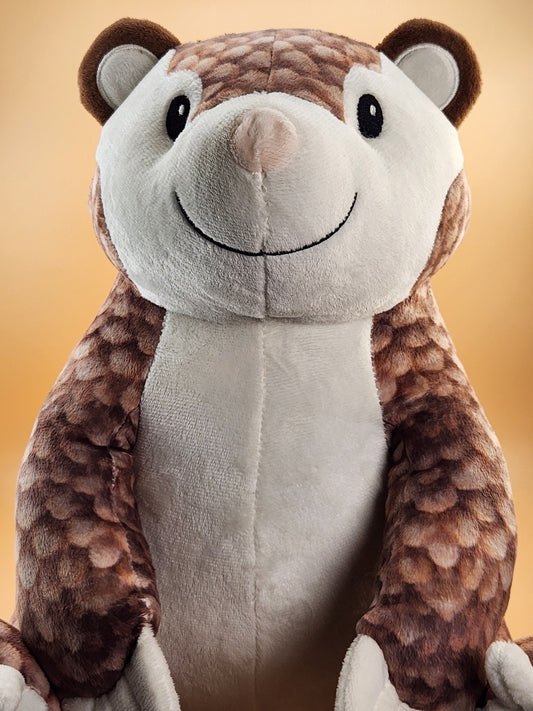
A child sketching a backyard beetle can place it beside a note about pangolin diets. The local insect stays the star of the page, but the comparison gives the notebook a wider horizon. A parent can then ask what both animals need, what they eat, or why hiding places matter.
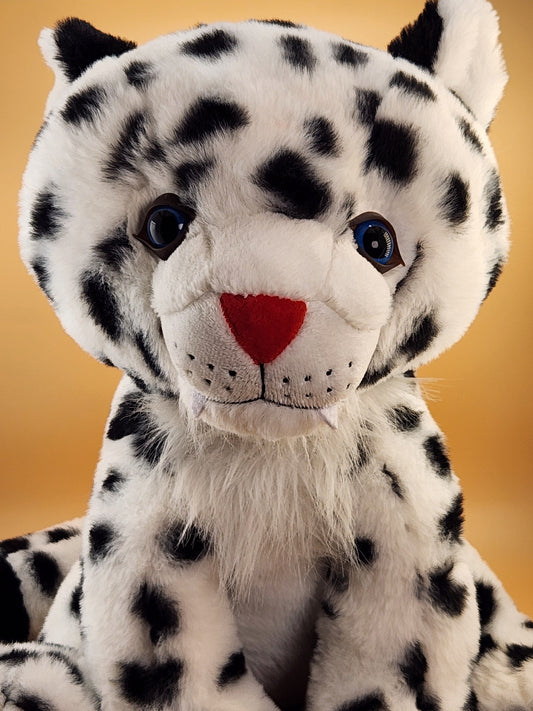
That same pattern works with different plush-inspired species stories. A spring sit-spot can lead to a note about Paulie the Pangolin and the leaf litter it searches through. A summer insect page can pair naturally with Ruby the Red Panda and the trees or bamboo cover animals need to feel safe. An autumn bird page can connect to Wayne the Whooping Crane and migration questions. A winter habitat page can bring in Tashi the Snow Leopard and the importance of rocky, protected terrain.
The point is not to turn every page into a lesson sheet. The point is to let one honest observation open the door to a larger conservation idea. When children write what they saw first and then connect it to an animal they care about, the page starts to support empathy as well as attention.
Real conservation learning starts when children care about a creature they can name, even if they only met it through a page, a photo, or a toy.
The family can also make the page more concrete by adding one fact about habitat, diet, or threat in a single sentence, then leaving the rest of the space for the child's sketch. That keeps the page child-led while still tying the entry to real wildlife. Families interested in the science side of that connection can use the animal research resource for kids as a follow-up after the page is finished.
Adapting the Journal for Different Learners
Not every child is ready for the same page. Some can label insects with confidence, while others need stickers, dictation, or a shorter time window to stay engaged. A nature journal for kids works best when the adult matches the entry to the child's motor skills, attention span, and sensory comfort instead of forcing everyone into one format.
Simple supports that lower the barrier
For very young children, the page can be mostly pictures with a few labels added by an adult. For children who struggle with writing, tracing outlines, leaf rubbings, and bark rubbings give them a way to participate without demanding too much fine motor control NSW Science K-6 nature-journaling resource. For children with attention challenges, a short timed observation can work better than an open-ended outing, because it gives the task a clear start and stop.
Caregivers can use plain language that lowers pressure:
- For pre-readers: “Draw one thing you noticed, and tell an adult one word about it.”
- For reluctant writers: “Pick one object, then let the page stay short.”
- For sensory-sensitive children: “Choose a comfortable spot first, then stay as long as it feels good.”
- For mixed-age groups: “Let the older child label the page while the younger child makes the rubbing.”
The main friction point is perfectionism. Children often freeze when they think a page has to look like art class, so adults do better when they praise noticing, not neatness. Another good support is a peer buddy or sibling helper, especially in a small group, because one child's page often gives another child a concrete idea to copy without feeling lost.
The most useful question is not “Can the child make a full page?” It is “What is the easiest possible page that still records a real observation?” That shift keeps the journal usable for more families, more ages, and more learning styles.
Sharing, Preserving, and Growing the Journal
A finished page should keep living after the outing ends. Families can photograph pages and send them to grandparents, keep a digital backup in case the notebook gets wet, or gather a few favorite entries for a family sit-spot night. Those small rituals make the journal feel like part of family culture instead of a disposable assignment.
Keeping momentum without pressure
Blank-page paralysis usually means the prompt is too open, so the fix is a single object or a single species. Perfectionism usually means the child thinks the page has to look “right,” so the fix is a short timer and a reminder that rough sketches count. Lost momentum in mid-season usually means the journal drifted too far from daily life, so the fix is to leave it by shoes, backpacks, or the door where it gets seen.
A family can also donate completed journals to a classroom or nature center when a notebook is full. That keeps the pages useful and gives children a sense that their observations matter beyond home. Another easy habit is to revisit old pages at the start of each new season, which helps children notice patterns without needing a brand-new project every time.
A simple 30-day starter plan can keep the routine realistic:
- Week 1: build the journal.
- Week 2: complete one backyard or sidewalk entry.
- Week 3: revisit the same spot and compare the page.
- Week 4: share one favorite entry with another family member.
That is enough to start. Once the routine is in place, the notebook stops being a school task and becomes a steady way to notice the living world together.
Snugglebug gives families a way to connect journaling with real wildlife stories, so curious kids can care about animals they meet on the page and in play. If this guide helped shape a first notebook, visit Snugglebug to explore plush companions and conservation-minded gifts that fit right alongside a child's nature journal.