
Global Citizenship Education a Guide for Modern Parents
A parent stands in the doorway at bedtime, holding a well-loved plush animal while a child asks a huge question in a very small voice. Why do animals lose their homes? Why do some children speak different languages? Why should anyone care about people far away?
That moment is where global citizenship education starts. Not with a lecture. Not with a worksheet. With a child's natural curiosity and an adult's willingness to stay in the conversation.
Many families and teachers want the same thing. They want children who are capable and confident, but also gentle, fair-minded, and aware that their choices affect other people and the planet. That hope has a formal name in education: global citizenship education. It sounds lofty at first, yet it lives quite comfortably in ordinary places like the reading corner, the breakfast table, the classroom rug, and the toy shelf.
For young children, abstract ideas need something soft and familiar to hold onto. Plush toys can do that work beautifully. A child may not grasp “interdependence” as a term, but that same child can understand that a snow leopard needs a safe mountain home, that a crane needs wetlands, and that kindness can travel from one small action to another. Play turns distant issues into something touchable. Families exploring plush toys that inspire environmental awareness in children often notice that children open up faster when a toy gives the conversation a face, a habitat, and a story.
Table of Contents
- Raising a Little Citizen of the World
- What Is Global Citizenship Education Exactly
- Why GCE Matters for Your Child's Future
- Key Frameworks for Teaching Global Citizenship
- Practical GCE Activities with Snugglebug Friends
- Bringing GCE into Your Home or Classroom
- Vetted Resources and Your Next Steps
Raising a Little Citizen of the World
A child lines up stuffed animals for a pretend picnic. One toy gets the biggest cup. Another gets left out. An adult watching nearby has a choice. Ignore it as random play, or gently ask, “Who still needs a place at the table?”
That question may look small, but it carries the heart of global citizenship education. Children learn that fairness matters. They learn to notice who's included and who isn't. They begin to understand that care isn't only for people who look like them, live near them, or speak exactly like they do.
Everyday moments already teach values
Much of early learning happens before anyone uses formal educational language. When a child shares a blanket with a plush fox, worries about a bird in winter, or wonders where a banana came from, that child is already building habits of attention. Global citizenship education gives adults a clearer framework for guiding those moments.
Many parents and teachers feel intimidated by the topic. They assume it requires deep geopolitical knowledge or a perfectly designed curriculum. It doesn't. For young children, it begins with three plain ideas:
- People live differently: homes, foods, clothes, languages, and traditions vary.
- Those differences deserve respect: curiosity is welcome, mocking isn't.
- Actions affect others: what children do in one room can shape how they think about the wider world.
Global citizenship education isn't another pile of content to squeeze into childhood. It's a way of teaching children to notice, care, and respond.
A softer entry point for big conversations
Plush play helps because it lowers the stakes. A child who might resist a serious conversation about fairness may eagerly explain why the tiger toy needs a turn, why the panda feels lonely, or why the crane's marsh must stay clean. Through pretend play, children rehearse the same social and moral moves they'll need later in friendships, communities, and civic life.
That's why the phrase little citizen of the world fits so well. No child needs to solve global problems today. A child does need chances to practice empathy, curiosity, and responsible action in forms that match early development.
What Is Global Citizenship Education Exactly
Global citizenship education can sound bigger than it is. The clearest way to explain it is this: it teaches children to be good neighbors on a global scale. A good neighbor learns names, respects differences, helps care for shared spaces, and responds when someone is hurting. Global citizenship education extends that same posture beyond the front door.

A simple way to define it
For adults, the term can be grounded in everyday examples. It includes learning about other cultures, noticing unfairness, caring for the natural world, and participating in solutions at an age-appropriate level. In a classroom, that may look like discussing where water comes from or reading a story set in another country. At home, it may look like asking how a toy was made, who made it, and what caring for the planet looks like during cleanup time.
UNESCO describes the framework in three parts. Global Citizenship Education operates through three distinct conceptual dimensions validated by UNESCO: the cognitive dimension, the socio-emotional dimension, and the behavioral dimension. The cognitive dimension involves knowledge such as human rights and systems of inequality. The socio-emotional dimension focuses on empathy and a sense of belonging to a common humanity. The behavioral dimension centers on acting responsibly to resolve local and global challenges, as outlined in UNESCO's ABCs of Global Citizenship Education.
The head, heart, and hands
A helpful classroom shorthand is head, heart, and hands.
| Dimension | What it means in plain language | Plush-based example |
|---|---|---|
| Head | Learning about the world | A child finds where a red panda lives on a map |
| Heart | Feeling empathy and connection | A child wonders how an animal feels when its habitat changes |
| Hands | Taking responsible action | A child helps sort recycling or joins a litter pickup |
Children don't need to master these in order. They move back and forth between them. A child may first feel concern for a plush penguin, then ask questions about ice, then decide to turn off unused lights. That sequence still counts.
Confusion often starts when adults assume global citizenship education is only about world news or culture festivals. It's broader than that. It includes justice, belonging, environmental care, peaceful problem-solving, and thoughtful participation.
Practical rule: if an activity helps a child learn about others, care about others, and do something responsible, it fits global citizenship education.
For young children, the “do something” part should stay concrete. Feed the classroom plants. Make a welcome card for a new student. Pretend to build a safe habitat for a toy animal. Those acts may be small, but they train the same muscles that later support civic action and ethical decision-making.
Why GCE Matters for Your Child's Future
Children are growing up in communities shaped by migration, technology, environmental change, and constant contact with people whose lives look different from their own. A child doesn't need to memorize every world issue to thrive in that reality. A child does need the habits that help people live, work, and cooperate across difference.
The gap between exposure and understanding
That need becomes clearer when learning outcomes are examined. Based on the 2016 ICCS study across 23 countries, students' understanding of global citizenship ranged from about 40% in some nations to nearly 70% in others, and over 40% of learners in OECD countries failed to demonstrate minimum global competence, according to UNESCO's reporting on global citizenship education. The striking part is that many students report exposure to global issues in school, yet understanding doesn't automatically follow.
That gap matters for parents and teachers because it shows that simple awareness isn't enough. A child can hear about “the world” and still struggle to make sense of fairness, shared responsibility, or respectful disagreement. Global citizenship education helps close that gap by connecting information to emotion and action.
Skills children use far beyond school
The benefits aren't only moral. They're practical.
Children who engage in this kind of learning practice skills that matter in classrooms, friendships, and future workplaces:
- Critical thinking: asking why conditions differ from place to place.
- Communication: listening to unfamiliar perspectives without shutting down.
- Problem-solving: thinking in terms of causes, effects, and possible responses.
- Conflict resolution: learning that disagreement doesn't have to become hostility.
- Identity with openness: feeling secure enough in one's own background to respect someone else's.
A child who learns to ask, “What might that person be feeling?” is building both empathy and social intelligence. A child who compares two homes, two meals, or two ecosystems without ranking one as “normal” and the other as “weird” is building intellectual flexibility. A child who helps repair a torn toy habitat during play is practicing responsibility in miniature.
It prepares children for human complexity
Many adults say they want children to be kind. Kindness is a strong starting point, but it's not the whole picture. Global citizenship education adds depth. It helps children move from “be nice” to “understand difference,” “notice unfairness,” and “participate in caring for shared life.”
A child's future won't be shaped only by what that child knows. It will also be shaped by how that child treats people, interprets difference, and responds to problems that don't have simple answers.
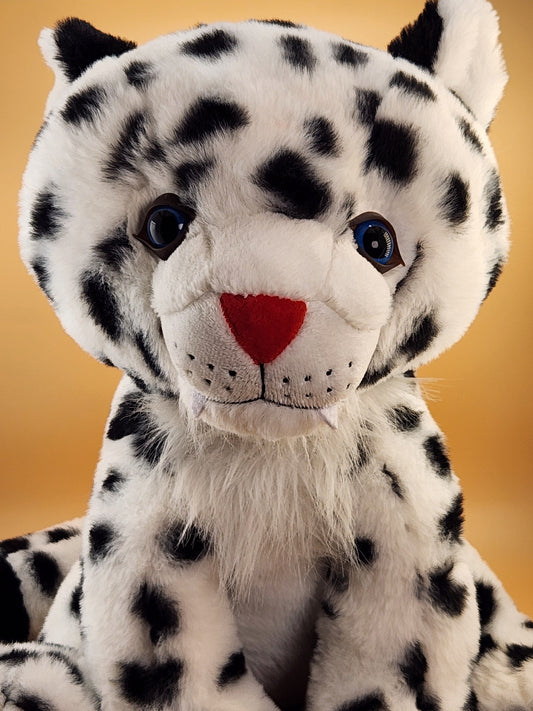
This is why plush-based play can be more than cute enrichment. When a child talks about Tashi the Snow Leopard needing a mountain home or Wayne the Whooping Crane needing healthy wetlands, the child is rehearsing a worldview. The lesson underneath the play is simple and durable. Lives are connected. Care has consequences. Small actions belong to a larger moral story.
Key Frameworks for Teaching Global Citizenship
Global citizenship education isn't just a nice idea adults invented to sound modern. It sits inside established educational frameworks, which helps explain why schools, nonprofits, and curriculum designers keep returning to it.

Why this belongs in real education
One important anchor is the Education 2030 agenda. A strategic pedagogical framework for GCED emphasizes four interrelated dimensions: critical thinking, dialogue, reflection, and responsible being or action, and this is tied to SDG Target 4.7, as described in the Education 2030 framework paper. That's useful because it shows that meaningful teaching in this area isn't about memorizing slogans. It's about how adults teach.
A quick way to understand the framework is to think of four recurring classroom moves.
Four teaching moves that work
Critical thinking
Children ask questions such as “Why does this happen?” and “Who is affected?” With young children, that might begin with a toy animal's habitat. Why does the animal need trees, snow, or clean water? What changes when those disappear?
Dialogue
Children hear perspectives beyond their own. In practice, this can be as simple as taking turns during circle time and learning that classmates have different family routines, holidays, or foods. Dialogue teaches that difference isn't a threat.
Reflection
Children need time to process feelings and ideas. After a book, a video, or a pretend-play scenario, adults can ask, “What stood out?” or “What felt unfair?” Reflection slows learning down enough for it to stick.
Responsible action
Learning should end somewhere visible. The action doesn't need to be grand. It can be cleaning a shared play area, making a welcome sign, reducing waste in the art corner, or checking whether every toy in pretend play has a place to belong.
A simple comparison helps:
| Teaching move | Adult question | Child-sized outcome |
|---|---|---|
| Critical thinking | Why is this happening? | Better questions |
| Dialogue | What do others think? | Better listening |
| Reflection | How does this feel and why? | Better self-awareness |
| Responsible action | What can be done now? | Better habits |
The framework matters because it keeps adults from turning global citizenship education into trivia. The point isn't to produce children who can recite terms. The point is to raise children who can think carefully, connect humanely, and act responsibly.
Practical GCE Activities with Snugglebug Friends
Many adults relax within this space. Once global citizenship education enters the playroom, it becomes much less intimidating.

Plush toys work especially well because they give children a concrete companion for abstract ideas. A toy can stand in for a habitat, a community, a need, or a feeling. Adults looking for more ideas on play-based learning can borrow from fun and educational activities with stuffed animals, then adapt those ideas toward empathy, fairness, and environmental care.
For toddlers and young preschoolers
At this age, the goal isn't explanation. It's repeated practice.
-
Home and habitat baskets
Place a few plush animals beside simple materials like blue fabric for water, blocks for mountains, and green scarves for forests. Ask the child where each animal might feel safe. This builds early thinking about place, needs, and care. -
Feelings with a favorite toy
During pretend play, ask gentle questions. Is the panda lonely? Is the crane tired? Does the pangolin need help? This develops emotional vocabulary and perspective-taking. -
Share the picnic blanket
Set up a toy picnic where one plush is left out. Let the child notice the problem and solve it. This turns inclusion into a visible action, not just a rule adults repeat.
Young children understand justice best when they can move it with their hands.
For preschool and early elementary children
These children can connect stories, places, and actions more clearly.
Map and match
Use a child-friendly world map. Choose one plush animal and find the region where it lives. Then ask three questions: What kind of home does it need? Who else lives there? What helps keep that place healthy?
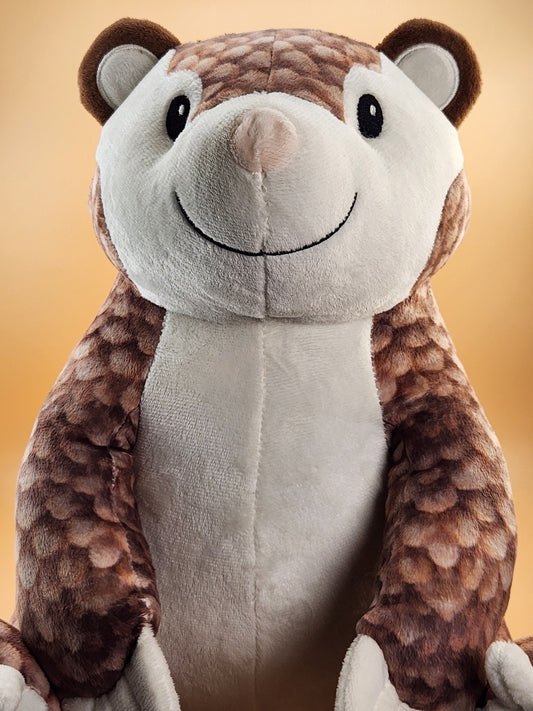
A species-specific plush with an educational card can support this activity. Snugglebug offers plush animals such as Paulie the Pangolin, Tashi the Snow Leopard, Ruby the Red Panda, and Wayne the Whooping Crane, each modeled after a real endangered animal and paired with age-appropriate conservation information. That format helps adults move from cuddly play to grounded conversation without making the activity feel heavy.
A day in the life play scene
Pick one animal and build its day from morning to bedtime. Where does it sleep? What does it eat? What dangers might it face? What would help it stay safe?
This works well because children naturally build narratives during play. Adults can gently guide those narratives toward empathy and systems thinking.
Kind choices sorting game
Create two piles of cards. One pile shows helpful actions, such as cleaning up litter, sharing space, and welcoming someone new. The other shows unhelpful actions, such as wasting water or excluding a classmate from play. Children sort the cards and explain their choices.
This turns values into decisions.
A short video can help adults picture the broader idea in action:
For families and mixed-age groups
Mixed ages need activities with different entry points.
The conservation jar
Choose one local action the family can do together. Pick up litter in a park. Save gently used art supplies. Reduce wasted paper. Add a token, marble, or paper leaf to a jar every time the action happens. The younger child counts the pieces. The older child helps track the purpose.
Storytime from many places
Read books that feature children, families, and environments from different settings. After reading, place a plush toy beside the book and ask, “What would this friend notice here?” The toy gives hesitant children a safer way to speak.
Toy town meeting
Set up several plush animals in a circle and invent a shared problem. The river is dirty. The forest is noisy. One animal has nowhere to sleep. Let children suggest solutions one by one. This activity teaches dialogue, listening, and responsible action.
A useful planning guide is to match activities to the three dimensions introduced earlier:
| Activity | Main dimension | What the child practices |
|---|---|---|
| Habitat basket | Cognitive | Understanding needs and environments |
| Feelings play | Socio-emotional | Empathy and perspective-taking |
| Cleanup or conservation jar | Behavioral | Responsible action |
Adults often worry about saying the perfect thing. They don't need perfect language. They need steady habits. A simple question at playtime can do a surprising amount of educational work: “What does this toy need, and what can be done to help?”
Bringing GCE into Your Home or Classroom
The strongest global citizenship education doesn't sit in a special unit and disappear. It becomes part of the room's culture. Children start to expect questions about fairness, belonging, nature, and responsibility because those questions show up in ordinary routines.

Daily routines that carry big ideas
A school or home doesn't need a dramatic overhaul. It needs consistent signals.
Practical GCED implementation can include embedding inclusion messages in remarks at school events, adopting policies that ensure inclusion of marginalized students, and using communication strategies that support work and school success, according to the Guide to Schoolwide GCED. In plain language, adults shape the environment long before a formal lesson begins.
A few easy routines make a real difference:
- At mealtime: ask where foods come from, who grows them, and what makes food systems fair.
- During storytime: choose books with varied families, languages, and settings.
- At cleanup: connect care for shared space to care for shared worlds.
- At class meetings: use welcoming language that makes every child feel seen.
- During science or social studies: fold in topics like habitats, migration, water, weather, and community life.
Teachers can find related ideas for cozy, values-rich learning spaces in cuddly classrooms, especially when trying to make difficult topics feel safe and age-appropriate.
Classroom cue: children notice what adults repeat. If adults repeatedly name inclusion, fairness, and care, children start to treat those values as normal.
How adults can notice growth
Assessment sounds intimidating, but with young children it can stay observational and humane. No test is needed to see whether understanding is deepening.
Adults can watch for signs such as:
- More curiosity: the child asks about places, people, languages, or animal habitats.
- More empathy: the child notices when a toy, character, or classmate is left out.
- More responsible action: the child suggests helping, cleaning, sharing, fixing, or welcoming.
- More thoughtful language: the child moves from quick judgment to questions.
- More connection-making: the child links a story, a place, and an action.
A simple note-taking chart can help:
| What adults notice | What it may mean |
|---|---|
| Child asks why an animal lost its home | Growing inquiry |
| Child gives every plush a turn | Growing fairness |
| Child suggests saving water | Growing responsibility |
This kind of observation honors what global citizenship education is trying to build. Not polished speeches. Not perfect awareness. A growing habit of seeing beyond the self.
Vetted Resources and Your Next Steps
Global citizenship education grows best when adults keep a small basket of reliable tools nearby. That basket doesn't need to be complicated. It just needs to invite ongoing curiosity.
A simple resource basket
A strong starting mix might include:
- Children's books with global settings and diverse characters so children regularly meet lives beyond their own.
- Kid-friendly nature and geography materials that connect animals, habitats, weather, and human choices.
- Maps and globes that make faraway places visible and discussable.
- Conservation organizations and educational nonprofits that offer child-appropriate materials on wildlife, peace, and sustainability.
- Simple news conversations adapted to a child's age, focused on understanding and care rather than fear.
One large reason to keep going is that global citizenship education is not optional within the overall educational framework. GCED is formally embedded within the United Nations' Sustainable Development Goal 4, specifically Target 4.7, which sets the expectation that by 2030 all learners acquire the knowledge and skills needed to promote sustainable development and global citizenship, as outlined by UNESCO's overview of global citizenship and peace education.
Starting small still counts
That global goal can sound enormous. Early childhood practice is much simpler. Read one thoughtful book. Put one toy on a map. Ask one better question. Help one child notice one unfair moment and repair it.
Those acts may look modest from the outside. They are not modest in a child's formation. They teach that the world is shared, that dignity belongs to everyone, and that caring action can begin in very small hands.
Snugglebug offers one practical way to support that kind of learning through species-specific plush toys paired with educational cards about endangered animals and conservation. Families, gift buyers, and educators exploring mission-driven play materials can visit Snugglebug to see how wildlife education can become part of everyday comfort and conversation.