
Camouflage and Mimicry: A Fun Family Guide
On a trail, in a backyard, or even on the sofa with a child's magnifying glass, the same small surprise keeps happening. Something that looked like a plain patch of bark, a leaf, or a harmless little insect turns out to be an animal that was there all along. That moment of discovery is why camouflage and mimicry feel magical to families, but the magic has a clear purpose, survival.
Animals use visual trickery because being noticed can mean being eaten, and being mistaken for the wrong thing can mean getting a pass from a predator. Over time, natural selection has shaped bodies, colors, behaviors, and even movement patterns that change what another creature decides to do. In conservation, that matters too, because many species that survive by hiding or impersonating are also the ones people rarely notice until habitats are already shrinking.
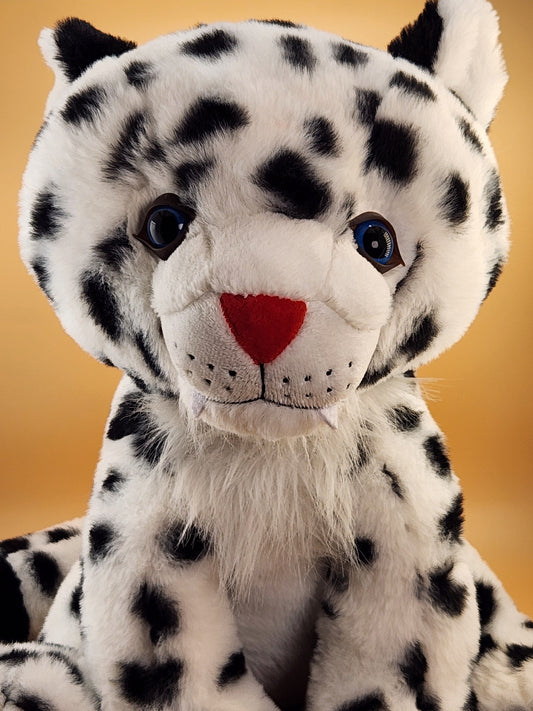
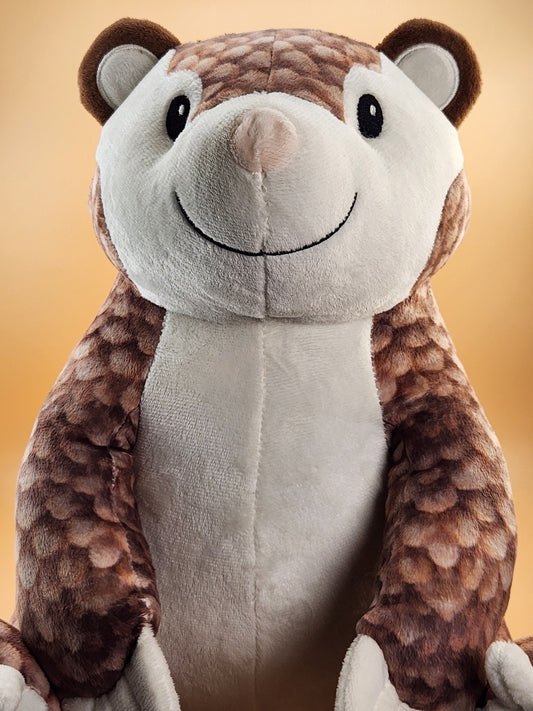
A stuffed animal can make that lesson feel immediate. A plush pangolin curled into a ball, or a plush snow leopard with a smoky gray coat, gives children something soft to hold while they compare what an animal looks like, where it lives, and why that look helps it survive. For families, that kind of hands-on empathy can turn a hidden animal into a remembered one.
Table of Contents
- Why Animals Disguise Themselves
- Defining Camouflage and Mimicry in Plain Language
- How Camouflage Works Across Strategies
- How Mimicry Borrows Another Animal's Reputation
- Meet the Sneaky Animals Behind the Strategies
- Where Camouflage and Mimicry Overlap
- Hands-On Activities and Plush Toy Lessons
- Conservation Impact and Where to Go Next
Why Animals Disguise Themselves
A child spots a moth on tree bark after a family has walked the same trail three times. The adults are looking at branches and roots, but the child notices a shape that seems almost carved into the bark itself. That tiny discovery says a lot about nature, because many animals survive by making the viewer's brain do extra work.
Survival starts with being missed
Predators usually have to make quick decisions. If an animal is hard to separate from its background, or looks like something the predator has learned to ignore, that animal gets more time to live, feed, and reproduce. The 2022 meta-analysis in Proceedings of the Royal Society B pooled 98 experiments on predator search time and 28 experiments on attack rate and found that camouflage made predators spend 62.57% longer finding and attacking prey, while prey attack rates fell by 27.34% overall. The same study found that masquerade produced the strongest effect, increasing predator search time by 295.43%, while background matching cut attacks by 22.69%, disruptive coloration by 18.73%, and motion camouflage by 29.99%. Those results show that concealment is not just a neat look, it changes predator behavior at scale across many species and study designs. The Royal Society B meta-analysis
That's why nature is full of leaves that aren't leaves, twigs that aren't twigs, and patterns that break up a body outline just enough to buy time. The animal is not trying to win a beauty contest. It's trying to avoid a decision from the other side.
Practical rule: if a pattern changes what a predator notices first, it can change whether the animal survives the encounter.
Conservation also fits into this story. The more a family understands how an animal stays safe, the easier it is to care about the places that keep that strategy working, from leaf litter to snowy slopes to wetlands.
Defining Camouflage and Mimicry in Plain Language
Camouflage and mimicry sound similar because both involve deception, but they solve different problems. Camouflage helps an animal avoid detection or look like part of the setting. Mimicry helps an animal look like something else, usually a different living thing, so the observer mistakes its identity.
A simple way to tell them apart
A useful everyday comparison is clothing. Camouflage is like wearing neutral clothes to blend into a crowd. Mimicry is like putting on a fake referee shirt and hoping everyone believes you belong on the field. In both cases, the goal is to influence how someone else classifies what they see, but the target is different.
Britannica describes camouflage as concealing coloration that helps an organism blend into its surroundings, while mimicry is when an organism presents a false identity by resembling another species. Cambridge's Encyclopedia of Darwin and Evolutionary Thought makes the same basic split with different terms, defining crypsis as difficulty being distinguished from the background and mimicry as resemblance between species that gives a survival advantage. The important part is the receiver's response. A predator doesn't need to be fooled forever, it just needs to hesitate, misread, or move on.
Mimicry is broader than color alone. It can involve shape, behavior, sound, or a combination of signals, while camouflage is more narrowly tied to being hard to detect against the environment. That's why the same animal can seem to belong in both categories if it looks like a leaf, a twig, or another object that has no living “identity” of its own.
Clear shortcut: camouflage answers “Can you see me?”, while mimicry answers “What do you think I am?”
That difference helps families stop mixing the two together. It also sets up a useful habit for field observation, asking whether an animal is hiding from notice, or borrowing a reputation.
How Camouflage Works Across Strategies
A coat pattern alone doesn't tell the whole story. Camouflage works through a few different strategies, and each one changes what the observer can detect. The design has to match the animal's real environment, and it has to work at the scale the observer uses, whether that's a bird's eye, a snake's strike distance, or a camera sensor.

Four major camouflage tools
Background matching is the easiest to picture. The animal's colors and tones resemble the setting, like a polar bear against snow or a brown bird against leaf litter. The trick only works if the local background is right, and if the animal's edges don't stand out too sharply.
Disruptive coloration uses bold patches, stripes, or spots to break up the outline of the body. A zebra is the classic classroom example because the stripes interrupt a single smooth shape. Instead of seeing one clear animal, a predator sees a cluttered pattern that's harder to parse quickly.
Motion camouflage leans on movement, or the lack of it. If an animal keeps still or moves in a way that reduces attention, it becomes harder to detect. That's one reason behavior matters so much in real-world concealment.
Masquerade goes a step further. The animal doesn't just blend in, it looks like an irrelevant object such as a leaf, twig, or bit of debris. In the meta-analysis, masquerade produced the largest change in predator search time, which makes sense because the observer may stop looking for prey and start mentally sorting the object into the wrong category.
The technical point from camouflage research is simple, even if the details are tricky. Detection depends on background-foreground similarity, boundary visibility, pattern, texture, and viewing conditions. A design that works at a distance can fail up close if the edges still pop out, or if light hits the body from a different angle. That's why field conditions matter more than a single swatch test.
A camouflage pattern is only as good as the eyes looking at it.
How Mimicry Borrows Another Animal's Reputation
Mimicry doesn't hide an animal in the scenery. It gives the animal a borrowed identity. That identity can be dangerous, unappetizing, or confusing enough to change a predator's decision.
Batesian and Müllerian systems
In Batesian mimicry, a harmless species imitates a harmful or dangerous one. The harmless animal gains protection because predators learn to avoid the model it resembles. In Müllerian mimicry, multiple harmful species converge on the same warning pattern, which helps predators learn faster and more reliably. The key idea is predator learning, because the predator changes behavior after recognizing a signal.
The familiar scarlet kingsnake example shows how this works in the wild. National Geographic notes that the pattern difference matters in the order of the colors, coral snakes are red-yellow-black, while scarlet kingsnakes are red-black-yellow. The mimic isn't trying to vanish. It's trying to be classified as something risky enough that the predator walks away. Britannica's overview of biological coloration
That distinction matters because mimicry can work through more than looks. Zoological literature also treats behavioral resemblance and other kinds of deceptive signaling as part of the wider mimicry family. Some systems rely on visual resemblance, others on sound or movement, and the benefit still comes from steering the receiver's judgment.
The technical difference from camouflage is worth keeping straight. Camouflage says, “Don't notice this.” Mimicry says, “Notice this as something else.” Those are related strategies, but they make different demands on the body and on the environment.
Meet the Sneaky Animals Behind the Strategies
A family often remembers a science lesson best when it attaches the idea to a real animal. A quiet forest floor, a snowy ridge, or a wetland edge can all hold examples that make the strategies feel alive rather than abstract.

From leaf litter to mountain rock
A walking stick insect is the classic masquerade animal, because its body resembles a twig so closely that the viewer's brain often dismisses it before checking twice. A cecropia moth resting on bark can disappear into the rough texture around it. A barred owl can seem like a tree trunk's shadow until it moves. A northern bobwhite can crouch so low in grass and leaf litter that the whole bird seems to fold into the ground. These are all different versions of background matching, disruptive coloration, and behavioral stillness at work.
Some examples feel especially meaningful to children because they are visually striking and easy to picture in a habitat. The pangolin folds into a protective ball, a shape that helps it disappear into the forest floor and also makes a plush version feel instantly recognizable as a survival story. The snow leopard uses a smoky gray coat that shatters its outline against Himalayan rock, a fact that fits neatly with these snow leopard facts for kids. The red panda has rusty fur that works against mossy branches and shaded trunks. The whooping crane uses white plumage and careful stillness on open wetlands, where motion matters as much as color.
A plush animal can help a child notice those details. A red panda toy can sit beside a photo of mossy branches, and the conversation starts naturally. Why is that color useful? What would a predator notice first? What would happen if the background changed?
Why these animals stay memorable
Each of these species gives families a different entry point. Pangolins invite talk about armor and curl-up defense. Snow leopards invite talk about mountain camouflage. Red pandas invite talk about forest texture and seasonal light. Whooping cranes invite talk about stillness, open space, and the challenge of being visible without being easy to catch.
A later-paragraph reminder helps here because kids often need the same idea in a second form before it sticks.
The same animal can be beautiful, strange, and practical all at once. That combination is what makes real wildlife feel more compelling than a cartoon.
Where Camouflage and Mimicry Overlap
The boundary between the two strategies is useful, but it isn't perfectly clean. Scientists often classify examples differently depending on whether the animal is mainly trying to avoid detection, or trying to be mistaken for something else. That's why masquerade sits in the overlap, because a leaf-like insect is both hard to notice and shaped like an irrelevant object.
| Aspect | Camouflage | Mimicry |
|---|---|---|
| Main goal | Avoid detection or blend into the background | Be mistaken for another thing, often a different organism |
| Main mechanism | Match background, break up outline, reduce visibility | Borrow the appearance, signal, or reputation of a model |
| Typical question | “Can the predator see it?” | “What does the predator think it is?” |
| Clear example | A snowshoe hare matching snow | A scarlet kingsnake resembling a coral snake |
| Blurry case | Masquerade can count as camouflage and mimicry | Some mimicry uses background-like resemblance too |
Three tricky cases that help
A leaf insect is a classic overlap case. It uses masquerade to look like a leaf, which makes it hard to detect, but it also functions like mimicry because it resembles a specific object rather than the general background.
A hawk moth caterpillar that mimics a snake head fits mimicry more cleanly. The goal isn't to disappear into the plant. The goal is to trigger the predator's fear or caution by looking like something dangerous.
A snowshoe hare is the clearest camouflage example. It matches the snow, which is a background problem rather than an identity problem.
The practical takeaway is that the labels are tools, not cages. Some animals belong mostly in one category, some in both, and the overlap is one reason the topic stays interesting for students and adults. A careful observer can argue for a classification by asking what the animal is trying to change in the predator's mind.
Hands-On Activities and Plush Toy Lessons
Children learn faster when a body is involved, not just eyes and ears. A backyard search, a paper craft, or a pattern experiment gives camouflage and mimicry a physical shape, and a plush animal gives that shape a face and a name.
Three activities by age
For younger children, try a color-match hunt. Place a few safe objects in a yard or park area, then ask the child to find which ones are easiest to miss against grass, bark, mulch, or leaves. A plush pangolin or red panda can join the search as the “animal” that needs the right background. The point is simple, colors don't matter in isolation, they matter against a setting.
For elementary kids, build a masquerade craft. Cut paper into leaf, twig, or pebble shapes, then let children draw a pattern that makes the cutout look like part of a scene. A plush snow leopard can sit beside the craft as the example of an animal whose body shape and coat help it disappear into rock and shadow. The conversation naturally moves toward what an outline is, and why outlines give predators away.
For older students, run a predator-vision test. Print different patterns and hold them at varying distances in daylight and shade. Ask which pattern is easiest to separate from the background and which loses its edges first. That experiment links directly to the idea that camouflage works differently at different viewing conditions, which is why one design can fail under another light or angle.
The family conversation works best when the child is the observer and the plush is the subject. Naming a stuffed animal, carrying it on a walk, or placing it in a habitat diorama turns the child from spectator into participant. That change builds empathy because the animal stops being a distant fact and becomes a being with a survival problem.
A simple lesson outline
- Start with a plush: Pick one species and ask where it lives.
- Add the habitat: Match the plush to bark, snow, grass, or wetland clues.
- Ask one question: What would a predator notice first?
- End with care: What happens if the habitat changes?
These stuffed-animal activity ideas fit neatly into a living room, classroom, or library program without much setup.
Conservation Impact and Where to Go Next
Camouflage and mimicry are not just clever tricks. They are survival tools that depend on real habitats, real light, and real predator behavior. When snow disappears early, a hare's concealment breaks down. When wetlands shrink, a crane's stillness matters less because the whole setting has changed. The animal hasn't stopped being adapted, the world around it has stopped matching the adaptation.
That's where conservation becomes personal for families. Understanding an animal's strategy makes habitat loss easier to see as a loss of function, not just a loss of scenery. A child who knows why a snow leopard's coat matters will understand why rocky, snowy terrain matters too. A child who knows why a pangolin curls up will see forest habitat as part of the animal's safety system, not just a place on a map.
The same curiosity that helps with identification can also help with action. Visit a local wildlife education center, borrow field guides from the library, and follow a vetted conservation organization that focuses on the species your family cares about. For broader ideas on supporting wildlife protection, this conservation guide gives families a practical place to start. The long history of the word itself, from camouflet in 1611 to the French camouflage first attested in 1887, shows that people have been fascinated by hidden things for a very long time. The history of the word camouflage
A family doesn't need to become field biologists to care well. It only needs to keep noticing the animal, the habitat, and the trick that keeps both alive. That habit turns a plush toy, a walk, and a conversation into a small conservation practice that children can carry for years.
Snugglebug turns wildlife learning into something children can hold, name, and care about. If this guide sparked curiosity about how animals survive through camouflage and mimicry, visit Snugglebug to explore plush companions that connect playtime with real conservation meaning.