
Animal Behavior Learning: A Guide for Curious Kids
A child stands still at the park, watching a squirrel dig into the soil, tuck away a nut, and run off. A minute later comes the question most adults hear sooner or later. Why did it do that?
That small question opens a very big door. Animal behavior learning helps children see that animals aren't moving through the world like wind-up toys. They respond, remember, practice, adapt, and sometimes surprise the people watching them. When a child starts asking why a bird returns to the same branch or why a dog perks up at a familiar sound, that child is already beginning to think like a naturalist.
Play can make those ideas feel safe and concrete. A plush animal on the couch can become a red panda hiding food, a crane finding its way, or a pangolin curling up when startled. Through simple pretend play, observation, and conversation, children can begin linking behavior with needs such as safety, comfort, food, and social connection. Families looking for hands-on ideas can pair this kind of observation with pretend play activities using toys to turn curiosity into empathy.
Table of Contents
- Why Do Animals Do That? Sparking Curiosity and Empathy
- The Secret Codes of Animal Learning
- Your Field Guide to Spotting Animal Smarts
- Playful Learning Activities for Young Conservationists
- How Learning Helps Protect Animals Worldwide
- Nurturing a Lifelong Love for the Animal Kingdom
Why Do Animals Do That? Sparking Curiosity and Empathy

A child who watches closely often notices what adults rush past. The squirrel isn't just running. The pigeon isn't just pecking. The family dog isn't just barking. Each action may be connected to memory, habit, fear, comfort, or a learned response to the world around it.
That matters because empathy grows when children stop asking only what an animal is doing and begin asking why. A rabbit hiding under a bush may not be “being shy.” It may be trying to stay safe. A bird calling loudly may not be “being noisy.” It may be warning others or holding territory. The more children connect behavior to an animal's needs, the more respectful their attention becomes.
Curiosity becomes care
Animal behavior learning gives adults a gentle way to guide that shift. Instead of offering a quick answer, a caregiver can ask, “What happened right before that?” or “What do you think the animal needs?” Those questions teach observation, patience, and perspective-taking.
Practical rule: When a child wonders about behavior, start with needs. Ask about food, safety, comfort, family, or space.
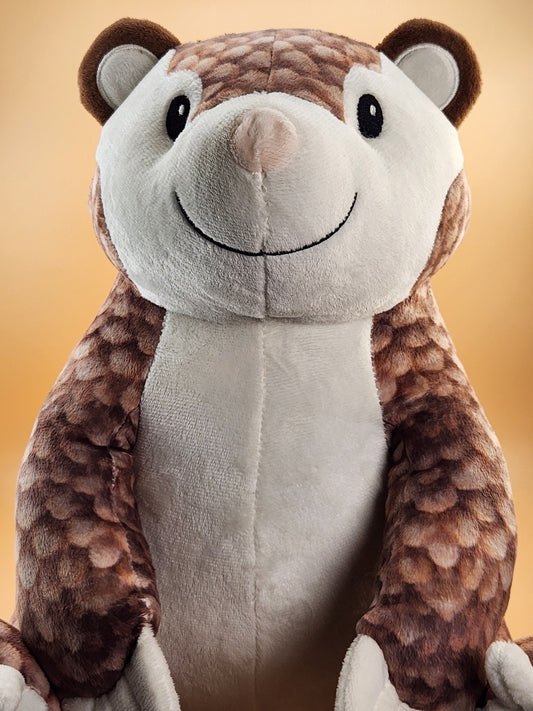
A plush toy can help slow the moment down. If a child has a pangolin plush and curls it into a ball during play, that action can open a conversation about protection and stress. If a crane plush “flies” from one room to another, that can lead to a discussion about movement, weather, and habitat. The toy becomes a stand-in for a real animal, which makes big ideas feel easier to hold.
Why this matters for conservation
Children protect what they feel connected to. They feel connected when they understand that animals have lives shaped by experience, not just appearance. That is one reason animal behavior learning belongs in playrooms as much as in science lessons.
A child who learns to notice behavior often becomes more careful outdoors. That child is more likely to watch without chasing, listen without interrupting, and ask better questions. Those are early conservation habits. They begin with wonder, but they deepen through attention.
The Secret Codes of Animal Learning

Animal behavior learning sounds technical, but the basic idea is simple. Animals meet the world, something happens, and their behavior changes in response. Sometimes the change is small. Sometimes it becomes a lasting pattern.
Learning starts with experience
One classic definition describes learning as a relatively permanent change in behavior as a result of experience. That wording is helpful because it clears up a common confusion. Not every action is learned. Some actions are reflexes or species-typical patterns. Learning shows up when experience changes what an animal does next.
Researchers have also shown that even very young animals can do more than many people expect. In a foundational review of statistical learning across species, newborn domestic chicks detected patterns in visual streams after mere exposure, and newly hatched chicks generalized over ABA, AAB, ABB, and BAA visual patterns. The same review notes that rats can use frequencies of co-occurrence rather than transitional probabilities to track syllables in speech streams. That means some animals can pick up structure from the world without direct reward, which gives children a powerful way to think about attention, repetition, and pattern finding in nature. The findings are described in this review of statistical learning across species.
Animals don't need a classroom to learn. Repetition, patterns, and outcomes can teach them every day.
Four common ways animals learn
Some forms of learning are especially useful for families to recognize.
- Habituation means learning to ignore something harmless. A city pigeon may stop reacting to the steady sound of passing footsteps. The sound is still there, but the bird no longer spends energy responding every time.
- Classical conditioning happens when one signal starts predicting another. A dog hears a leash clip and heads for the door because that sound has become linked with a walk.
- Operant conditioning means behavior changes because of consequences. If a pet sits and a treat follows right away, sitting becomes more likely next time. The same basic idea appears across animal training and everyday home routines.
- Observational learning happens when animals watch others. Young animals may learn what to approach, avoid, or repeat by paying attention to older or more experienced individuals.
A child doesn't need formal terminology to grasp these ideas. During play, a caregiver can say, “The rabbit plush heard the bag crinkle and came over because it learned that sound means food,” or “The bird plush stopped worrying about the garden statue because it learned the statue never moves.”
| Learning type | Plain-language meaning | Child-friendly example |
|---|---|---|
| Habituation | Ignoring something safe | A plush fox “gets used to” the washing machine sound |
| Classical conditioning | Linking one signal with another | A bell means dinner for the toy puppy |
| Operant conditioning | Learning from consequences | Sitting earns a pretend berry or treat |
| Observational learning | Learning by watching | A baby bird plush copies where another bird looks for food |
Confusion often comes from mixing learned behavior with innate behavior. Both can appear in the same animal. A squirrel may have species-typical food-storing tendencies, but the exact places it chooses and the ways it responds to neighborhood risks can reflect experience too.
Your Field Guide to Spotting Animal Smarts

Many adults want to answer a child's question quickly. Was that behavior learned, or was it instinct? Real observation usually isn't that tidy.
Researchers studying wild animals with machine learning have highlighted an important truth. Some behavior is species-typical, but individuals also develop unique patterns that data can reveal even without direct observation. That means an animal may follow broad species tendencies while still building personal routines through experience. This challenge is discussed in research on behavior identification from unlabeled GPS data.
What to watch before deciding
A better approach is to slow down and look for clues.
- Notice the trigger. Did the behavior happen after a sound, person, object, or change in weather?
- Look for repetition. Does the same action happen in the same situation?
- Watch for change over time. Did the animal react strongly at first and then become calmer later?
- Compare individuals. Does one crow ignore people while another keeps its distance?
- Consider context. Feeding, nesting, resting, hiding, and defending can look similar unless the setting is clear.
A robin that avoids a window area after a collision may be showing learning from experience. A dog that runs to the door when it hears one familiar car may have linked a very specific sound with a person's arrival. A backyard squirrel that changes its route after a new fence appears may be adjusting to the environment rather than following a fixed script.
Later in the observation, this short video can help children think about movement, reaction, and patterns in real animals.
A simple observation tool for families
A notebook works well, but a spoken routine works too. Caregivers can ask children these three questions:
- What happened first?
- What did the animal do next?
- What happened after that?
Some of the best nature study begins with uncertainty. “Maybe” is often a smarter answer than a rushed guess.
That approach teaches humility along with curiosity. Children learn that behavior isn't always a fixed checklist. Animals from the same species can act differently because each one has its own history, surroundings, and opportunities to learn.
Playful Learning Activities for Young Conservationists

Hands-on play helps children absorb animal behavior learning without turning it into a lecture. The goal isn't to make play feel academic. The goal is to let children test ideas with their bodies, their words, and the objects they already love.
Learning has been defined as a relatively permanent change in behavior as a result of experience, and trainers often rely on operant conditioning, where a favorable consequence immediately follows a behavior to strengthen it. Families can see that principle in simple everyday moments, such as a pet learning that sitting is followed by a reward, as described in this overview of animal behavior and learning. Caregivers wanting more activity ideas can also explore fun and educational activities with stuffed animals.
For preschoolers
Young children learn best through repetition and movement.
- Hide-and-seek food game. Hide felt “berries” or paper leaves around a room. Let a red panda or squirrel plush search for them. This introduces searching, memory, and problem-solving.
- Safe or scary sorting. Place toy objects into two groups. One pile is harmless, like a pillow or spoon. The other is surprising, like a loud shaker. Ask which things the plush might learn to ignore and which might still cause caution.
- Follow-the-leader animal walks. One child or adult acts like an older animal. The plush or child “copies” the path, sound, or movement. That models observational learning in a physical way.
A single toy can carry a lot of meaning here. One option is a species-based plush such as Ruby the Red Panda from Snugglebug, used as a prop for pretend foraging, hiding, or resting. The learning comes from the conversation wrapped around the play.
For elementary-age children
Older children often enjoy recording, comparing, and storytelling.
| Activity | What the child does | What it teaches |
|---|---|---|
| Behavior journal | Watches a pet, bird feeder, or local squirrel and writes what happened before and after a behavior | Pattern spotting and context |
| Migration story path | Moves a bird plush across a map, rug, or hallway “route” with weather or habitat obstacles | Adaptation and decision-making |
| Reward and response game | Gives a pretend cue, then a reward after the plush “performs” a behavior | Consequences shape behavior |
Children can also act out a small ethics lesson. If the plush “looks worried,” what should the human do? Step back? Lower the noise? Give space? That turns animal behavior learning into empathy practice.
Try this at home: After each activity, ask one reflection question. “What might help this animal feel safe?” often leads to richer thinking than “Was that right or wrong?”
How Learning Helps Protect Animals Worldwide
People sometimes treat animal learning as a training topic only. In real care settings, it has a much wider role. Learning principles help people reduce fear, support natural behavior, and improve daily welfare.
Welfare is part of conservation
Behavioral management now sits at the center of many welfare efforts. The National Agricultural Library describes enrichment in social, occupational, physical, sensory, and nutritional forms, and frames behavioral management around improving welfare through environment, social housing, natural behavior, and training. In other words, good care isn't just about getting an animal to do something on cue. It's about shaping conditions that help the animal cope, explore, and function more comfortably. That guidance appears in the National Agricultural Library's overview of behavioral management for animals.
This matters in zoos, aquariums, sanctuaries, rehabilitation settings, and managed care. If an animal can learn that a routine is predictable and safe, handling may become less frightening. If an environment offers the right kinds of challenge and choice, natural behaviors are more likely to appear. If caregivers understand how behavior changes with stress, they can adjust the setting instead of blaming the animal.
What children can understand from this
Children don't need advanced vocabulary to understand the heart of that idea. Animals need more than food and shelter. They also need chances to move, choose, explore, rest, and feel secure.
That lesson connects neatly to conservation. Protecting animals means protecting the conditions that support healthy behavior. A forest animal needs places to hide and forage. A social species needs appropriate social opportunities. A sensitive species may need less noise and less disruption. Families interested in turning care into action can explore ways to support organizations protecting endangered species.
When children learn that welfare includes behavior, conservation becomes more personal. It stops being only about saving animals “out there.” It becomes about understanding what animals need in order to live well.
Nurturing a Lifelong Love for the Animal Kingdom
A child doesn't have to memorize scientific terms to build a strong bond with wildlife. Watching carefully, asking thoughtful questions, and practicing gentle play are enough to begin.
Small habits that grow into care
Preference matters in animal welfare, too. Researchers use preference testing to learn what environments animals choose, and in one mouse study, animals in partitioned cages showed more burrowing, greater weight gain after weaning, lower adrenal gland weights, and lower fear scores in two standard tests, the open field and emergence test. That finding reminds families that care improves when people pay attention to what animals choose and how they respond over time.
For children, that can become a daily habit of mind. Instead of assuming an animal “likes” something because it looks cute or entertaining, they can ask whether the animal seems calmer, safer, or more able to do natural things. That is a mature kind of empathy, and it starts surprisingly early when adults model it during play and observation.
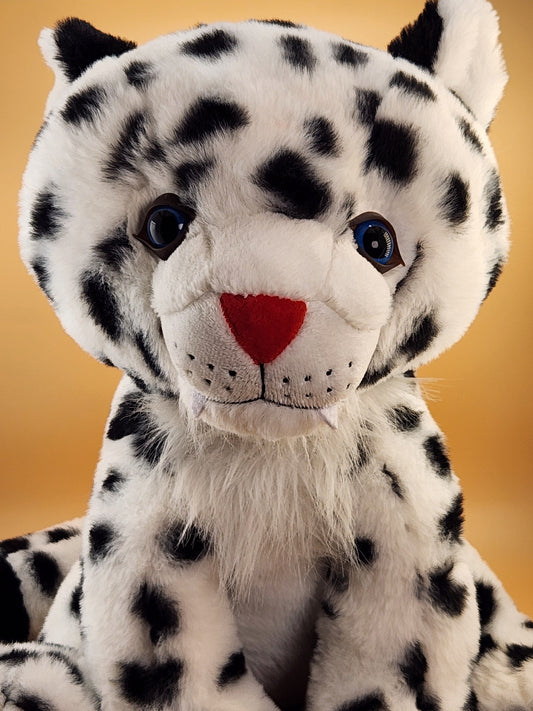
A plush pangolin, snow leopard, red panda, or crane can help hold those ideas in place. The toy gives children something touchable while they think about creatures they may never meet in person. Over time, those repeated moments of wondering, noticing, and caring can grow into respect for real habitats and real conservation work.
The most meaningful outcome of animal behavior learning isn't perfect identification. It's a change in how a child sees living creatures. Animals become beings with needs, patterns, limits, and capacities for learning.
A family looking for a gift with an educational purpose can explore Snugglebug, where species-based plush toys are paired with wildlife learning and conservation themes.