
Endangered Species Gifts That Protect Real Wildlife
An endangered species gift often arrives in an ordinary moment, a birthday list on the kitchen counter, a teacher looking for a class prize, a grandparent trying to avoid another plastic toy. The best version of that gift does more than sit on a shelf. It can give a child a named animal to care about, a reason to ask questions, and a small object that keeps the conversation going long after the wrapping paper is gone.
Table of Contents
- A Birthday Gift That Started a Conversation About Pangolins
- What Counts as an Endangered Species Gift
- Why the Conservation Gap Matters for Gift Buyers
- A Four-Point Checklist for Evaluating Any Endangered Species Gift
- Inside a Mission-Driven Plush Like Paulie the Pangolin
- Occasion-Based Gift Ideas and Learning Activities
- Common Misconceptions Buyers Should Drop
- Bringing It Together and Answering the Questions Buyers Still Ask
A Birthday Gift That Started a Conversation About Pangolins
A parent scrolling through a birthday wish list often wants something kinder than another battery toy, but still fun enough to earn an excited grin. A teacher choosing a class reward may want the same thing, something that feels special without becoming clutter. That's where an endangered species gift can work better than a generic animal toy, because it gives the child a real creature to learn about instead of a made-up mascot.
One family might hand over a plush pangolin with a card that explains where pangolins live and why they need protection. Another classroom might use the same idea as a reading prompt, letting each child guess what the animal eats, where it sleeps, or what threatens it. A grandparent might prefer that to a cartoon character because the gift keeps asking for attention after the party ends.
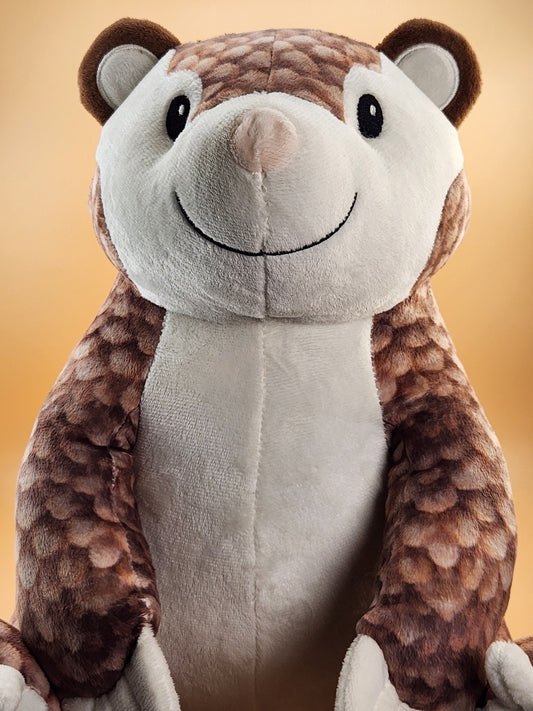
A good example is a pangolin plush paired with a short educational card, such as Paulie the Pangolin. The plush becomes the object the child holds, but the card becomes the part that changes the next week of conversations.
A small gift can do more than delight a child for an afternoon. It can become the reason a family talks about habitat, extinction, and how a real animal survives.
That's the long tail of this category. A child may outgrow the wrapping paper, but the animal name, the habitat, and the conservation message can stay useful for months. For parents and educators, that makes the gift feel less like a transaction and more like the start of a habit, learning to notice wildlife as something real, specific, and worth protecting.
What Counts as an Endangered Species Gift
An endangered species gift is any physical item or experience that connects the recipient to a specific threatened animal, supports conservation, and teaches something concrete. The simplest way to think about it is this. A wildlife gift is to a documentary what a generic animal toy is to a cartoon, one is rooted in a real species and a real world, the other only borrows the shape.
The category usually includes educational plush toys, species cards, books, field guides, symbolic adoption kits, and donations made in someone's name. The common thread is not the price or the packaging. It is the combination of a named animal, a learning element, and some kind of conservation link.
What belongs in the category
A plush with species facts fits. A symbolic adoption packet can fit if it explains where support goes. A book about a real animal or a field guide can fit if it helps the child identify the species and its habitat. A donation in someone's name also fits, especially when the recipient gets a note that explains what the gift supports.
What does not belong
Wildlife trade does not become ethical just because it looks educational. The U.S. Fish & Wildlife Service traveler guide lists items that are generally prohibited from entering the United States, including all sea turtle and pangolin products, ivory, fur from tigers and most spotted cats, and medicinals made from rhino, tiger, or Asiatic black bear in its traveler guidance on wildlife products. A souvenir carved from ivory or a pangolin-skin item belongs in the avoid category, not in the gift cart, because it normalizes harm rather than conservation. The same caution applies to any marketplace listing that blurs the line between a cute wildlife theme and real animal parts.

A useful shortcut is to ask whether the item teaches respect for the animal or treats the animal like a collectible object. If the answer feels fuzzy, the gift likely needs a closer look. The category is strongest when it supports curiosity, not ownership.
A separate way to vet the gift is to check whether the seller makes its conservation path visible. The Endangered Species Coalition warns that symbolic-adoption style campaigns can vary widely in transparency and impact, so a gift buyer should look for clear fund allocation and evidence of real conservation outcomes, not just branding. Ideas for supporting conservation-focused organizations are only useful when the path from purchase to protection is understandable.
Why the Conservation Gap Matters for Gift Buyers
Gift buyers often think they're shopping in a small niche, but the background problem is much larger. The U.S. Fish & Wildlife Service says the Endangered Species Act has protected 1,459 species in the United States, yet an Association of Zoos and Aquariums survey found Americans guessed only 100 species on the list, and young adults ages 18 to 34 guessed 80. In the same survey, 87% of respondents said they were willing to help save animals from extinction, but none of the 1,002 participants identified the correct number of protected species. The gap is not about indifference, it's about awareness.
That's why a gift can do useful work. A plush, card, or book that names one species, one habitat, and one threat gives a child an entry point into a topic most adults misjudge. Even a short conversation can correct the idea that endangered species are rare in the abstract but distant in daily life.
A simple learning win
If a child learns five species names from a gift and can connect each one to a habitat, that child has already learned more concrete wildlife facts than many adults can name from memory. That matters because the average size of monitored wildlife populations has fallen by 73% since 1970, according to WWF's 2024 Living Planet Report, and WWF also notes that more than 47,000 species have been assessed as threatened with extinction on the IUCN Red List. The educational job is not to overwhelm kids with doom. It is to make the animals feel knowable enough to care about.
Practical rule: the best gift is not just “animal themed.” It should leave the child with a species name, a habitat, and one thing conservationists are trying to protect.
That is what turns a toy into an on-ramp. The child gets comfort and the adult gets a conversation starter, which is exactly the kind of low-pressure learning that sticks. A closer look at mission-driven plush impact helps families see why the educational side matters as much as the soft toy itself.

The bigger point is hopeful. Children do not need a lecture on extinction to start caring, they need a clear, friendly first species. A good gift gives them that first foothold, then leaves room for parents and teachers to build from there.
A Four-Point Checklist for Evaluating Any Endangered Species Gift
A thoughtful buyer can sort most listings quickly by checking four things, safety, ethical sourcing, educational depth, and verifiable impact. That order matters. A gift can be adorable and still miss the mark if it hides where the money goes or uses wildlife imagery in a way that feels exploitative.
1. Safety and age fit
The item should match the child's age and setting. A classroom prize, a hospital comfort item, and a bedtime plush all have different needs, so loose parts, sharp accessories, or complicated components can be a problem. A soft toy with a simple card is easier to use in real life than a novelty object that needs constant supervision.
2. Ethical sourcing
The seller should make it obvious that the product doesn't rely on threatened or endangered species parts. That includes obvious red flags like ivory carvings or animal-skin souvenirs, but it also includes vague marketplace language that makes wildlife sound collectible. If the listing leans on “exotic” instead of explaining habitat support, that's a warning sign.
3. Educational depth
A label that says “save the animals” is too thin to carry much learning. A better gift gives facts, a habitat connection, or a suggested activity. The child should be able to answer at least one question after opening it, even if the answer is just the animal's name and where it lives.
4. Verifiable impact
This is the trust question that gets skipped too often. The Endangered Species Coalition explicitly warns that symbolic-adoption campaigns can vary in transparency, administrative overhead, and effectiveness, so buyers should ask how funds are allocated and whether the organization can show conservation results. If the seller can't explain where money goes, the conservation claim is just a slogan.
Here's a simple comparison at a glance.
| Gift Type | Safety & Age Fit | Ethical Sourcing | Educational Depth | Verifiable Impact |
|---|---|---|---|---|
| Plush with species card | Usually clear and child-friendly | Check that it uses no wildlife parts | Strong if it names the species and habitat | Stronger when profit-sharing or donations are stated clearly |
| Symbolic adoption kit | Usually fine for older kids and families | Ethical if it avoids real wildlife products | Good if it includes habitat facts and follow-up activities | Depends on the charity's transparency and outcome reporting |
| Ivory souvenir or animal-part item | Poor fit for a child gift | Not ethical, avoid | Low educational value for conservation | No meaningful conservation benefit to the buyer |
A good rule is simple, if the gift can't explain itself in one minute, the child probably won't know what problem it is helping solve.
The short video below can be helpful for adults who prefer to see the framework in action before shopping.
Inside a Mission-Driven Plush Like Paulie the Pangolin
A mission-driven plush works best when the design choices line up with the educational promise. Species accuracy is the starting point, because a pangolin should look like a pangolin, not just a generic brown animal with scales. When the shape is recognizable, the child can connect the toy to a real animal more easily.
The next layer is the card that ships with the plush. That card matters because it does the teaching work that packaging usually doesn't. It can give a child a few facts, a conservation idea, and a reason to ask an adult a follow-up question.
The model used by Snugglebug shows how that can come together in one product. The company says each species-specific plush is modeled after a real endangered animal, comes with an educational card, and the brand donates 15% of profits to vetted organizations protecting those animals and their habitats. It also organizes plushes into themed collections, including Forests and Peaks, and supports broader sustainability efforts.
The journal side matters too. Parents and educators do not always need another toy, they need a way to turn the toy into a lesson without making it feel like homework. A journal that suggests questions, conversations, or simple activities helps adults stretch the gift across a week or a school term instead of a single unwrapping moment.
For a buyer, that combination creates a useful standard. A good endangered-species plush should be recognizable, age-friendly, and paired with information that the adult can use. If any one of those pieces is missing, the gift starts leaning more decorative than educational.
Occasion-Based Gift Ideas and Learning Activities
A strong endangered-species gift becomes easier to use when it matches the occasion. Birthday gifts can be playful, school gifts can be hands-on, and hospital gifts can be soothing first, educational second. The same plush can feel different depending on how it's introduced.
Birthdays and holidays
For birthdays, the wrapper can include a simple challenge, ask the child to name the animal, then guess its habitat before opening the card. For holidays, a plush can go with a “species passport” that adds one new animal card each season. That turns the gift into a collection without encouraging the child to treat animals like trophies.
Classroom rewards and lessons
Teachers can pair the gift with a habitat diorama, a short read-aloud, or a sorting activity that groups animals by forest, grassland, or ocean. The goal is to give the class a concrete way to compare species without turning the lesson into a quiz that feels punitive. If the room is already studying climate or ecosystems, the plush can serve as the anchor object that makes the topic feel real.
Hospital, therapy, and comfort settings
In hospitals or therapy rooms, the soft object itself may matter most at first. The educational card can wait until the child is ready, which keeps the gift gentle instead of pushy. A bedtime routine can also help, one adult reads the card aloud, then the child tucks the plush in beside them.
Grandparent and family gifts
Grandparents often want gifts that open into conversation, not clutter. A plush plus a short note about habitat protection gives them a way to connect the animal to family values, especially when the note invites the child to ask where the species lives and what it needs.
A useful routine: let the child read the animal card aloud once a week for a month, then add one new fact or drawing each time.
That kind of repetition makes the gift stick. It also keeps the mood hopeful, which matters when the wider conservation picture can feel heavy. The child gets a friend, the adult gets a teaching tool, and the animal stays at the center of both.
Common Misconceptions Buyers Should Drop
The first myth is that a cute animal toy automatically helps conservation. It doesn't. Most toys have no donation component at all, so the buyer has to look for a clear link between the item and real protection work. A plush only becomes mission-driven when the seller states what happens beyond the sale.
The second myth is that symbolic adoption always equals habitat work. The Endangered Species Coalition warns that these programs can differ widely in transparency and overhead, which means the buyer has to inspect the details rather than trust the label. If the organization can't explain where the funds go, the symbolism is doing more work than the conservation.
The third myth is that the most species-specific novelty item is the most ethical. That can be backwards. The U.S. Fish & Wildlife Service's holiday guidance points buyers toward gifts that support wildlife by protecting habitat and avoiding harmful products, not by turning animals into collectibles. A gift that clearly funds conservation and teaches respect is more useful than one that looks rare.
A better filter is simple. Ask whether the gift teaches, whether it avoids wildlife trade, and whether the seller can show a real conservation connection. Those three questions cut through most marketing language fast.
Bringing It Together and Answering the Questions Buyers Still Ask
A strong endangered-species gift should pass the same four tests every time, safety, ethical sourcing, educational depth, and verifiable impact. That's the easiest way to keep the gift joyful without letting it drift into empty branding. If a listing clears those four points, it is usually doing more than decorating a shelf.
Two questions come up often. First, is this kind of gift appropriate for very young children? Usually yes, if the item is soft, simple, and age-appropriate, because the learning can be light and the adult can handle the deeper conservation conversation. Second, can items made from endangered species parts ever be passed down as gifts? The U.S. Fish & Wildlife Service says a lawfully taken and held endangered- or threatened-species part may be shipped interstate as a bona fide gift or loan if there is no barter, credit, other compensation, or intent to profit or gain, so legality depends on lawful possession and a noncommercial transfer.
That's the cleanest next move, choose one gift this season that can be defended on all four points. A child should be able to hold it, name it, and learn from it, while the adult can feel confident the purchase isn't supporting harm.
Snugglebug makes species-specific plush toys that pair comfort with wildlife education, and each one comes with an educational card plus a clear conservation connection. For a gift that turns playtime into a chance to talk about real animals and their habitats, visit Snugglebug and look through the collections with those four buyer checks in mind.