
Endangered Animals for Kids
Share
Who's in Trouble and Who's Making a Comeback
Right now, scientists are keeping track of more than 169,000 different animals and plants around the world. Of those, 47,187 are threatened with extinction (IUCN Red List, 2025). That's a big number, but it doesn't mean every story is sad. Some animals are actually doing better than they were a few years ago. Others still need a lot of help. This post looks at both kinds, so you know who's struggling and who's turning things around, plus a few things you can actually do about it before you finish reading.
What "Endangered" Actually Means
When scientists say an animal is "endangered," they're using a specific label from a list called the IUCN Red List. Groups of researchers study how many animals are left, whether that number is going up or down, and how much of their habitat still exists. Based on all that, each species gets sorted into a category: Least Concern, Vulnerable, Endangered, or Critically Endangered. Critically Endangered is the most serious warning a species can get before extinction. Snugglebug wrote a full breakdown of what causes animals to become endangered if you want the longer explanation.
The Comeback Kids: Two Success Stories
Not every endangered animal story ends badly. These two species prove that conservation work can actually pay off.
Green sea turtles spent more than 40 years listed as Endangered, ever since 1982. In October 2025, the IUCN moved them all the way down to Least Concern, skipping past the "in-between" categories entirely. Their global population has grown by roughly 28% since the 1970s, thanks to protected nesting beaches and rules that stopped people from collecting turtle eggs (IUCN Red List, October 2025). Some regional groups, like the ones in the Maldives, are still struggling, but the overall trend is a genuine win.
Giant pandas were considered Endangered for almost 30 years. In 2016, the IUCN downgraded them to Vulnerable, a less severe category, after China's conservation programs helped the wild population grow (IUCN, 2016). As of a November 2024 count, roughly 1,900 pandas live in the wild, alongside another 757 living in breeding and research centers (WWF, November 2024). Pandas aren't out of danger yet, but they're a real example of what protecting a habitat can do.
Animals That Still Need Our Help
These species haven't turned the corner yet. Some are losing ground fast.
Tigers are still listed as Endangered. A 2025 IUCN assessment counted somewhere between 3,726 and 5,578 tigers left in the wild, with only about 3,140 of those old enough to have cubs of their own (IUCN, 2025). A hundred years ago, there were roughly 100,000 tigers. Tigers have already disappeared completely from 9 of the 24 regions where they used to live.
Orangutans are in even worse shape. All three species, Bornean, Sumatran, and Tapanuli, are classified as Critically Endangered. Current estimates put the population at around 104,700 Bornean orangutans, 14,600 Sumatran orangutans, and fewer than 800 Tapanuli orangutans left in the wild, according to IUCN species assessments cited in 2025 reporting. Losing rainforest to logging and palm oil farms is the main reason their numbers keep dropping.
Black rhinos are Critically Endangered too, though their story includes a bit of hope. Poaching cut their population from around 70,000 animals in 1970 down to just 2,410 by 1995, a 96% collapse in 20 years. Careful protection since then has helped numbers climb back to 6,788 rhinos as of 2025 (State of the Rhino, 2025). It's real progress, just from an extremely low starting point.
Red pandas have been listed as Endangered since 2015, and their population keeps shrinking. Fewer than 10,000 are believed to remain, and numbers dropped by about half over 20 years, according to the IUCN's 2015 assessment. Habitat loss in the mountain forests of Nepal, India, and China is the biggest threat.
African elephants split into two groups with different outlooks. African forest elephants are Critically Endangered, with a 2025 DNA-based survey estimating around 135,690 individuals; that number reflects better counting methods, not a population increase (IUCN, 2025). African savanna elephants are listed as Endangered. Both groups lose ground to poaching and to mining, farming, and road projects that break up their habitat. Forest elephants matter for another reason too: they spread seeds through the rainforest as they move, so losing them changes the forest itself, not just the elephant count.
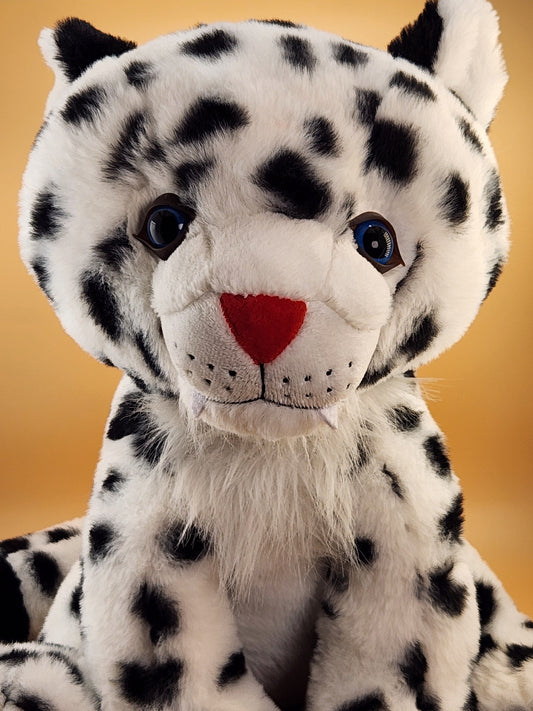
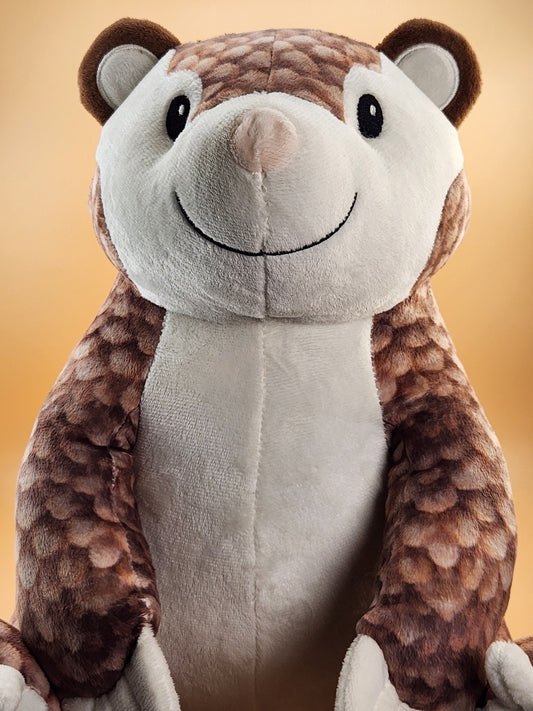
Snow leopards and pangolins deserve a spot on this list too. If you want to go deeper on either one, Snugglebug has full posts covering snow leopard facts for kids and pangolin facts for kids, plus a closer look at why snow leopards became endangered in the first place.
What Kids Can Actually Do to Help
You don't have to wait until you're grown up to make a difference. A few things actually help:
- Learn about one animal really well, then teach someone else. Passing along real facts (not myths) is how support for conservation spreads.
- Skip products made from real animal parts, like ivory or fur, even as souvenirs. Every purchase like that keeps a market alive that hurts wild populations.
- Support organizations that protect habitat directly. Snugglebug put together a guide to organizations doing this work, including ones kids can get involved with.
- Ask for a stuffed animal version instead of the real thing. It sounds small, but plush toys modeled after endangered species keep curiosity alive without any animal paying the price. Snugglebug's gift guide for kids who love animals has options tied to several of the species above.
The Bigger Picture
Out of the animals in this post, two have moved in the right direction and five are still losing ground. That split is roughly what's happening across the planet: conservation works when it gets funding, protected land, and enforcement, but most species are still waiting for that kind of support. Reading about pandas or tigers won't fix that on its own, but kids who grow up knowing the difference between Endangered and Critically Endangered, and who understand that species status can actually change, are the ones who'll keep pushing these numbers in the right direction.
None of these labels are permanent. A species can move from Critically Endangered to Endangered to Vulnerable, or all the way down to Least Concern, the same way green sea turtles just did. It can also move the other way if habitat keeps disappearing. Checking back on these numbers every so often is one of the easiest ways to see whether conservation efforts are actually working.
If you'd like to welcome a new plush friend into your home, take a look at our ideas for gifts kids who love animals will treasure. Curious about the animals behind our plush collection? Read up on pangolin facts for kids and snow leopard facts for kids.
Photo by Sid Balachandran on Unsplash