
Children's Hospital Gifts: A How-To Guide for Donating
A parent stands in a store aisle with a cart half full of books, coloring sets, and plush toys, then freezes at the same question almost every new donor asks. What helps in a hospital, and what will get turned away at the door?
That uncertainty is normal. Children's hospital gifts carry more weight than people expect. A gift can comfort a child before a procedure, give a sibling something steady to hold, or soften a long afternoon that feels nothing like home. But in a clinical setting, kind intentions need structure. The right gift feels warm and personal while still meeting strict safety rules.
Table of Contents
- The Power of a Thoughtful Gift
- First Things First Understanding Hospital Rules
- Choosing Gifts That Heal and Help
- The Impact of Mission-Driven Gifting
- Coordinating Your Donation From Drop-Offs to Drives
- After You Give Documentation and What Comes Next
The Power of a Thoughtful Gift
A grandparent might want to send a teddy bear after a new diagnosis. A classroom might want to collect puzzle books for a local pediatric floor. A neighborhood group might want to drop off holiday presents because giving feels better when children are included. All of those impulses come from the right place.
What helps is understanding how central children's hospitals are to family life in the first place. Children's hospitals make up only 5% of hospitals in the United States, yet they treat nearly half, about 50%, of all children admitted to any type of hospital. In 2022, a coalition of 52 children's hospitals delivered nearly $8.95 billion in total community benefit, according to the Children's Hospital Association blog on key children's hospital data.
That scale matters because even a small donation enters a much larger care system. One new board book may end up in an inpatient playroom. One sealed plush toy may become a child's comfort object during blood draws. One art kit may give a teenager something private and absorbing to do at bedside.
Practical rule: The best children's hospital gifts don't just look cheerful on a table. They meet a real emotional need at the moment a child receives them.
A thoughtful gift also helps restore something hospitals can unintentionally strip away, which is a sense of normal childhood. Children don't stop needing play, routine, softness, and choice just because they've been admitted. Many donors already understand this instinctively. That's one reason gifts like books and stuffed animals remain popular, and why resources on the benefits of stuffed animals for comfort and development resonate with families looking for something more meaningful than a generic toy.
A practical example makes the point. If a donor sends a battery-operated toy with loud sounds, the child may enjoy it for a minute, but staff may have nowhere appropriate to use it. If that same donor sends a new, washable plush or an age-appropriate activity set cleared by the hospital, the gift is far more likely to stay with the child and support coping in a real way.
First Things First Understanding Hospital Rules
The hardest lesson for new donors is this one. A hospital isn't being picky when it declines a gift. It's protecting children whose immune systems, allergies, sensory needs, and medical equipment all change what is safe.
The most common reason gifts are rejected is simple. Used, opened, or handmade items are rejected 100% due to hygiene standards, and the most effective route is using a hospital's designated Amazon Wish List or contacting the gift planning coordinator directly, as outlined by UC Davis Children's Hospital donation guidance.

Why sealed and new matters
A handmade quilt may feel loving. A gently used stuffed animal may look spotless. Neither gives staff what they need, which is confidence about cleanliness, storage, and infection control.
Children in hospitals often share units with patients who are medically fragile. Staff can't inspect every fiber, seam, and surface the way a donor imagines they can. Original packaging helps the hospital verify that an item is new and hasn't already been handled in ways that introduce risk.
A useful comparison is below.
| Gift type | What happens in practice | Better option |
|---|---|---|
| Used plush toy | Usually declined for hygiene reasons | New sealed plush from the hospital list |
| Handmade blanket | May be declined if laundering and material standards can't be verified | New packaged fleece blanket if the hospital accepts them |
| Gift-wrapped item | Staff often need to remove wrapping before distribution | Unwrapped item in original packaging |
| Latex balloon or latex item | Often restricted because of allergy concerns | Mylar-free alternatives only if the hospital allows them, or skip balloons entirely |
The short list of non-negotiables
New volunteers do best with a simple filter before buying anything:
- Check the source first: Find the hospital's official donation page, volunteer office, or child life department before shopping.
- Buy only new items: If the seal is broken, it's usually not usable.
- Skip gift wrap: Wrapped donations slow screening and create extra handling.
- Avoid common problem materials: Latex, strong scents, food items, and gifts with hard-to-clean surfaces often create problems.
- Think broad age ranges: A hospital may need options for toddlers, school-age children, and teens on the same day.
The machine-washable stuffed animals guide is useful because it highlights the kind of practical feature hospitals care about. A cute item isn't enough. Staff need something easy to clean, easy to store, and safe to hand over without hesitation.
Hospitals rarely reject a gift because the donor cared too little. They reject gifts because the item creates work, risk, or disappointment at the point of care.
How to find the right channel
Many donors waste time shopping first and asking later. That order should be reversed.
A smoother method looks like this:
- Locate the hospital's official donation instructions. Search the hospital website for child life, volunteer services, or gifts in kind.
- Use the listed wish list if one exists. This is often the fastest route because approved items have already been screened.
- Email the contact person with a specific question. For example: "Are sealed sensory items for school-age children currently needed?"
- Ask about drop-off windows and packaging rules. Some hospitals need appointments. Some accept shipments only.
- Keep receipts and item lists. Those details help with acknowledgement letters later.
A practical example helps. A donor who wants to give ten plush toys may think any reputable retailer will do. But if the hospital's approved list specifies certain materials, no detachable accessories, and direct shipping, buying off-list can turn a generous gesture into a box the hospital can't use.
Choosing Gifts That Heal and Help
The best children's hospital gifts do one of three jobs well. They comfort. They engage. They distract without demanding too much energy.
Play therapy using toys can reduce cognitive and emotional regression by up to 50% for children with long hospitalizations, and Child Life departments report that stuffed animals significantly reduce hospitalization stress and support emotional regulation, according to The Toy Association's overview of play in children's hospitals.

That doesn't mean every toy works. Good selection depends on energy level, age, sensory tolerance, and how easily the item fits into hospital life. A strong gift supports coping without creating clutter, noise, or cleanup burdens.
Comfort items that do real work
Comfort gifts are often underestimated because they look simple. In practice, these are the items children reach for during waiting, procedures, unfamiliar sleep, and moments when adults need them to hold still.
Strong options include:
- Sealed plush toys: Soft, familiar, and easy for a child to claim as "mine."
- Small fleece throws if approved: Helpful for comfort, though hospitals vary on acceptance.
- Board books and picture books: Good for bedside reading and family connection.
- Simple sensory-safe comfort items: Only if the hospital specifically accepts them.
A plush toy works best when it avoids the usual failure points. Think no glitter, no fragrance, no detachable bows, no bead-filled sections, and nothing that sheds fibers. Neutral softness and easy handling matter more than novelty.
A practical example: a small sealed plush with embroidered features is often more useful than a giant premium bear with accessories. The smaller toy fits in bed, travels to imaging or treatment more easily, and doesn't crowd medical equipment.
A good comfort item doesn't compete with care. It accompanies care.
For donors considering cause-driven plush toys, the strongest candidates are the ones that stay focused on safety first. The mission can add value, but the toy still needs to function well in a hospital room.
Activity gifts that keep hands and minds engaged
Children who feel stuck benefit from gifts that create momentum. An activity gift says, "You can still make, build, solve, and choose."
Good choices often include:
- Sticker books: Low mess and easy to pause.
- Coloring books with new crayons or markers if approved: Familiar and flexible.
- LEGO-style sets for older children only when the hospital accepts small parts: Best for specific age groups, not universal donation bins.
- Craft kits with clear age labeling: Useful when they don't require scissors, heat, or complicated setup.
- Puzzle books and brain games: Strong for older kids and teens who want something quieter.
What doesn't work as well? Anything that assumes a child has a table, stamina, privacy, or fine motor ease. A complicated bracelet kit may look generous, but a child with IV lines, fatigue, or movement restrictions may not be able to use it.
That same logic applies to oversized games. Bedside gifts need a small footprint. If pieces scatter or require a big flat surface, staff and families may set the gift aside even if it's technically allowed.
This short video shows the kind of plush gift many donors look for when comfort is the goal.
Entertainment that respects energy limits
Entertainment gifts are different from activity gifts. They ask less from the child. That's important when a child feels sick, medicated, or emotionally spent.
A few reliable examples:
- Chapter books for independent readers
- Word search and maze books
- Large-piece jigsaw puzzles if approved
- Portable card games for older children and teens
- Journals or sketch pads for quiet expression
The strongest entertainment gifts can be used in short bursts. A child waiting for transport may have ten minutes. A sibling in a family lounge may need something calm and self-directed. A teen may want an option that doesn't feel babyish.
One practical way to shop is to build by age lane rather than by product type alone:
| Age lane | Often useful | Usually less useful |
|---|---|---|
| Toddlers and preschoolers | Board books, simple plush, chunky crayons if approved | Tiny parts, advanced crafts |
| School-age children | Coloring sets, sticker books, plush, simple games | Loud electronic toys |
| Teens | Journals, puzzle books, card games, mature art supplies if approved | Very young character toys unless specifically requested |
That last point matters. Donors often overbuy for younger children because the gifts feel more visibly cute. Teen-friendly gifts are harder to choose and often more needed.
The Impact of Mission-Driven Gifting
Some gifts do more than occupy time. They carry a message about care, identity, and connection to something outside the hospital room. That can matter more than donors realize.
Mission-driven gifting works especially well when the item already fits the setting. A plush toy tied to wildlife education, for example, can still function first as comfort and second as a conversation starter. A child may hold it during a hard moment, then later ask where the animal lives or why it's endangered. That shift, from fear to curiosity, has real emotional value even when it isn't measurable at bedside in the moment.

Why the story behind the gift matters
The psychology of giving supports this. Harvard Business School research found that consumers see a brand donating a higher percentage of profits, such as 15%, as more generous and are more likely to support it, even if the total donation amount is smaller than a competitor's, as explained in Harvard Business School Working Knowledge on how consumers judge charitable giving.
That finding helps explain why some donors gravitate toward gifts with a clear social purpose. They aren't just buying an object. They're buying alignment between the gift and the values behind it.
In a hospital context, that added layer can help in two ways:
- For the donor: The purchase feels intentional rather than transactional.
- For the recipient: The gift may open gentle learning, storytelling, or imaginative play.
A practical example is a child receiving an animal plush with a simple educational card. The toy comforts first. Later, the card gives a parent or staff member an easy script: "This animal lives in the mountains," or "This species needs protection." That kind of low-pressure conversation can be grounding.
What donors often overlook
Mission-driven doesn't automatically mean hospital-ready. The mission only strengthens the gift if the product is safe, durable, and appropriate for medical settings.
Before choosing a cause-linked item, donors should still ask:
- Is it sealed and new?
- Does it have detachable parts?
- Can staff hand it over quickly without extra explanation?
- Is the educational element gentle and age-appropriate?
- Would it still be a good gift even without the mission attached?
If the answer to that last question is no, the gift may be better for a home or classroom than for a pediatric unit.
The mission should add meaning, not excuse a poor product choice.
The best mission-driven children's hospital gifts feel complete on their own. They comfort the child, respect the workflow of staff, and let the donor support a wider good at the same time.
Coordinating Your Donation From Drop-Offs to Drives
Once the gifts are chosen, logistics determine whether generosity lands smoothly or creates friction. At this point, many well-meaning efforts succeed or fail.
Gift giving in children's hospitals has long been a community ritual. Ethnographic research describes donors ranging from Scout troops to local businesses, and shows that these gifts act as anchors of comfort that transform the clinical setting into a space of hope while reinforcing social bonds between donors, patients, and staff, as discussed in the Journal of Contemporary Ethnography article on holiday gifting in children's hospitals.
That community spirit is powerful. It works best when the donation process is organized with the same care as the gifts themselves.
For one donor or one family
Individual donations usually move fastest when they stay simple.
A clean process looks like this:
- Confirm the active need list. Hospitals change needs by season, storage capacity, and patient census.
- Choose one category. For example, only books for elementary-age children, or only sealed plush toys.
- Buy within the approved channel. If the hospital offers direct shipping or a registry, use it.
- Label the donation clearly if requested. Some sites want donor name, contact information, and item list.
- Schedule the drop-off instead of showing up unannounced. Security and staffing vary by campus.
A practical example: a parent who wants to donate after their own child's discharge may be tempted to bring a mixed bag of leftover toys, blankets, and handmade cards. A better version is a small, pre-cleared batch of new items from the current hospital list, delivered during the approved intake window.
The guide on how to donate stuffed animals to hospitals and charities is helpful for donors who want a more detailed walkthrough of this narrower category.
For schools companies and community groups
Group drives need more structure because one vague message creates a pile of unusable donations. The organizer's job is to narrow the ask.
The easiest way to do that is to define all four of these at the start:
| Decision point | Better instruction |
|---|---|
| Item scope | "Only new, unopened plush toys and books" |
| Age range | "Focus on school-age children and teens" |
| Delivery method | "Ship from the approved wish list or bring to the central collection day" |
| Packaging rule | "No gift wrap, no used items, no handmade items" |
A few details make a major difference in real drives:
- Use photos of acceptable items: People respond better when they can see examples.
- Name the exclusions clearly: Say "no used items" and "no gift wrapping" in every announcement.
- Assign one coordinator: Hospitals need a single point of contact.
- Sort before delivery: Separate books, plush, crafts, and teen items so staff don't have to.
- Expect fewer categories, not more: A focused drive usually produces a higher-quality donation.
One common mistake is trying to make the drive feel festive by broadening the invitation too much. "Bring anything for kids" sounds warm, but it produces noise makers, opened games, old stuffed animals, and novelty items with no clinical use. A narrower request is kinder to the hospital.
Field note: The more specific the drive, the more likely every donated item reaches a child instead of a sorting table.
Corporate teams can also improve outcomes by matching a hospital's workflow. Instead of running a huge open-ended collection, a company can sponsor one approved category, use the hospital's registry, and deliver on a date the hospital confirms. That keeps the event community-focused without creating intake problems for staff.
After You Give Documentation and What Comes Next
After delivery, one final step often gets missed. Donors should request an acknowledgement or receipt if the hospital provides one, then keep their own itemized records. For in-kind gifts, that usually means purchase receipts, quantities, and the date of transfer.
That paperwork matters even more because starting in the 2026 tax year, the One Big Beautiful Bill Act introduces a 0.5% floor on charitable deductions for itemizers. A couple with a $300,000 adjusted gross income, for example, can only deduct donations exceeding $1,500, according to Fidelity Charitable's explanation of OBBBA tax changes. For donors who give regularly, careful documentation and bundling gifts thoughtfully may matter more than it used to.
The more important point is practical, not tax-related. Children need support all year. Admissions don't cluster only around holidays, and comfort needs don't disappear in spring or summer. A small quarterly donation of approved bedside items can be more useful than a once-a-year burst of unplanned generosity.
Children's hospital gifts do their best work when care, safety, and empathy all point in the same direction. Start with the hospital's rules. Choose items that support coping. Deliver them in a way staff can use right away. That's what turns a good intention into a gift that helps.
Snugglebug offers plush toys designed for meaningful giving, with species-specific companions, educational conservation cards, and a mission-driven model that donates 15% of profits to vetted wildlife organizations. For donors looking for a thoughtful comfort gift that also reflects larger values, explore Snugglebug.
Related Posts
-
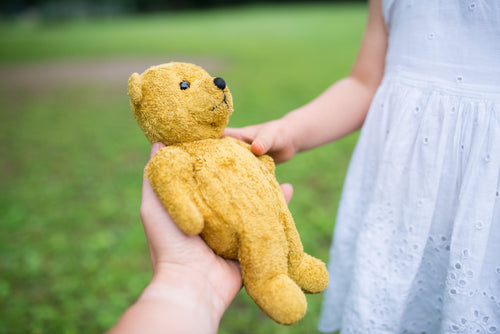
Donating Stuffed Animals: Give Your Plush Toys a Second Life
Instead of letting cherished companions gather dust, consider giving them a new life by donating them.
-
Gifts for Animal Lovers: A Guide to Mindful Giving
Looking for gifts for animal lovers that go beyond the ordinary? Our guide shows you how to choose thoughtful, educational, and conservation-minded presents.
-
Eco Friendly Children's Gifts: 2026 Guide
Discover the best eco friendly children's gifts for 2026. Our guide features sustainable, non-toxic, and meaningful presents kids adore and the planet
-
Classroom Gift Ideas That Teachers Actually Want in 2026
Find thoughtful classroom gift ideas for any budget. Our guide covers teacher-approved gifts, safety tips, and meaningful, sustainable options.
