
Educational Toys for 8 Year Olds: Best Picks for 2026
A familiar shopping moment tends to happen around age eight. A child still loves to play, but simple toddler toys feel babyish, and flashy gadgets often promise more than they teach. Caregivers end up standing in an aisle or scrolling through pages of options, wondering which toys will hold attention, build skills, and still feel fun.
That question matters because eight is a turning point. Children this age can handle more rules, more steps, and more challenge. They often want toys that let them build something, solve something, test ideas, or care about a topic that feels real to them.
The strongest educational toys for 8 year olds usually do two jobs at once. They stretch thinking and they connect to who the child is becoming. That might mean a construction kit that rewards persistence, a word game that supports communication, or even an animal plush that opens the door to empathy, wildlife learning, and conservation conversations.
Table of Contents
- Welcome to the World of the 8-Year-Old Learner
- Understanding Your 8-Year-Olds Developing Mind
- Matching Educational Toys to Key Learning Goals
- A Practical Guide to Educational Toy Categories
- From Playtime to Purpose How to Use Toys for Deeper Learning
- The Smart Shoppers Checklist for Buying and Gifting
- Investing in Play to Build a Brighter Future
Welcome to the World of the 8-Year-Old Learner
An 8-year-old often lives in two worlds at once. One part still delights in jokes, pretend stories, and collecting favorite things. Another part wants fairness, rules, facts, strategy, and the pride of doing something independently.
That mix is exactly why toy shopping can feel surprisingly hard. A toy may look educational because it has letters, numbers, or science words on the box, yet still fall flat if it feels too easy, too passive, or too scripted. At this age, children usually want to participate, not just press a button and watch.
Educational play also starts to look different than it did in preschool. It isn't only about naming colors or matching shapes anymore. It's about planning ahead, sticking with a challenge, noticing patterns, cooperating with others, and connecting ideas from play to real life.
Practical rule: If a toy lets an eight-year-old make choices, solve problems, and try again after mistakes, it usually has more staying power than a toy with one fixed outcome.
A strong choice often has one or more of these qualities:
- Enough challenge: The toy asks for thought, not just quick reactions.
- Room to grow: A child can use it in simple ways at first, then build more complex skills.
- Real engagement: It invites repeated play instead of a single afternoon of excitement.
- Meaning: It connects with interests such as animals, art, building, science, stories, or teamwork.
Families don't need the most expensive option or the trendiest brand. They need a toy that matches the child's current stage and fits the values of the home. For one child, that may be a logic puzzle. For another, it may be a nature kit, a collaborative board game, or a carefully chosen plush tied to wildlife learning.
Understanding Your 8-Year-Olds Developing Mind
At age eight, a child's mind often feels like a bridge under construction. One side is the concrete world of what can be seen and touched. The other side is more complex thinking, where rules, strategy, planning, and perspective-taking start to matter much more.
That developmental shift helps explain why many children this age move away from very simple toys and toward projects, puzzles, and games with structure. A widely cited study in Frontiers in Psychology looked at 105 toys for children ages 1 to 8 and found that 6- to 8-year-olds were more likely to fully use age-appropriate games, puzzles, instructional toys, and sports or recreation toys than toys intended for older children. The differences were strongly significant, with Wald χ² values ranging from 248.16 to 593.22, all p < .001, in the Frontiers in Psychology study on age-appropriate toy use.

Why age fit matters so much
That finding gives parents and educators a useful filter. If a toy matches an 8-year-old's developmental stage, the child is more likely to stay engaged and return to it. If it's too young, it can feel dull. If it's too advanced, it can create frustration before confidence has a chance to grow.
A good example is the difference between stacking blocks and a rule-based construction challenge. Both involve building, but the second asks for planning, visualizing, and following constraints. Those are exactly the kinds of skills many 8-year-olds are ready to practice.
Educational value doesn't come from labels on the box. It comes from the match between the toy and the child's growing capacity.
What often changes around age eight
Several shifts tend to show up around this age.
- Logical thinking gets stronger: Children can hold more steps in mind and think through consequences with more consistency.
- Rules start to feel interesting: Board games, strategy tasks, and structured challenges become more appealing because rules create a problem to solve.
- Independence increases: Many children want to do it themselves, then explain what they built or discovered.
- Social awareness expands: They begin noticing fairness, cooperation, and other people's perspectives more clearly.
- Fine-motor control improves: Small pieces, pattern work, careful assembly, and more detailed crafting become manageable for many children.
A parent might see this in everyday play. A child who once dumped puzzle pieces randomly may now sort edge pieces first. A child who used to build freely may suddenly care whether a tower can support weight or whether a marble run works. A child who once hugged a stuffed animal for comfort may now invent a backstory, habitat, and rescue mission for that animal.
These changes don't happen on the same day for every child. Still, they point in the same direction. The most useful educational toys for 8 year olds respect both competence and curiosity.
Matching Educational Toys to Key Learning Goals
“Educational” is a broad word, and that's where many families get stuck. It helps to stop asking whether a toy is educational in general and start asking what kind of learning it supports.

For children ages 6 to 8, developmental guidance recommends toys that combine STEM skills, reading, strategy, and collaboration, and open-ended building sets and science kits are specifically recommended because they encourage planning, testing, and revising during play, as described in this guidance on educational toys for kids ages 6 to 8. That gives four especially useful learning goals for this age.
STEM and strategic thinking
This is often the first category adults think of, and for good reason. Eight-year-olds are usually ready for toys that involve cause and effect, design choices, and multi-step thinking.
Useful examples include:
- Construction sets: LEGO bricks, magnetic building systems, marble runs, and wooden engineering sets.
- Science kits: Beginner chemistry activities, circuit sets, and hands-on experiment kits.
- Logic games: Pattern puzzles, deduction games, and sequencing challenges.
A child building a bridge from modular pieces isn't only “playing with blocks.” That child is testing structure, noticing balance, revising a plan, and learning that failure can be informative. Families who want ideas in this area may also enjoy browsing pretend play toys that support open-ended learning, especially when a child likes to mix building with storytelling.
Literacy and communication
Not every educational toy needs to look academic. Literacy grows through play whenever a child reads directions, invents stories, explains rules, or uses new vocabulary.
Strong options include word games, storytelling cards, joke books, puppet sets, and mystery games that require reading clues. Even a board game can become a language tool when children negotiate rules, describe strategies, or retell what happened afterward.
A practical example helps here. A child using story cubes might roll a moon, a boat, and a fox, then create a tale with a beginning, problem, and ending. That playful task supports sequencing, vocabulary, and oral expression without feeling like workbook practice.
Social-emotional learning
Age eight is also a rich time for SEL, or social-emotional learning. Children become more aware of fairness, belonging, embarrassment, pride, and cooperation. Toys can support that development when they invite turn-taking, shared goals, and perspective-taking.
Good fits include:
| Toy type | What it can support |
|---|---|
| Cooperative board games | Teamwork and shared problem-solving |
| Role-play sets | Perspective-taking and emotional expression |
| Strategy games | Self-control, patience, and handling disappointment |
| Creative group projects | Communication and compromise |
A toy has social-emotional value when children must listen, adjust, and care about another person's experience, not only their own success.
Conservation and global citizenship
This category gets less attention, but it deserves a place on the list. Some children are strongly motivated by real animals, real places, and real-world care. A toy can become educational when it helps them connect play to responsibility.
That might look like a wildlife-themed puzzle paired with a library book about habitats. It could be a nature journal, an animal figurine set used for biome sorting, or a species-specific plush that invites discussion about empathy and conservation. The key is that the toy becomes a doorway into larger questions: Where does this animal live? What threatens its habitat? How can people help?
That kind of values-based learning works especially well for children who are less interested in overtly academic toys but highly engaged by stories, causes, and living things.
A Practical Guide to Educational Toy Categories
Some families like a framework. Others want a concrete shopping list. Toy categories help because they translate development into something visible on a shelf or screen.

Pediatric occupational therapists recommend toys for 8-year-olds that strengthen visual-perceptual, auditory, and fine-motor coordination. Toys with small manipulatives, pattern-matching, or structured construction mechanics are especially useful because they support skills that transfer to tasks like writing and math, according to pediatric-OT guidance on educational toys.
Building and construction toys
This category has unusual range. One child may build fantasy castles. Another may obsess over gears, ramps, and symmetry. Both are learning.
Construction toys often help with:
- Spatial reasoning: Seeing how pieces fit and rotate
- Fine-motor control: Snapping, stacking, balancing, connecting
- Planning: Holding a design in mind before acting
- Persistence: Rebuilding after a collapse
Wood-based sets are often appealing for families who value tactile, durable materials. Caregivers comparing options may find wooden construction toys for open-ended building helpful when they want something sturdy and less flashy than electronic alternatives.
Games puzzles and coding tools
Many 8-year-olds are ready for more than simple matching games. They can often handle hidden information, longer turns, and basic strategy. That makes board games and puzzles an excellent category for children who like structure.
Examples include chess learners' sets, logic-grid puzzles, multi-step jigsaw puzzles, and beginner coding games that teach sequence and commands through cards, buttons, or simple robots. These toys reward careful attention and delayed gratification. They also teach children that thinking ahead can change the outcome.
A useful way to evaluate this category is to ask one question. Does the child get to make meaningful decisions? If yes, the toy is likely doing more educational work than a push-button gadget.
A short demonstration can make that clearer:
Science kits exploration tools and art materials
Science toys for this age don't need to be complicated. They need to be active. A magnifying glass, child-safe microscope, rock kit, seed-growing set, or circuit board can all create rich learning if the child gets to test ideas.
Art supplies belong in this category too, especially for children who think with their hands. Good options include watercolor sets, origami kits, weaving looms, clay tools, and design journals. Creative materials teach planning and revision just as clearly as science tools do. A child mixing colors or redesigning a cardboard invention is practicing experimentation.
A helpful buying cue: Choose materials that allow more than one finished result. Open-ended tools usually stay relevant longer than single-project kits.
From Playtime to Purpose How to Use Toys for Deeper Learning
You set out a toy after school. Ten minutes later, your 8-year-old is either rushing through the directions or turning the pieces into something entirely new. That moment tells us something important. The learning does not come only from the toy. It grows from the conversation, the choices, and the meaning a child builds around it.

The toy matters less than the invitation
The same toy can lead to very different kinds of learning.
A science kit used once can stay a one-time activity. That same kit becomes richer when an adult asks, “What do you predict will happen?” or “What would you change if you tried again?” In a classroom, children might test ideas, record results, and explain surprises. The materials have not changed. The thinking has.
That pattern shows up across play. A construction toy starts to work like a small engineering lab when a child tests stronger designs. A board game becomes practice in self-control and perspective-taking when children talk about fairness, frustration, and strategy. The toy is the doorway. The questions help the child walk through it.
A few prompts go a long way:
- Before play: “What's your plan?”
- During play: “What are you noticing?”
- After play: “What would you try differently next time?”
These questions help an 8-year-old shift from doing an activity to reflecting on it. That reflective step is where deeper learning often begins.
How a plush toy can become an educational tool
Families often recognize the learning value of STEM kits, games, and building sets. Plush toys get overlooked, especially for older children. That is a missed opportunity.
A species-specific plush can support factual learning, emotional growth, and values-based conversations all at once. Independent guidance on open-ended toys points to realistic animal toys as strong tools for imaginative learning, as noted in this article on open-ended learning toys. For an 8-year-old, that realism can become a bridge between affection and curiosity.
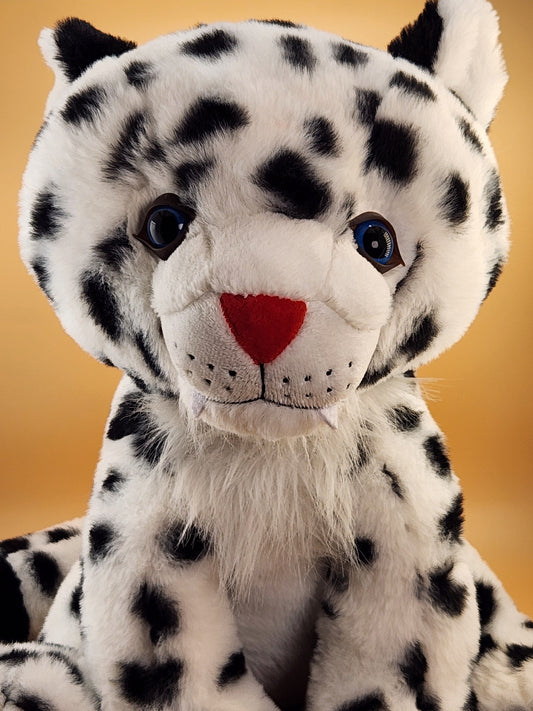
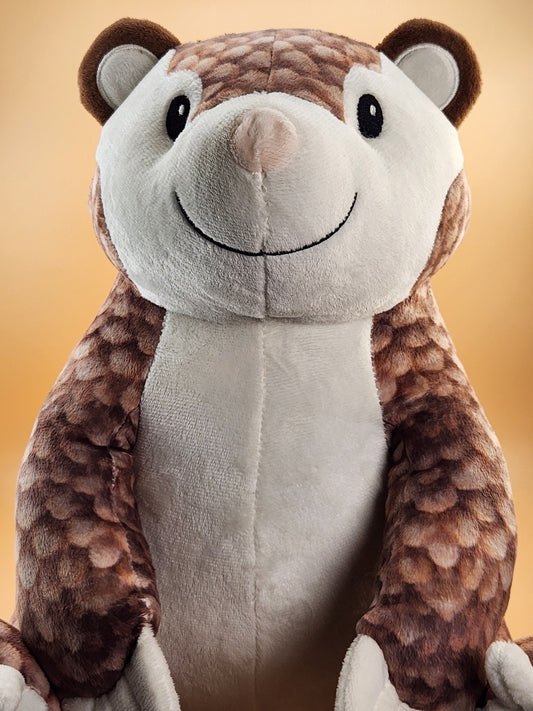
This approach is particularly effective for children who learn best through relationship and story. A child may resist a dry lesson on habitats, then eagerly learn about snow leopards or pangolins because the animal now feels personal. That is one reason some families explore eco-friendly plush toys that connect play with conservation themes. A factual example in this category is Snugglebug, which offers species-specific plush paired with educational cards about real animals and age-appropriate conservation ideas.
Here are a few simple ways to extend that kind of play:
-
Use the plush as a research starter
If a child gets a pangolin plush, ask where it lives, what it eats, and how it protects itself. Then invite the child to draw its habitat or explain three facts to someone else. -
Build empathy through storytelling
A child can write a journal entry from the animal's point of view. What does it need to feel safe? What problems might it face in the wild? -
Connect learning to family values
After play, choose one small related action. Read a library book about endangered species, make a habitat poster, or start a simple home habit that reduces waste. -
Respect the comfort piece too
Some 8-year-olds still turn to plush toys for calm and reassurance. That comfort does not reduce the educational value. It often strengthens it, because children learn well when they feel secure.
The goal is not to turn every toy into a lesson plan. A few thoughtful questions, a small follow-up activity, or a connection to kindness and stewardship can be enough. That is how play starts to carry knowledge, empathy, and purpose at the same time.
The Smart Shoppers Checklist for Buying and Gifting
Many toy regrets start with good intentions. The box looked impressive. The reviews sounded promising. Then the child opened it, used it once, and moved on. A practical checklist helps prevent that.
Developmental guidance from NAEYC shows a clear progression. 3- to 6-year-olds are ready for puzzles with 12 to 20+ pieces, while older children move toward more complex math, spelling, and quiz-style games, according to NAEYC guidance on choosing good toys. That shift helps explain why age eight works best with toys that ask for more sustained concentration and more complex thinking.
A quick decision checklist
Before buying, it helps to pause over these questions:
- Is the challenge right? A toy for an 8-year-old should usually involve more than simple matching or one-step cause and effect.
- Can the child do something with it? The toy should invite building, solving, designing, reading, sorting, explaining, or imagining.
- Will it last past the first try? Good educational toys for 8 year olds usually support repeated use, not just a single reveal.
- Are the materials sturdy and safe? Small parts, finishes, fabric quality, and age labeling still matter.
- Does it fit the family's values? Some homes want screen-free play, eco-conscious materials, or gifts tied to a cause.
A sustainability lens can be part of that checklist too. Families exploring thoughtful materials and gift choices may appreciate eco-friendly plush toys and what to look for.
A strong gift feels as if it understands the child, not just the age label.
How to match the gift to the family
Gift givers often focus only on the child's interests. That's useful, but it's only half the picture. The household matters too.
A few examples make this easier:
| Family situation | Good toy direction |
|---|---|
| Limited space | Compact games, card decks, portable puzzles, sketch kits |
| Siblings share often | Cooperative games, large building sets, open-ended art materials |
| Child prefers quiet play | Puzzles, craft sets, plush-linked storytelling, nature journals |
| Child needs movement | Outdoor exploration tools, sports-based skill toys, active challenge games |
It also helps to avoid “gift mismatch.” A beautiful science kit may frustrate a child who dislikes careful instruction, while a story-based toy may delight that same child for weeks. The best choice respects both readiness and temperament.
Investing in Play to Build a Brighter Future
Choosing toys for an 8-year-old isn't just about filling a playroom or checking a birthday list. It's about noticing who that child is becoming. At this age, toys can support reasoning, language, collaboration, emotional growth, and a wider sense of care for the world.
The strongest choices usually share one trait. They invite active engagement. A child gets to build, test, read, imagine, discuss, sort, revise, or care. That is where learning sticks.
For educators, therapists, and program buyers, the same framework works well in group settings. Choose materials that promote collaboration, independent problem-solving, and repeated use. A strong classroom or therapy toy gives children something meaningful to do together while leaving room for different skill levels and personalities.
Thoughtful play is never a small thing. It helps children practice how to think, how to relate, and how to act with purpose.
Families looking for meaningful gifts can explore Snugglebug for species-specific plush toys that pair comfort with wildlife learning, conservation themes, and age-appropriate educational materials.