
Why Are Snow Leopards Endangered? A Family Guide
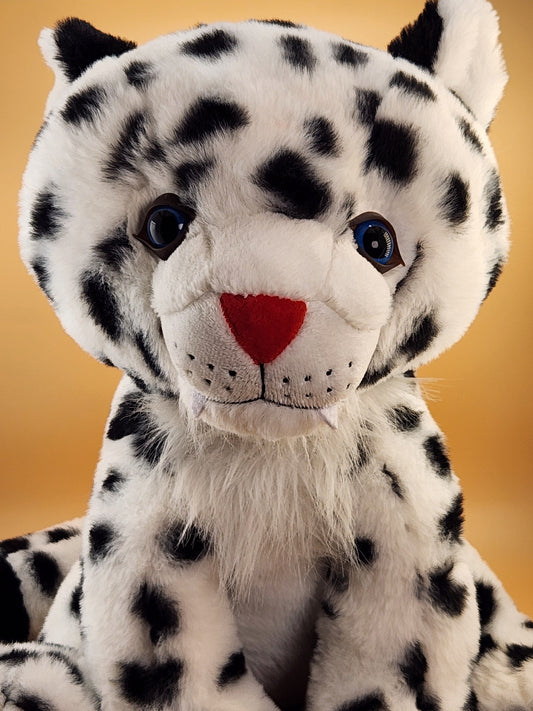
A child spots a spotted plush snow leopard on a bed and asks why a mountain cat would need help. That simple question opens the door to one of the most important wildlife lessons a family can share.
Table of Contents
- Meet the Ghost of the Mountains
- A Life Lived on Top of the World
- The Biggest Dangers Snow Leopards Face
- Heroes on the Mountain How We Are Saving Them
- How Your Family Can Protect Snow Leopards
- A Hopeful Future for the Ghost of the Mountains
Meet the Ghost of the Mountains
At dawn in the high mountains, a snow leopard can sit so still against rock and snow that it almost disappears. That’s one reason people call it the ghost of the mountains.

For many children, the first connection to this animal comes through a storybook, a photograph, or a toy that makes a faraway species feel close enough to care about. A product like Tashi the Snow Leopard can do that job well. It gives a child a face, a name, and a reason to ask better questions about the actual animal.
Snow leopards live in rugged mountain regions across Asia, and they’re famous for being hard to spot. That mystery is part of their magic, but it also makes them harder to protect. Families sometimes hear that a species is “at risk” and wonder what that means in real life.
Here is the clearest starting point. Snow leopards are classified as Vulnerable, with an estimated 2,710 to 3,386 mature individuals left in the wild, and that number reflects about a 10% decline over the last 16 years, according to IFAW’s snow leopard overview.
Why this matters: A small population spread across huge, harsh mountains is harder to monitor, harder to reconnect, and easier to push into trouble.
That’s the heart of the question behind why are snow leopards endangered. They are still here, still powerful, still wild. But they are living with less room for error than many people realize.
A Life Lived on Top of the World
Snow leopards live where many animals would struggle just to walk. Their world is steep, cold, windy, and rocky, like a rooftop made of cliffs.

A child can think of a snow leopard as an animal built for mountain parkour. It moves across ledges, loose stone, and deep snow with the confidence of a gymnast on a balance beam.
Built for cliffs snow and silence
Several body features help it survive in that extreme home.
- Wide paws: These work a bit like built-in snowshoes, helping spread weight over snow and rough ground.
- Long tail: The tail helps with balance on narrow, uneven surfaces. It also wraps around the body for warmth when the weather turns bitter.
- Spotted coat: The smoky gray pattern blends into rock, shadow, and snow. In a game of hide-and-seek, the mountain often seems to swallow the cat whole.
- Powerful body: Snow leopards need strength for climbing, stalking prey, and moving across broken terrain where one bad step can mean a dangerous fall.
These adaptations make snow leopards excellent hunters in a place that feels almost sky-high. They are also top predators, which means they help keep mountain ecosystems in balance. When top predators disappear, the ripple effects can reach prey animals, plants, and even the way people use the land.
A practical example helps here. In a healthy mountain food web, wild prey species remain in their habitat, and the predator has a reason to hunt wild food. When that balance weakens, trouble spreads outward.
A snow leopard isn’t just living in the mountains. It helps shape how that mountain ecosystem works.
For families who want to see the animal’s movement and habitat more clearly, this short video gives helpful visual context.
Why being a specialist can be risky
Snow leopards are not generalists. They aren’t the kind of animal that can easily switch to a completely new climate or lifestyle. They are mountain specialists.
That specialization is linked to another important fact. Snow leopards have very low genetic diversity, not because of a recent crash, but because their population has been historically small for a long time, as explained in Stanford’s report on snow leopard genetic diversity.
This part can sound technical, so a simple analogy helps. A big box of crayons gives more choices for drawing different kinds of pictures. A tiny box gives fewer choices. In wildlife, genetic diversity is a bit like that range of options. When rapid change hits, a species with fewer built-in options may have a harder time adjusting.
A family might ask, “If snow leopards are so perfectly built for mountain life, isn’t that a good thing?” Yes, but only while the mountain world stays stable enough for those special skills to keep working. If the habitat shifts quickly, or prey becomes harder to find, a specialist can get trapped by its own narrow fit.
The Biggest Dangers Snow Leopards Face
The simplest answer to why are snow leopards endangered is this. Their home is changing, their food base is under pressure, and conflict with people can turn deadly.

A child often understands this best through a familiar comparison. If a playground gets smaller, food disappears from the lunch table, and neighbors get upset every time a child steps into the wrong yard, daily life becomes much harder. That is not a perfect comparison, but it gets close to the pressure snow leopards face.
A mountain home that is shrinking
Climate change and human expansion are creating a “perfect storm” for snow leopards. They threaten to erase up to 30% of snow leopards’ Himalayan habitat within the next decade, according to David Shepherd Wildlife Foundation’s snow leopard threats page.
That statement can feel abstract, so it helps to translate it. Habitat is not just empty space. It is the full living neighborhood an animal needs: cover, travel routes, resting areas, and access to prey. When warming temperatures, shifting vegetation, infrastructure, and expanding human land use alter that neighborhood, the leopard loses usable mountain country.
A practical example is easy to picture. If a family home kept losing rooms year after year, everyone inside would be squeezed into fewer corners. Snow leopards face a version of that problem, except their “rooms” are cliffs, ridgelines, and hunting grounds spread across enormous mountains.
A struggle for food
Snow leopards depend on wild prey. When those prey animals decline, the leopard doesn’t stop needing to eat.
In some shared rangelands, domestic livestock use much of the available grazing space, leaving wild prey under added pressure. In southwestern Mongolia, field research documented a prey-to-predator ratio of 114 to 230 ibex per snow leopard, and the same research described domestic livestock occupying 70% of grazing capacity in shared ranges, according to this conservation analysis in Inquiries Journal.
That sounds complicated, but the daily-life version is simple. If the pantry empties out, the family has to look elsewhere for dinner. A snow leopard does something similar when wild prey becomes scarce. It may turn to sheep, goats, or other domestic animals because they are available.
Often, readers find this confusing. The snow leopard is not “choosing to be bad.” It is responding to a food shortage in the area around it.
| Problem in the mountain ecosystem | What can happen next |
|---|---|
| Wild prey becomes harder to find | Snow leopards look for easier food |
| Livestock graze where wild prey also needs food | Competition grows |
| Leopards attack domestic animals | Families who depend on livestock suffer losses |
Conflict with people and illegal killing
Once a snow leopard kills livestock, fear and anger can rise quickly. For herding families, those animals may represent income, food, or security through a hard season. That makes retaliation understandable, even though it is harmful to conservation.
Illegal killing is another threat. The verified data shows that poaching for fur, bones, and related trade can demand up to 450 kills annually, and retaliatory killings add to that pressure. In the same broader threat picture, the Inquiries Journal analysis describes poaching removing 220 to 450 snow leopards annually during the period it discusses, which shows how serious direct killing can become in a small population.
Practical rule: When families ask why one endangered species can’t simply “have more babies and recover,” the answer is often that several threats are hitting at once.
Snow leopards are dealing with exactly that kind of pileup. Their habitat can shrink, prey can drop, and conflict with people can increase, all in the same places. A species can survive one challenge more easily than three overlapping ones.
Heroes on the Mountain How We Are Saving Them
The story doesn’t end with danger. Across snow leopard range countries, people are building protection in ways that are practical, local, and durable.

The most encouraging conservation work often begins with a simple shift. Instead of treating local communities as bystanders, strong programs treat them as leaders.
When local communities become guardians
In some regions, community-managed conservancies have helped increase prey populations like markhor by over 50% and have significantly curbed poaching by giving local villagers a direct role in protection, as described qualitatively in the verified conservation summary.
That matters because mountain conservation only works long term when the people living there can benefit from it and help shape it. A ranger from the community knows the terrain, the seasons, and the local concerns. A village committee can spot trouble earlier than a distant office can.
Families can think of this like neighborhood care. A park stays safer when the people next to it value it, watch over it, and believe it matters.
A helpful example of this broader idea appears in Snugglebug’s article on conservation efforts that create big changes, which highlights how local stewardship can turn concern into daily protection.
How scientists protect an animal they rarely see
Scientists also play a key role, but snow leopards make them work for every answer. Because the cats are elusive, researchers often rely on indirect tools such as camera traps, field signs, and tracking technology to understand where the animals travel and what pressures they face.
That kind of work may sound distant from family life, yet the core idea is familiar. A teacher learns about a student by paying attention to patterns. A wildlife scientist learns about a snow leopard by reading clues in its habitat.
Some of the most useful conservation tools include:
- Camera traps: These help confirm that snow leopards are using certain paths without needing close contact.
- Tracking and mapping: These tools help identify movement routes and areas where conflict is more likely.
- Population connectivity work: Conservationists try to keep subpopulations linked, because isolated animals face greater risk over time.
Small actions on the ground matter most when they match what science is showing about the animal’s real needs.
The strongest snow leopard conservation combines both kinds of knowledge. Local experience says where conflict begins. Science helps explain why. Together, they create better protection than either one could alone.
How Your Family Can Protect Snow Leopards
A family doesn’t need to live near the Himalayas to help. The first step is to make the animal real, not abstract.
Start with learning that feels personal
Children care more strongly when they can connect a fact to a face, a place, or a story. Instead of opening with a long lecture, families can build understanding through small, concrete activities.
- Watch a wildlife documentary together: Pause when the setting appears and ask what would make life hard there. Snow, steep cliffs, limited prey, and distance from help are all easy things for a child to notice.
- Read a map of snow leopard range: Even young children can see that these cats live across vast mountain regions. That helps explain why protecting them isn’t as simple as fencing one small park.
- Visit an accredited zoo or nature center if one offers snow leopard education: The goal isn’t entertainment alone. It’s helping a child connect body features, habitat, and conservation in one experience.
A practical dinner-table question works well too. Ask, “What would happen if an animal had to live only on the coldest rooftops in the world, and those rooftops kept changing?” That kind of question helps children reason through the challenge instead of memorizing it.
Choose support that connects play and action
Families often want a next step that a child can see. Cause-based products can help when they are tied to real education and real giving.
One option is Snugglebug’s Tashi the Snow Leopard plush, which turns a toy into a learning prompt about endangered wildlife. According to the publisher information provided, Snugglebug donates part of profits to vetted conservation efforts and includes educational material with species-specific plush toys. For some families, that makes a gift double as a conversation starter.
The key is to treat the plush as a doorway, not the finish line. A child can name the toy, learn where snow leopards live, and begin to understand why habitat, prey, and human conflict all matter. That emotional bond often comes before long-term care.
A child who hugs an animal-themed toy today may be more ready to protect the real species tomorrow.
Families looking for more ideas in that same spirit can use Snugglebug’s guide to ways to support organizations protecting endangered species.
Keep going with trusted conservation groups
After learning and conversation come direct support choices. Families don’t need to do everything. One steady habit matters more than one dramatic moment.
A simple approach could look like this:
- Pick one species to follow for a season: Snow leopards work well because the story includes habitat, prey, climate, and people.
- Choose one trusted conservation organization: Read what it does on the ground. Look for work that supports both wildlife and local communities.
- Set one family action: That could be a small donation, a classroom talk, a book drive, or a birthday gift that supports wildlife learning.
- Talk about tradeoffs: If livestock loss hurts families, children should hear that conservation must help people too.
Another practical example is a classroom corner or family shelf with three objects: a mountain map, a snow leopard book, and one animal plush. That tiny setup can keep the topic alive far longer than a single lesson.
A Hopeful Future for the Ghost of the Mountains
Snow leopards are endangered because several pressures meet in the same difficult terrain. Their mountain home is changing. Their prey can become harder to find. Conflict with people can turn survival into a daily gamble.
But this is not a hopeless story. It is a story about whether people act early enough, wisely enough, and together enough.
The hopeful part is already visible. Community conservancies have shown that local protection can improve conditions for prey and reduce poaching. Scientists are learning how to protect movement routes and identify the places where intervention matters most. Families far from the mountains can still help by raising children who understand that wild animals are not decorations in nature. They are part of living systems that need space, respect, and care.
When a child asks why are snow leopards endangered, the best answer is honest and hopeful at the same time. Snow leopards are in trouble because the world around them is changing fast. They still have a future because people are changing their response too.
A thoughtful gift can become the start of that response. Snugglebug gives families one practical way to connect playtime with wildlife learning, helping children build empathy for species like the snow leopard while supporting broader conservation awareness.