
Stacking Wood Blocks: Fun Games & Building Tips
A familiar scene plays out in living rooms and classrooms every day. A child sits on the floor with a scatter of wooden blocks, one hand clutching a square piece, the other nudging a half-built tower that keeps leaning to the side. There’s curiosity, a little frustration, and a lot of possibility in that small pile of wood.
Stacking wood blocks looks simple, but it holds an unusual amount of learning. Children test balance, notice shapes, plan what comes next, and invent stories as they build. A tower becomes a cave. A row becomes a road. A handful of blocks becomes a whole world for a favorite plush animal to explore.
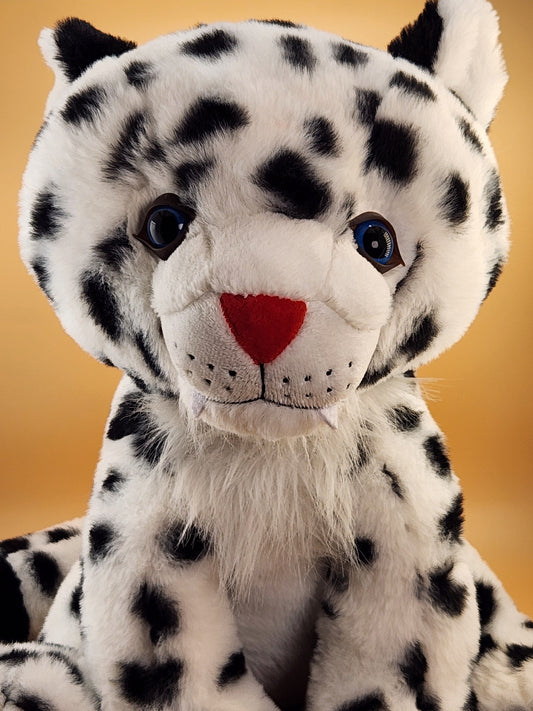
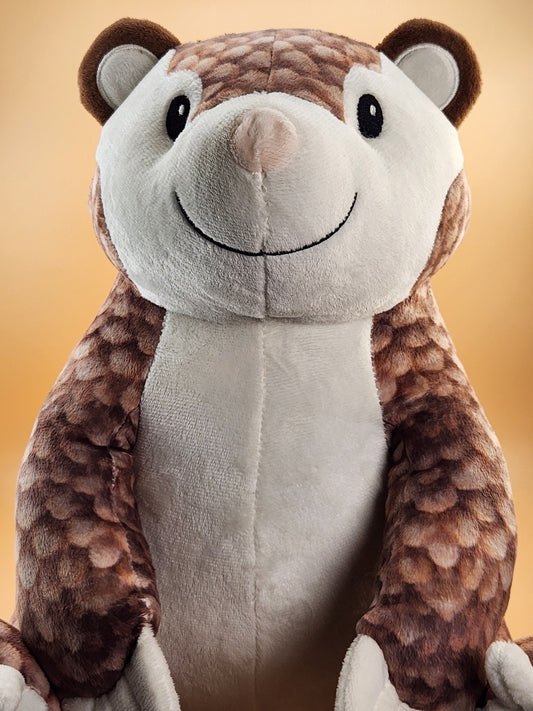
That mix of hands-on building and gentle storytelling is where block play becomes especially rich. A child who builds a bridge for Paulie the Pangolin or a snowy lookout for Tashi the Snow Leopard isn’t only practicing fine motor control. That child is also practicing care, imagination, and early problem-solving in a way that feels playful instead of instructional.
Table of Contents
- Beyond the Tower : The Magic of Stacking Wood Blocks
- How to Build Stable Towers and Structures
- Age-Appropriate Block Play from Toddler to Preschooler
- Games and Stories to Enrich Block Play
- Mastering Bridges Patterns and Topple-Proofing
- Caring for Your Blocks and Building a Legacy
Beyond the Tower : The Magic of Stacking Wood Blocks
A child tips out a basket of blocks and starts with the obvious plan. Build high. Then the tower falls, and something better often happens. The blocks spread into paths, animal homes, fences, ramps, and tiny gathering places for plush companions. That’s when stacking wood blocks becomes more than a motor activity.
Children rarely separate building from storytelling. A short wall might be a shelter. A circle of blocks might be a nest. A long line might become a migration route for a beloved toy animal. Adults sometimes focus on the finished structure, but children often care more about what the structure means.
That meaning matters. When a child builds a resting place for a pangolin or a mountain den for a snow leopard, the play takes on emotional weight. The child isn’t just placing objects on top of one another. The child is practicing how to make space for another living thing.
Stacking wood blocks gives children a way to hold ideas in their hands. Balance becomes visible. Care becomes something they can build.
A thoughtfully prepared play space helps this kind of play unfold naturally. Low shelves, open floor area, baskets for loose parts, and a few nature-inspired touches can make blocks feel like an invitation rather than just another toy. Families who want that softer, wildlife-centered atmosphere can borrow ideas from this guide to a wildlife-themed playroom.
Why block play feels bigger than it looks
Several kinds of learning happen at once during stacking wood blocks:
- Motor control develops as children line up flat faces, adjust hand position, and place pieces gently.
- Spatial thinking grows when they judge width, height, and whether a piece will fit.
- Language expands as they describe what they made, what fell, and what should happen next.
- Empathy deepens when the build serves a character, an animal, or a shared story.
That last point often gets overlooked. A block tower on its own is fun. A rescue tower for a tiny animal who needs a safe lookout often keeps children engaged longer and gives adults better openings for conversation about habitats, weather, and caring for the natural world.
How to Build Stable Towers and Structures
Paulie the Pangolin needs a safe lookout. Your child sets down one block, adds another, and then reaches for a third. The tower sways. A small pause follows. That moment matters, because stable building begins when children notice why something tips and how a careful change can help it stay up.

For young children, balance is easier to understand through their hands than through explanation. A block tower works like a tree with roots. If the bottom is steady and well placed, the rest has something reliable to stand on. If the base is narrow, bumpy, or off-center, every new block adds strain.
That is why the first lesson is simple. Help children look for a flat side, place it on another flat side, and center the block as much as they can. You are not teaching formal physics. You are helping a child feel what support means.
What makes a block tower stay up
A stable structure usually comes from a few repeatable choices:
- Start with the strongest base. Wide, flat blocks near the bottom give children more room for small mistakes.
- Center each piece. When a top block sits too far over the edge, the whole build has to work harder to stay upright.
- Use a firm surface. A wooden floor or steady table makes placement easier than a soft blanket or cushion.
- Place blocks gently. Lowering a block lets children notice tiny shifts before the tower collapses.
- Pause and check. A light touch after each layer helps them see whether the structure is settled.
One short phrase helps many children: “Flat on flat, middle on middle.”
A simple routine children can remember
Young builders often do better with a rhythm than with lots of correction. Try this sequence:
- Pick the base. Ask, “Which block looks strongest for the bottom?”
- Turn the block. Help the child find the flattest face.
- Line it up. Encourage their eyes to check whether the edges are roughly centered.
- Lower slowly. Gentle hands give the tower a better chance.
- Test before adding more. A tiny wiggle check can save a bigger crash.
If your child enjoys pretend play, give the routine a purpose. Tashi the Snow Leopard might need a tall cliff to scan the mountains, or Paulie might need a little shelter from the rain. Story gives the structure a job. That often keeps children focused longer than “build a tower” on its own. Families who enjoy this kind of character-led play can borrow ideas from these fun and educational activities with stuffed animals.
Small changes that make a big difference
Children are often surprised that tiny adjustments matter. Moving one block half an inch can change a shaky tower into a steady one. This is a useful life lesson tucked inside play. Careful choices build stronger results.
| Building choice | What usually happens |
|---|---|
| Wide base, centered blocks | Tower stays steadier and can grow taller |
| Narrow base, overhanging blocks | Leaning starts sooner |
| Slow placement | Child notices problems early |
| Fast drop onto the top | Pieces shift, slide, or fall |
A fallen tower is useful too. It gives children feedback they can see and hear right away. Instead of rushing to rebuild for them, stay nearby and wonder with them. “What changed?” “Which block felt strongest?” “Where should Paulie stand so the lookout stays safe?” That kind of coaching helps children build patience, problem-solving, and a quiet respect for materials.
Over time, Snugglebug block play can become more than stacking. It becomes a way to build habitats, shelters, and story worlds that gently connect construction skills with care for animals and the places they live.
Age-Appropriate Block Play from Toddler to Preschooler
A 14-month-old may be thrilled just to balance one block on another. A 4-year-old may use the same set to build a mountain shelter for Tashi the Snow Leopard or a safe path for Paulie the Pangolin. That is part of the magic of wooden blocks. The materials stay simple while the child’s thinking grows wider, steadier, and more imaginative.
Children do not outgrow block play quickly because blocks meet them where they are. Early on, the work is mostly sensory and physical. Later, it becomes more intentional. By the preschool years, many children are building ideas as much as structures. A tower can become a lookout. A row can become a forest trail. A few carefully placed blocks can become a habitat worth protecting.
Toddlers and first stacks
For toddlers, block play often begins in the hands before it shows up in a structure. They carry blocks, tap them together, turn them over, line them up, stack one or two, and send them tumbling. That repetition matters. It helps children learn weight, balance, grip, and cause and effect.
As noted earlier, developmental research describes a familiar pattern. Young toddlers often start with very small stacks, then build taller and with more control as their hand skills and planning improve over time.
Good toddler invitations stay simple and concrete:
- Two-block success: Celebrate one secure stack. That small win feels big to a toddler.
- Line them up: Some children prefer making a road or row before they are ready to build upward.
- Build and topple: Knocking down a tower on purpose teaches just as much as stacking it.
- Tiny homes for toys: Ask, “Can Paulie have a little place to hide?” A clear purpose helps the child know what to do with the blocks.
A short prompt often works better than a long explanation. “Let’s make Ruby the Red Panda a seat” gives the blocks a job right away.
Young preschoolers and purposeful building
Young preschoolers usually want their structures to mean something. They may build a fence, a cave, a road, or a place where an animal can sleep safely. This is often the stage where storytelling and construction begin to braid together. One supports the other.
That blend is a natural fit for Snugglebug play, especially when children already love caring for plush companions. Families can extend the same warm, imaginative style with these stuffed animal activities for playful learning.
Try prompts like these:
- Shelter build: “Can Tashi have a high spot to rest?”
- Forest path: “Can Paulie travel through the trees without getting stuck?”
- Safe enclosure: “Can Ruby have a cozy space with one opening?”
- Sorting challenge: Build one structure with long rectangles and another with cubes.
Children at this age often respond best to questions about need. “What does the animal need to stay safe?” leads to richer play than “Build something nice.” It also gently introduces empathy. The child is not only stacking blocks. The child is caring for a creature inside the story world.
Older preschoolers and bigger ideas
Older preschoolers often begin to plan before their hands start moving. They compare shapes, test different layouts, notice weak spots, and repair them. They may also enjoy symmetry, repeating patterns, and structures with multiple parts.
Block play begins to resemble early design thinking. A child forms an idea, tests it, notices a problem, and tries again. The process can look playful and still be thoughtful.
Here are a few strong matches between interest and invitation:
| Child’s interest | A matching block invitation |
|---|---|
| Animals | Build a den, nest, mountain ledge, or watering place |
| Vehicles | Create a road, tunnel, bridge, or parking area |
| Patterns | Arrange blocks in repeating colors, sizes, or shapes |
| Pretend worlds | Make a village, rescue center, or trail system |
Challenge cards can also keep older preschoolers engaged:
- For a planner: Can you build a habitat with a gate and a lookout point?
- For a storyteller: Can Wayne the Whooping Crane have a home near water?
- For a pattern lover: Can the path follow a repeating order?
- For a child who persists: Can you rebuild yesterday’s idea in a stronger way?
One gentle shift matters here. Instead of showing the child exactly how to build, stay nearby and coach with curiosity. “What might make this side steadier?” or “Where should the snow leopard stand to stay safe?” Those questions help children notice structure, solve problems, and connect play with care.
That last piece matters. With Snugglebug characters, block play can grow into something larger than construction practice. Children begin to build shelters, crossings, and resting places for animals they care about. In a small, age-right way, they are practicing creativity, responsibility, and respect for living things and the homes they need.
Games and Stories to Enrich Block Play
The richest block play often begins when the blocks stop being “just blocks.” A short row becomes a riverbank. A circle becomes a nest. A low arch becomes a cave entrance that only one special animal can fit through.

When children bring plush characters into the scene, the play gets more purposeful. A pangolin needs protection. A snow leopard needs a high place to watch from. A red panda needs a tucked-away resting spot. Those needs guide the build, and that gentle problem-solving gives the story emotional depth.
Families who want to support that kind of imaginative thinking can find more ideas in this article on the benefits of make-believe.
Turn a pile of blocks into a habitat
A strong storytelling prompt starts with a real need in the pretend world.
Try examples like these:
- Mountain lookout: Stack broad blocks at the bottom and create a high perch for Tashi the Snow Leopard. Ask what makes the perch safe.
- Forest shelter: Arrange a partial enclosure with one open side for Ruby the Red Panda. Add “trees” with upright blocks nearby.
- Safe path game: Build a winding route and let Paulie the Pangolin travel from one end to the other without “touching the mud.”
- Nest building: Use blocks to mark the edges of a nesting area for Wayne the Whooping Crane, then leave space in the center.
These games work because they give children a reason to care whether the structure stands. The tower matters because someone lives there.
Use old building ideas in new play
History offers wonderful prompts for children’s play. In medieval Europe, the holzhausen was a circular, domed wood pile designed to season firewood over 6 months to 2 years, while improving airflow and helping communities protect an essential fuel supply, as described in this history of the holzhausen wood house. That story can become a playful invitation.
A caregiver might say, “People once made round wood houses to protect and dry wood carefully. Could a round block house be built for a snow leopard in the mountains?” Children don’t need every historical detail. They only need the spark.
A story gives shape to the structure. Children often build longer and revise more willingly when the blocks are solving a problem for a character.
A few easy story-based prompts can go a long way:
- Build before the storm. The animal needs shelter before rain or snow arrives.
- Create a rescue route. A bridge or stepping path must help the animal cross safely.
- Make a hidden home. The structure should feel protected, not just tall.
- Rebuild the habitat. Something changed in the environment, and the blocks must help.
Conservation themes fit naturally here. Children can talk about shelter, safe places, and what animals need to thrive. Those are early, concrete ways to understand care for the planet.
Mastering Bridges Patterns and Topple-Proofing
At some point, many children move past towers and ask a harder question. Can the blocks stretch across space instead of only rising upward? That question leads to bridges, overhangs, and the sort of cheerful trial and error that makes block play so valuable.

Simple bridge building for curious kids
The easiest bridge starts with two supports and one flat block across the top. Once that works, children usually want a longer span. That’s where older preschoolers can begin exploring overhang in a simple way.
The classic block-stacking problem shows that a stack of identical blocks can create surprisingly long overhangs. In the ideal pattern, the top block extends by 1/2 a block length, the next by 1/4, then 1/6, and so on, allowing increasingly dramatic cantilevers, as explained in this overview of the block-stacking problem.
A child doesn’t need the formula. A child can try this instead:
- First attempt: Place one block so half of it hangs over the edge of another.
- Second attempt: Add another supporting block underneath and adjust slowly.
- Third attempt: See whether a toy car or tiny animal can cross the finished bridge.
Pattern building also supports this stage well. Alternating colors, making mirror-image walls, or repeating long-short-long-short arrangements encourages children to plan ahead instead of placing blocks at random.
When it falls, the learning starts
Collapse is part of the lesson. Children often need adults to treat a fall as information instead of failure.
A calm response helps:
- “That piece slid.”
- “The base moved.”
- “This side was heavier.”
- “Would a wider bottom help?”
Those short observations teach children to study what happened. They also reduce the emotional sting.
“The tower fell” can become “The experiment gave an answer.”
A quick troubleshooting guide keeps the mood practical:
| Problem | What to try |
|---|---|
| Tower leans early | Use bigger blocks at the bottom |
| Bridge collapses in the middle | Shorten the span or widen the supports |
| Child places blocks too hard | Practice lowering blocks slowly |
| Frustration builds fast | Rebuild a smaller version first |
Some children enjoy turning toppled structures into stories. An earthquake shook the habitat. Strong wind hit the lookout tower. The bridge needs repairs before the animals can cross again. That kind of reframing builds resilience without dismissing disappointment.
Caring for Your Blocks and Building a Legacy
Wooden blocks tend to stay in active use when adults make care simple. A low basket, a shelf with clear space, and a quick wipe-down after messy play are often enough. Blocks that are easy to reach and easy to put away get chosen more often.
Keep wooden blocks ready for play
A few habits help blocks last and stay inviting:
- Store them where children can see them. Hidden toys are often forgotten toys.
- Wipe with a lightly damp cloth when needed. Gentle cleaning protects the feel of the wood.
- Check for rough spots. If a block becomes splintered or damaged, remove it from play.
- Sort loosely, not perfectly. Children usually build more freely when cleanup systems are simple.
A mixed basket often works better than a fussy, highly organized tray. Children can scan shapes quickly and start building without waiting for adult setup.
Why simple toys last
Wooden blocks earn their place because they grow with the child. The same set supports first stacks, pretend habitats, bridge experiments, and cooperative building years later. They don’t need batteries, licensed characters, or complicated instructions to stay interesting.
That durability also carries a quiet lesson about sustainability. Toys that last, get repaired, and move from one child to another teach care through everyday use. When block play connects to stories about animals, habitats, and thoughtful stewardship, the lesson becomes even stronger. Children begin to see that building well and caring well belong together.
For families who want playtime to nurture empathy as much as creativity, Snugglebug offers plush companions inspired by real endangered animals. Paired with a basket of wooden blocks, those characters can turn an ordinary tower into a wildlife habitat, a rescue mission, or a small story about caring for the world children are growing into.